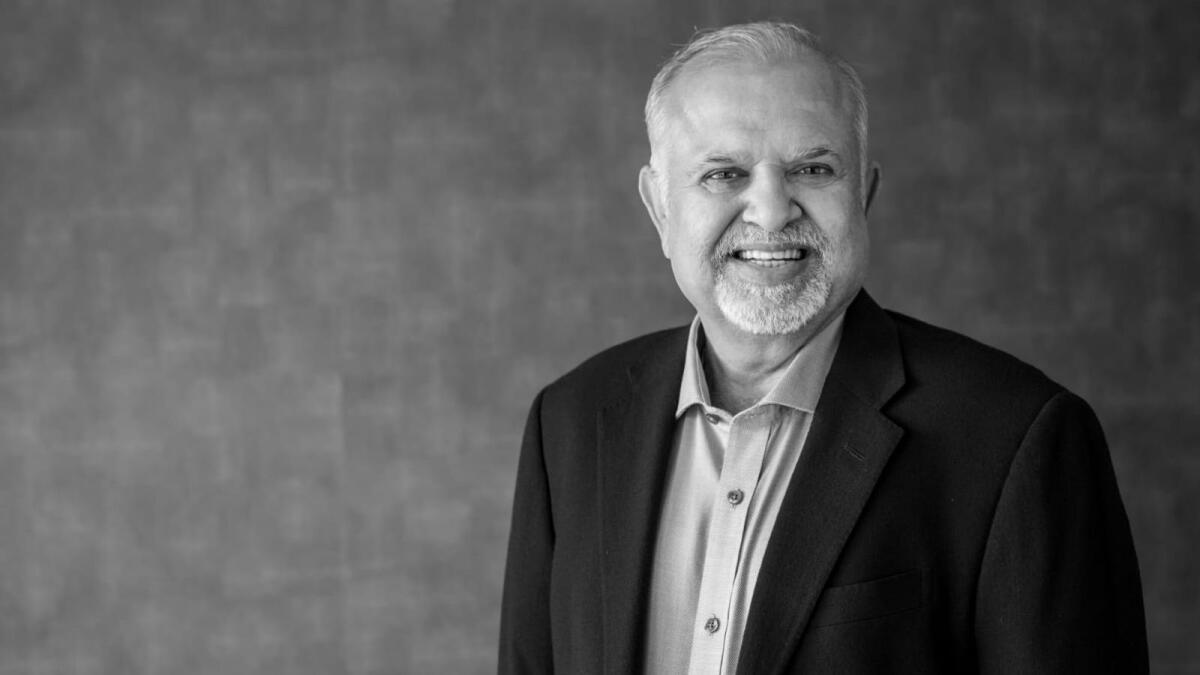
Micky Jagtiani’s name evokes a rags-to-riches saga that rivals the greatest entrepreneurial epics. (Micky Jagtiani Biography) Born Mukesh Wadhumal Jagtiani in 1952, this Indian-origin visionary transformed a modest toy shop in Bahrain into the Landmark Group, a retail and hospitality juggernaut spanning 24 countries with over 2,200 outlets. Under his stewardship, the Dubai-headquartered empire generated billions in revenue, employing 45,000 people and redefining consumer experiences across fashion, home furnishings, and budget hospitality.
Jagtiani’s journey—from driving taxis in foggy London streets to commanding a $5.2 billion fortune—embodies unyielding resilience and foresight. Though he passed away on May 26, 2023, at age 70 after a prolonged illness, his legacy endures through his wife Renuka and children, who now helm the group. With the family’s net worth pegged at $5.6 billion as of October 2024, Jagtiani remains a beacon for expatriate success. This 1100-word profile chronicles his biography, storied history, opulent properties, strategic investments, devoted family, prestigious awards, financial prowess, and the ambitious projects propelling Landmark forward.

Early Life and Meteoric Rise
Micky Jagtiani entered the world on August 15, 1952, in Kuwait City, to a Sindhi Hindu family of modest means—his father a trader, his roots tracing back to pre-Partition India. The oil-rich emirate offered stability, but young Micky’s education was peripatetic: schooling in Chennai and Mumbai’s bustling academies, then Beirut’s international environs. Dreams of stability clashed with reality; by his late teens, he ventured to London, enrolling in an accounting program at a nondescript school. But academia proved stifling. Dropping out, he hustled as a taxi driver, navigating the city’s labyrinthine roads while honing a street-smart acumen for customer needs—lessons that would later fuel his retail revolution.
In 1973, at 21, tragedy struck: his elder brother, a shopkeeper in Bahrain, died suddenly, leaving a small toy and baby products outlet in disarray. Micky seized the reins, rebranding it Babyshop with a mere $2,000 in savings scraped from odd jobs. Bahrain’s expatriate boom—fueled by Gulf oil wealth—proved fertile ground. He sourced affordable imports from India and Europe, stocking cribs, strollers, and playthings that resonated with growing families. Within a decade, Babyshop burgeoned into six outlets across the island kingdom, employing dozens and turning a profit through relentless cost-cutting and customer-centric innovation.
The 1990 Gulf War upended everything. As bombs fell and economies shuddered, Micky relocated to Dubai in the early 1990s, a burgeoning hub of ambition. There, he birthed the Landmark Group in 1995, initially as a holding entity for his ventures. Diversification became his mantra: Home Centre launched in 1995 for affordable home decor, Lifestyle in 1998 for mid-market fashion, and Splash for trendy apparel. By 1999, he ventured into entertainment with Fun City, the UAE’s first indoor amusement park, and hospitality via Citymax budget hotels.
The 2008 financial crisis tested his mettle; undeterred, he snapped up a 6% stake in beleaguered UK retailer Debenhams, catapulting onto Forbes’ billionaire list as India’s 16th richest with $2 billion. Philanthropy wove through his ascent—donations to education in India and UAE disaster relief—earning him the moniker “the people’s billionaire.”
Properties: Symbols of Subtle Splendor
Jagtiani’s lifestyle mirrored his philosophy: “I spend very little and earn a lot.” Eschewing flashy ostentation, he owned few personal assets, often titling properties under family names to sidestep what he called “wealth traps.” His primary residence was a sprawling villa in Dubai’s elite Emirates Hills enclave—a gated oasis of manicured lawns, private pools, and state-of-the-art security, overlooking the Montgomerie Golf Course.
Valued at over $20 million, this 15,000-square-foot haven, deeded to wife Renuka, served as a family sanctuary and business nerve center, hosting quiet Onam celebrations and high-stakes board meetings. Its exact address remains closely guarded, listed vaguely as Emirates Hills, Dubai, UAE, in public records.
Beyond Dubai, Jagtiani maintained a pied-à-terre in Bahrain’s Manama, a modest yet elegant apartment overlooking the Gulf, nostalgic nods to Babyshop’s origins. In London, a discreet Mayfair flat—acquired during his Debenhams foray—facilitated European sourcing trips. The family’s portfolio extended through Landmark’s commercial holdings: ownership stakes in 20+ malls across the Middle East, including Dubai’s sprawling Centrepoint complexes blending retail and leisure.
A private yacht docked in Dubai Marina and a fleet of low-key Mercedes sedans rounded out his assets, reflecting a man who prized utility over extravagance. Posthumously, Renuka has preserved these as family trusts, ensuring generational continuity.
Investments: Crafting a Retail Colossus
Landmark Group’s investments form the cornerstone of Jagtiani’s empire, a diversified behemoth blending retail, real estate, and hospitality. At its heart: 2,200 stores under banners like Centrepoint (one-stop family hubs), Max (value fashion in India), and Shoe Mart. Annual revenues topped $7 billion by 2023, with 40% from India alone since the 1999 entry. Real estate ventures include mall developments in Qatar and Saudi Arabia, yielding steady rental streams. Hospitality shines through 23 Citymax hotels—affordable yet amenity-rich, from Dubai’s silicon oases to Nairobi’s urban edges—catering to budget travelers amid tourism surges.
Jagtiani’s foresight extended to a 2014 family office managing $5 billion in assets, funding stakes in startups like sustainable fashion tech and e-commerce logistics. He shunned speculation, focusing on supply-chain verticals: Landmark’s in-house farms in India source textiles, cutting costs by 20%. The 2008 Debenhams investment, though later divested amid the chain’s 2021 collapse, honed his M&A savvy. Today, under family oversight, investments pivot to sustainability—solar-powered stores and eco-fabrics—positioning Landmark for green consumer shifts.
Family Life: A Pillar of Unity
Jagtiani’s personal world orbited family, a tight-knit circle forged in Bahrain’s early hardships. He wed Renuka Soraya in the mid-1970s; she, a Mumbai native with a commerce degree, abandoned a banking career to co-build Landmark, rising to CEO by 2023. Their partnership was symbiotic—Renuka’s operational genius complementing Micky’s vision—raising three children amid boardroom battles and beachside barbecues. Daughters Aarti and Nisha, both in their 40s, helm key divisions: Aarti drives hospitality expansions, married with children Samar and Nikhil; Nisha oversees fashion retail, wed to Kabir with son Yohan. Son Rahul, the youngest, spearheads digital transformation, blending tech with tradition.
Grandchildren—four in total—infuse joy, with family pilgrimages to Sindhi temples in India preserving heritage. Dubai’s Emirates Hills villa buzzes with their laughter, a counterpoint to global jet-setting. Post-Micky’s passing, Renuka’s leadership has unified them further, with all three as group directors ensuring seamless succession.
Awards and Accolades: Tributes to Tenacity
Jagtiani’s trailblazing garnered global kudos. In 2004, Ernst & Young crowned him UAE Entrepreneur of the Year for Babyshop’s bootstrap brilliance. The 2005 Dubai Quality Award saluted his operational excellence. Retail Middle East’s 2007 Personality of the Year honored his sector dominance. Forbes’ 2008 nod as India’s 16th richest amplified his profile.
Later honors included Arabian Business’s 2012 Power List for inspirational impact and NDTV’s 2016 Global Business Leader at the Gulf Indian Excellence Awards. In 2017, he and Renuka entered the Retail Hall of Fame, etched alongside icons like Sam Walton. These weren’t shelf fillers; they spurred philanthropy, like $10 million for UAE flood victims in 2024 via family foundations.
Financial Empire: Wealth with Wisdom (Micky Jagtiani Biography)
At his 2023 demise, Jagtiani’s net worth hit $5.2 billion, per Forbes, vaulting him to UAE’s top expatriate rich list. Personal income, largely dividends from Landmark’s $7 billion revenues, averaged $300-400 million annually, funneled into reinvestments over luxuries. Frugality defined him—eschewing jets for economy flights—yet strategic bets like Debenhams yielded windfalls. By October 2025, the family’s collective fortune stands at $5.6 billion, buoyed by post-IPO gains in affiliates, underscoring enduring value creation.
Future Projects: Legacy in Motion
Though Micky’s vision endures, Renuka and kin propel Landmark’s horizon. A November 2024 bombshell: $1 billion infusion over three years for 400 new stores across GCC, India, and Southeast Asia by 2028—a 20% footprint swell. Highlights include Viva grocery’s 2025 Saudi debut and Babyshop’s rollout in four untapped markets. E-commerce gets a $200 million tech overhaul, partnering Alibaba for seamless omnichannel.
Real estate beckons: August 2025’s ₹400 crore ($48 million) plunge into Gurugram’s Landmark SKYVUE—240 luxury apartments along Dwarka Expressway—targets India’s premium housing boom. Hospitality expands with five Citymax openings in Africa, tapping tourism rebounds. Sustainability threads all: carbon-neutral malls by 2030. “Micky built the foundation; we build the future,” Renuka affirms, eyeing 50,000 new jobs.
An Enduring Tapestry
Micky Jagtiani’s odyssey—from London’s cabs to Dubai’s pinnacles—weaves a tapestry of triumph, teaching that empires rise on grit, not gold. His void aches, yet through Renuka’s resolve and heirs’ hustle, Landmark marches on, a living homage to a man who turned dreams into dynasties. Thank you to read this article on Fastnews123.com
Micky Jagtiani Biography Micky Jagtiani Biography Micky Jagtiani Biography Micky Jagtiani Biography Micky Jagtiani Biography Micky Jagtiani Biography