Start Your Own Food Empire: The Secrets to Dehydrated Onion Powder Success
The dehydrated onion powder manufacturing business is a profitable food-processing industry because onion powder is widely used in snacks, instant foods, sauces, spice mixes, and fast-food products. Food companies prefer onion powder because it has a long shelf life and strong flavor. The global demand for dehydrated onion products is growing steadily, especially in processed food industries.
1. What is Dehydrated Onion Powder?
Dehydrated onion powder is produced by removing moisture from fresh onions and grinding them into fine powder. The dehydration process extends shelf life and reduces weight for easy export.
Major uses:
-
Spice industry
-
Instant noodles & snacks
-
Restaurant food preparation
-
Seasoning powder industry
-
Frozen and packaged foods
Many food companies buy onion powder in bulk for seasoning products.
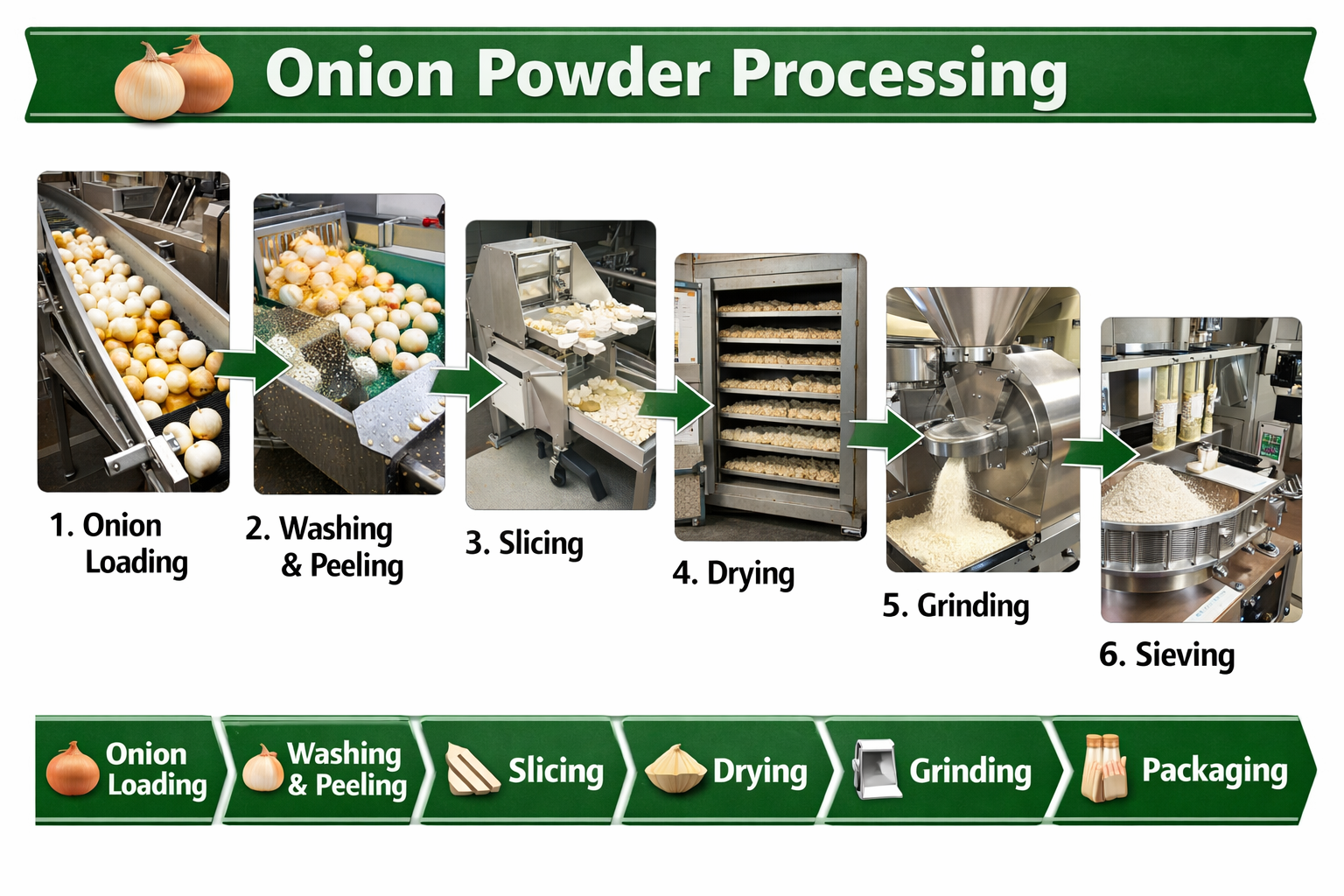
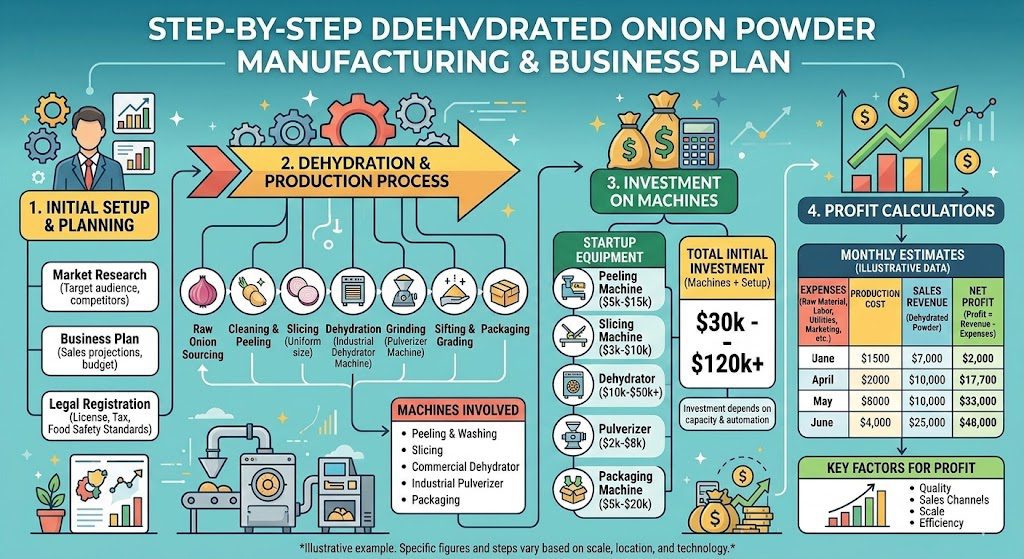
2. Step-by-Step Onion Powder Manufacturing Process
Step 1 – Raw Onion Procurement
Buy fresh onions directly from:
-
Farmers
-
Wholesale vegetable markets
-
Agricultural suppliers
High-quality white onions are preferred for dehydration.
Step 2 – Washing
Onions are washed using a vegetable washing machine to remove dirt and pesticides.
Step 3 – Peeling
Outer skins are removed manually or by automatic onion peeling machines.
Step 4 – Slicing
The onions are cut into thin slices using a slicing machine for faster drying.
Step 5 – Dehydration
The onion slices are dried using tray dryers or industrial dehydrators for several hours until moisture is removed.
Step 6 – Grinding
Dried onion slices are ground into powder using an industrial grinder or pulverizer.
Step 7 – Packaging
Onion powder is packed in:
-
Plastic pouches
-
Glass jars
-
Bulk export bags
Nitrogen packaging can increase shelf life.
3. Required Machines for Onion Powder Manufacturing
Below are the common machines used in a small or medium factory.
| Machine | Estimated Cost |
|---|---|
| Onion washing machine | $1,000 – $3,000 |
| Onion peeling machine | $500 – $3,000 |
| Onion slicing machine | $500 – $2,000 |
| Tray dryer / dehydration machine | $5,000 – $30,000 |
| Pulverizer grinder | $500 – $2,000 |
| Sieving machine | $300 – $1,000 |
| Packaging machine | $1,000 – $5,000 |
Industrial dehydration machines alone may cost $5,000–$30,000 depending on capacity.
A complete automated onion powder production line may cost $50,000–$80,000 or more depending on capacity.
4. Total Investment Required
Small-Scale Unit
Investment required:
| Item | Cost |
|---|---|
| Machinery | $5,000 – $15,000 |
| Raw onion purchase | $2,000 |
| Factory rent/setup | $2,000 |
| Packaging materials | $1,000 |
| Labor & utilities | $2,000 |
Total Investment: $10,000 – $20,000
Medium-Scale Plant
| Item | Cost |
|---|---|
| Complete machinery line | $50,000 |
| Factory building | $15,000 |
| Raw material stock | $10,000 |
| Workers & utilities | $10,000 |
Total Investment: $70,000 – $90,000
Small factories can process 500 kg – 2 tons of onions per day.
5. Profit Margin in Onion Powder Business
Profit mainly depends on raw onion price and export demand.
Typical profit calculation example:
Raw onion price = $0.20 per kg
10 kg onions produce approx. 1 kg onion powder
Cost of production per kg = $1.5 – $2.5
Selling price:
-
Wholesale = $4 – $6 per kg
-
Export price = $2,600 per metric ton (approx $2.6/kg).
Estimated profit margin:
30% – 40% profit possible in this industry if production and marketing are managed well.
6. Demand Countries for Onion Powder
The global market is growing because processed food companies need dehydrated ingredients.
Major importing countries include:
-
United States
-
Germany
-
United Kingdom
-
Japan
-
France
-
Canada
-
Netherlands
-
Australia
The United States alone imports about 25% of global dehydrated onion powder supply. European food industries also have strong demand for onion powder used in seasoning blends and ready-to-eat meals.
7. Onion Powder Export Price Chart
| Country | Average Import Price |
|---|---|
| USA | $3.5 – $5 / kg |
| Germany | $3 – $4 / kg |
| UK | $3 – $4 / kg |
| Japan | $4 – $6 / kg |
| France | $3 – $4 / kg |
| Canada | $3 – $5 / kg |
| Australia | $4 – $6 / kg |
| UAE | $3 – $4 / kg |
Bulk export orders can be 1–25 tons per shipment depending on buyers.
8. Licenses Required for This Business
To start onion powder manufacturing legally you need:
-
Food safety license
-
Business registration
-
Export license for international trade
-
GST or tax registration
-
Factory license
Food processing businesses must follow strict hygiene standards.
9. Marketing and Sales Strategy
You can sell onion powder through several channels:
Local Market
-
Grocery wholesalers
-
Restaurant suppliers
-
Supermarkets
-
Spice companies
Export Market
-
Food ingredient distributors
-
Seasoning manufacturers
-
Frozen food companies
Online Sales
-
B2B platforms (Alibaba, IndiaMART)
-
Food ingredient marketplaces
-
Direct website sales
10. Advantages of Onion Powder Business
Reasons why this business is attractive:
-
Long shelf life product
-
Growing global demand
-
Easy export product
-
High profit margins
-
Government support for food processing
Many dehydration factories operate mainly for export markets because domestic demand is smaller but growing.
Conclusion (onion powder manufacturing)
The dehydrated onion powder manufacturing business is a high-demand food processing industry with good export opportunities. With a small investment of $10,000–$20,000, entrepreneurs can start a small production unit and supply to local spice companies. Medium factories require larger investments but can supply bulk quantities to international markets. By using the right dehydration machines, quality onions, and strong marketing channels, this business can generate 30–40% profit margins and long-term growth.
dehydrated onion products food processing business onion powder uses export onion powder investment in food manufacturing dehydrated vegetable market advanced food processing machines bulk onion powder