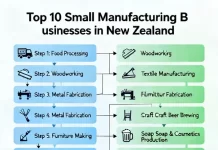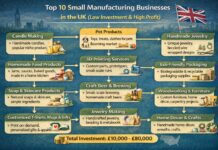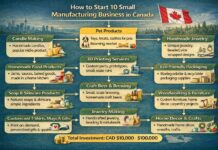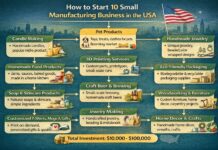
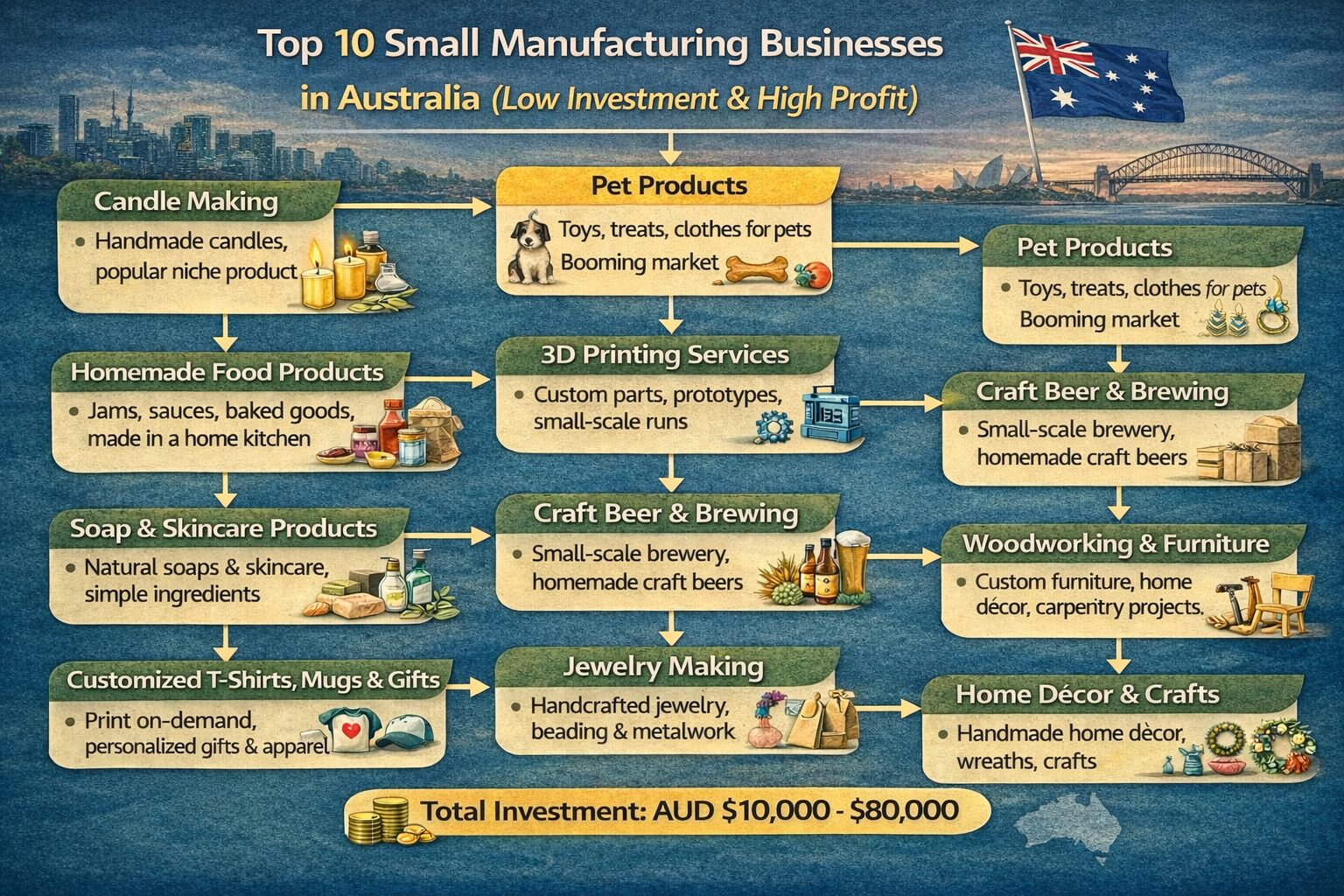
How to Start 10 Small Manufacturing Businesses in Australia — Investment, Costs, and Profit
Starting Small Manufacturing Businesses in Australia is easiest when you focus on a narrow niche, keep your first processes simple, and sell to customers who already buy regularly (tradespeople, installers, industrial maintenance teams, property managers, e-commerce sellers). Below is a practical guide you can follow, plus 10 small manufacturing business ideas with typical investment cost and profit potential.
Step-by-Step: Manufacturing Business in Australia
- Choose one product type and one customer Focus on what you can deliver fast and repeatedly. For example: “custom metal brackets for HVAC installers” or “3D-printed replacement parts for equipment jigs.” A clear customer reduces marketing cost.
- Validate demand before buying equipment
- Search local service providers on Google Maps for similar offers.
- Contact 10–20 potential buyers (contractors, workshops, small brands) and request what specs they need.
- Ask for “first sample” pricing or trial orders.
- Estimate total startup cost (not only equipment) Include: tools, workspace setup, safety gear, consumables, packaging, software subscriptions, insurance, utilities, and a small reserve for mistakes.
- Pick your business structure and handle tax setup Many small manufacturers start as a sole trader or company, but you should confirm with an accountant for GST registration, invoicing, and insurance needs.
- Secure workspace and compliance basics Manufacturing commonly requires attention to: ventilation/dust control, noise, waste disposal, safe storage, and occupational health and safety. If you handle certain regulated items (food-contact packaging, electrical-related builds, medical-grade claims), compliance becomes more complex.
- Build a simple quoting system Always quote with:
- required drawings/specs or a measurement checklist
- turnaround time
- revision limits
- material allowances and scrap/rework assumptions
- delivery and shipping terms
Good quoting protects your margin.
- Create proof quickly Build 2–5 sample items (even if slightly different versions), then take clear photos and videos. Manufacturing sells with proof of fit, finish, and reliability.
- Start with small batch orders First aim for consistent 1–5 jobs per week. Use repeat clients as your growth engine, not one-off experiments.
- Track margin using unit economics Track each job: materials, direct labor hours, machine/tool time, packaging, delivery, and scrap/rework. If profit is thin, fix process or pricing—not just marketing.
1) CNC Woodworking (Signs, Panels, Custom Parts)
What you make: shop signs, display parts, cabinet components, custom fixtures.
Typical startup investment (AUD): 5,000–45,000
Profit potential: often 10%–30% net once quoting is accurate and turnaround is reliable.
Why it works: frequent demand from trades, renovators, and local small businesses.
2) CNC Metal Fabrication (Brackets, Guards, Tool Frames)
What you make: brackets, machine guards, handrail sections, tool mounts.
Typical startup investment (AUD): 15,000–120,000
Profit potential: 12%–35% net for stable B2B work.
Key success factor: clean estimating and controlling rework.
3) Laser Cutting & Engraving (Acrylic, Metal, Steel Plates)
What you make: engraved plates, cut templates, signage components, custom parts.
Typical startup investment (AUD): 6,000–50,000
Profit potential: 10%–28% net depending on order volume and finishing costs.
Why it works: fast turnaround attracts repeat orders.
4) 3D Printing & Prototyping (Jigs, Fixtures, Replacement Parts)
What you make: prototypes, small-run components, production aids.
Typical startup investment (AUD): 2,000–30,000
Profit potential: 10%–35% net if you sell design-for-use and reliable lead times.
Key success factor: offer “engineering support,” not only printing.
5) Contract Assembly & Kitting (Industrial Subassemblies)
What you do: assemble kits, do simple subassemblies, pack for dispatch.
Typical startup investment (AUD): 3,000–40,000
Profit potential: 10%–25% net with ongoing repeat contracts.
Why it works: steady demand if you become a reliable supplier.
6) Custom Packaging Components (Inserts, Folding Boxes, Rigid Packaging)
What you make: branded inserts, protective packaging components, small-run cartons.
Typical startup investment (AUD): 3,000–45,000
Profit potential: 12%–30% net with consistent client reorders.
Note: if you touch food-contact products, comply carefully with claims and materials.
7) Upholstery-Adjacent Manufacturing (Workshop Covers, Seat Rebuild Components)
What you make: seat covers, protective workshop covers, custom padding components.
Typical startup investment (AUD): 4,000–35,000
Profit potential: 15%–35% net depending on labor efficiency.
Why it works: local installers and repair businesses need custom sizes.
8) Industrial Plastic Fabrication (Guards, Covers, Replacement Panels)
What you make: protective covers, guards, small replacement parts, custom housings.
Typical startup investment (AUD): 5,000–60,000
Profit potential: 12%–30% net with maintenance and replacement-demand customers.
9) Electrical-Related Enclosure Assembly (Non-Critical Builds with Partnerships)
What you do: assemble enclosures, mounting panels, cable management accessories.
Typical startup investment (AUD): 10,000–90,000
Profit potential: 12%–35% net depending on compliance scope and partnerships.
Important: ensure you stay within what your licensing/partner arrangements allow.
10) Refurbishment and Re-manufacturing (Furniture, Fixtures, Shop Repairs)
What you do: restore furniture, repair cabinets, refurbish fixtures; replace worn parts.
Typical startup investment (AUD): 2,000–25,000
Profit potential: 15%–40% gross margin possible, net varies with labor time.
Why it works: buyers value quality repairs and before/after outcomes.
Marketing and Sales Plan That Works in Australia (Small Manufacturing Businesses in Australia)
- Local SEO: create a Google Business Profile and pages like “CNC machining in [city]” and “custom metal brackets [area].”
- Trade partnerships: work with installers, small industrial repair businesses, designers, and e-commerce fulfillment operators.
- Fast quoting: respond quickly with a clear timeline and spec checklist.
- Show proof: publish case studies (problem → solution → finished result → turnaround time).
- Repeat offers: offer re-order packs (e.g., “once you approve tolerances, we produce monthly runs.”)
Top 10 Small Manufacturing Businesses in Australia custom metal fabrication in Australia sheet metal fabrication near me. laser cutting service near me 3D printing prototype service Australia custom plastic parts Australia. contract assembly services Australia. custom plastic parts Australia industrial kitting services Australia custom woodworking Australia furniture restoration Australia Top 10 Small Manufacturing Businesses in Australia