
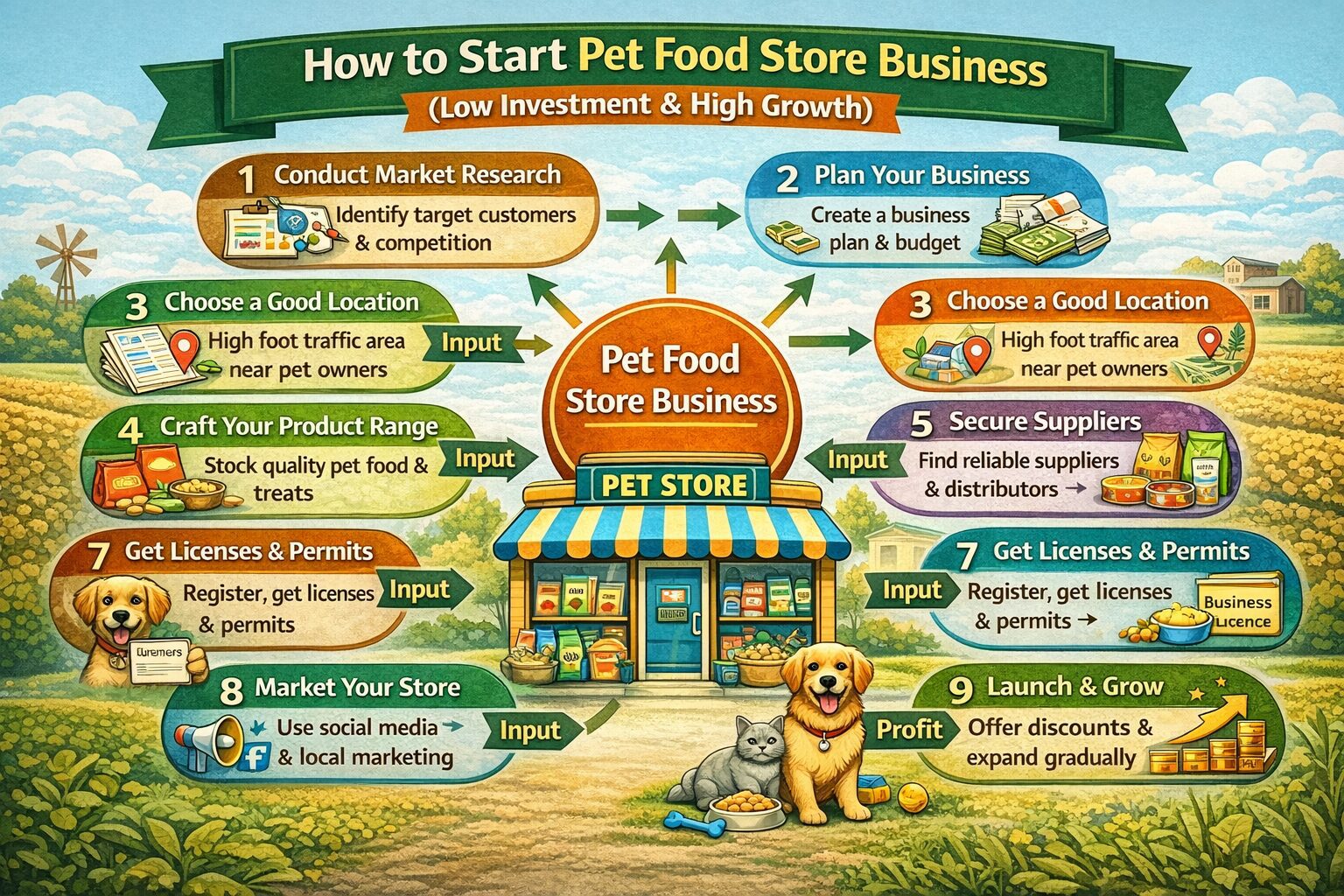
Pet Food Store Business: Complete Guide to Starting a Profitable Venture
Starting a Pet Food Store Business is one of the most promising opportunities in today’s growing pet care industry. With more people treating pets as family members, the demand for high-quality pet food, treats, and nutrition products has increased significantly. Whether you plan to open a small local shop or a modern retail outlet, this business offers steady income, repeat customers, and long-term growth potential.
Why Start a Pet Food Store Business?
The pet industry is expanding rapidly due to rising pet ownership and awareness about pet health. Pet owners are willing to spend more on premium, organic, and specialized diets for their animals. This creates a strong market for pet food stores that offer variety, quality, and expert guidance. Additionally, pet food is a necessity product, ensuring consistent demand throughout the year.
Market Research and Planning
Before starting your pet food store, it is important to conduct proper market research. Identify your target customers, such as dog owners, cat owners, or exotic pet lovers. Study your local competition and understand what products they offer and what gaps you can fill. Decide whether you want to focus on budget-friendly products, premium brands, or specialized diets like grain-free or organic food.
A solid business plan should include your investment, expected profits, pricing strategy, and marketing approach. Planning ahead reduces risks and helps you run the business efficiently.
Choosing the Right Location
Location plays a crucial role in the success of your pet food store. Choose a place with high foot traffic, such as near residential areas, veterinary clinics, or pet grooming centers. Ensure the shop is easily accessible and visible to attract walk-in customers. If a physical store is not feasible, you can also start an online pet food business or combine both offline and online sales.
Investment and Setup
The initial investment for a pet food store depends on the scale of your business. A small store may require a moderate budget for rent, shelves, storage, and initial stock. Larger stores or franchises may require higher investment. Key setup requirements include:
- Shelving and display racks
- Storage space for bulk products
- Billing system or POS machine
- Branding and signage
- Licensing and permits
Maintaining cleanliness and proper storage conditions is important to preserve the quality of pet food products.
Product Selection
Your product range is the backbone of your business. Offer a wide variety of items to attract different customers. These may include:
- Dry and wet food for dogs and cats
- Pet treats and snacks
- Organic and grain-free food
- Puppy and kitten special diets
- Nutritional supplements
- Food for birds, fish, and small animals
Stocking well-known brands along with affordable options helps you cater to a broader market. Keeping up with new trends in pet nutrition will also give you a competitive advantage.
Supplier and Inventory Management
Building relationships with reliable suppliers is essential for consistent product availability. You can source products directly from manufacturers, wholesalers, or distributors. Ensure timely restocking and maintain proper inventory levels to avoid shortages or overstocking.
Using simple inventory management software can help track sales, monitor stock levels, and reduce wastage.
Marketing and Promotion
Effective marketing is key to attracting and retaining customers. Some proven strategies include:
- Creating a strong online presence through social media
- Listing your store on Google Maps
- Offering discounts and loyalty programs
- Collaborating with local veterinarians or pet groomers
- Running seasonal promotions and offers
You can also educate customers by sharing tips on pet nutrition, which builds trust and encourages repeat business.
Profit Potential
The pet food business offers good profit margins, especially on premium and specialized products. Since pet owners purchase food regularly, you can expect consistent cash flow. Adding related products like accessories, grooming items, or pet toys can further increase your revenue.
With proper management, a small pet food store can grow into a successful retail brand or even expand into multiple locations.
Challenges to Consider
Like any business, a pet food store also comes with challenges. These may include competition from large retailers or online platforms, managing inventory, and maintaining product quality. However, offering personalized service, expert advice, and unique products can help you stand out.
Future Growth Opportunities
Once your business is established, you can expand in several ways:
- Start an online delivery service
- Launch your own pet food brand
- Open additional branches
- Add pet grooming or veterinary services
The pet care industry is expected to continue growing, making this a future-proof business option.
Conclusion
A pet food store business is a smart and sustainable venture for entrepreneurs who want to enter the retail sector with consistent demand. With proper planning, quality products, and effective marketing, you can build a profitable and trusted brand. As people continue to invest in their pets’ health and happiness, the opportunities in this business will only grow stronger in the coming years.
How to Start Pet Food Store Business Pet food store business 2026 Start pet food shop guide Pet food business ideas Low investment pet store business Pet food shop profit margin How to open pet food store Small pet shop business plan Pet food retail business tips Pet store startup guide 2026 Profitable pet food business ideas




[…] ही जा रही है लोग अंडे से बनने वाले तरह तरह के व्यंजनों को खाना बहुत पसंद करते […]