Maximize Your ROI in Agriculture: High-Demand Ventures for 2026
The agricultural Business of 2026 is defined by a shift from “volume-based” farming to “value-based” precision business. As global populations approach 8.3 billion, the focus has pivoted toward sustainability, food security, and high-margin niche markets. Whether you are looking for low-investment rural startups or high-tech urban ventures, the following sectors represent the top-performing agriculture businesses this year.

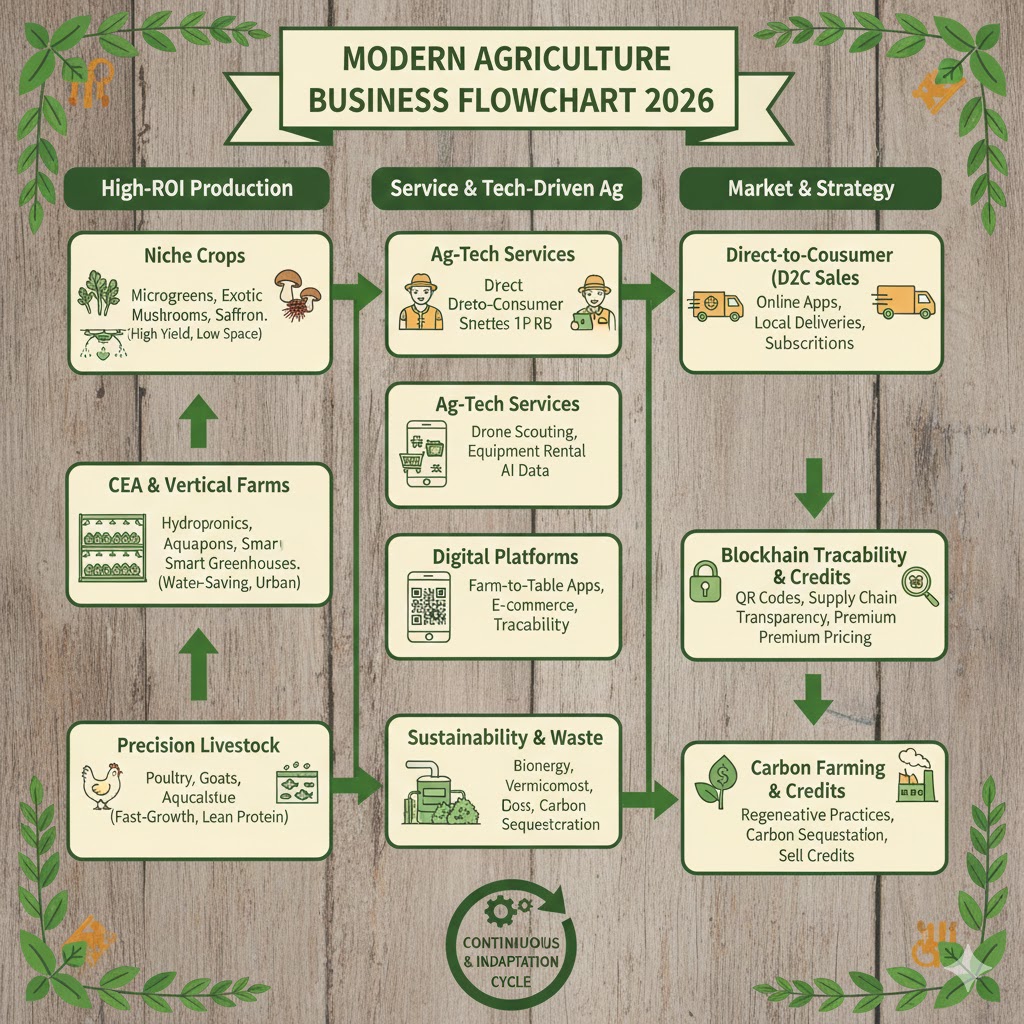
High-ROI Niche Crop Production
The era of relying solely on bulk commodities like corn or soy is fading for small-to-medium landholders. In 2026, the highest return on investment (ROI) comes from crops with rapid turnover or high industrial value.
-
Microgreens & Superfoods: With 20–25 harvests per year, microgreens can generate up to $15 per square foot monthly. Demand is driven by the wellness sector and high-end culinary markets.
-
Medicinal & Gourmet Mushrooms: Utilizing agricultural waste (straw/sawdust) as a substrate, varieties like Lion’s Mane and Oyster mushrooms are booming. The global functional mushroom market is projected to exceed $13 billion by the end of this year.
-
Indoor Aeroponic Saffron: Traditionally restricted by climate, saffron is now being grown in controlled environments. Grade I Saffron commands $3,000–$5,000 per kilogram, and indoor systems allow for up to four harvests annually.
Controlled Environment Agriculture (CEA) & Vertical Farming
As arable land shrinks and climate volatility increases, CEA has become a primary solution for urban food security.
-
Hydroponics & Aquaponics: These soilless methods use 90% less water than traditional farming. 2026 has seen a massive rise in “Container Farms”—modular units that can be placed in parking lots or warehouses to provide hyper-local produce to cities.
-
Smart Greenhouses: Modern greenhouses now use AI-driven climate control to optimize photosynthesis. In regions like the Middle East (UAE/Saudi Arabia), high-tech desert farming ventures have raised hundreds of millions in funding to achieve year-round production of berries and leafy greens.
Livestock & Protein Innovation
While traditional dairy faces some pricing pressure, other livestock sectors are in a strong positive cycle.
-
Precision Poultry Farming: Broilers remain the quickest path to revenue, delivering returns within 35–45 days. In 2026, the integration of IoT sensors to monitor bird health and automated feeding systems has significantly reduced labor costs.
-
Goat & Sheep Farming: Driven by a consumer shift toward leaner proteins and the rising demand for specialty cheeses, small-ruminant farming is highly scalable and requires less land than cattle.
-
Aquaculture (Fish Farming): Integrated systems, such as Biofloc technology, allow for high-density fish rearing with minimal water exchange, making it a sustainable and profitable venture for inland areas.
Ag-Tech & Service-Based Agribusiness
You don’t always need to own a farm to profit from agriculture. Service-based models are the “gold rush” of 2026.
-
Drone Scouting & Spraying: With labor shortages persisting, many farmers now outsource crop monitoring and pesticide application to specialized drone service providers.
-
Farm Equipment Rental Platforms: Known as the “Uber for Tractors,” these digital platforms allow small-scale farmers to rent advanced machinery (like autonomous harvesters) without the heavy upfront capital investment.
-
Ag-Waste Management & Bioenergy: Converting crop residues and livestock manure into biogas or vermicompost is not only eco-friendly but provides a secondary, steady revenue stream.
Strategic Trends for Success in 2026
To rank high in the current market, agribusinesses must align with these core pillars:
Sustainability and Carbon Farming
Governments in the EU, Canada, and the US are now offering significant financial incentives for “Carbon Farming.” By implementing regenerative practices—like cover cropping and no-till farming—businesses can earn Carbon Credits, which are sold to corporations looking to offset their emissions.
The “Farm-to-Table” Digital Supply Chain
Middlemen are being bypassed. In 2026, the most profitable farms use:
-
Direct-to-Consumer (D2C) Apps: Selling subscription produce boxes directly to urban households.
-
Blockchain Traceability: Providing QR codes on packaging that allow consumers to see exactly where and how their food was grown, justifying premium pricing.
6. Global Market Outlook & Demand
| Region | High-Demand Commodities (2026) | Key Growth Drivers |
| North America | Organic berries, hemp, indoor leafy greens | Health trends & automation |
| Asia-Pacific | Rice, dairy, tropical fruits | Rising middle-class consumption |
| Middle East | High-tech greenhouse vegetables | National food security initiatives |
| Europe | Medicinal herbs, organic grains | Strict environmental regulations |
Conclusion (Agriculture Business)
The top agriculture businesses in 2026 are those that leverage technology to solve scarcity. Whether it is saving water through hydroponics, replacing labor with drones, or meeting the health demands of urban consumers through organic microgreens, the opportunities for high ROI are abundant for those who think “tech-first.“
agriculture business ideas agriculture business in hindi precision agriculture sustainable farming practices agtech solutions vertical farming investment organic farming trends 2026 indoor farming technology agriculture technology