How to Start 3D Printing Filament Business Using Recycled Plastic
3D printing filament is the raw material used in 3D printers to create objects layer by layer. Common filaments include PLA, ABS, and PETG. These can be manufactured from recycled plastics such as bottles, containers, and industrial waste.
By converting plastic waste into usable filament, you can:
- Reduce environmental pollution
- Lower raw material costs
- Tap into a growing 3D printing market
- Build a sustainable brand

Market Opportunity in 2026
The global 3D printing industry is expanding rapidly, with applications in education, healthcare, construction, and manufacturing. Demand for filament is increasing every year, especially for eco-friendly alternatives.
Key market trends:
- Rising demand for recycled and biodegradable filaments
- Growth of small-scale 3D printing businesses
- Increased use in schools and startups
- Government support for recycling initiatives
This creates a strong opportunity for new entrepreneurs to enter the market.
Required Raw Materials
The main raw material is plastic waste, which can be sourced from:
- PET bottles
- ABS plastic scraps
- PLA waste from failed prints
- Industrial plastic leftovers
Other materials required:
- Color pigments
- Additives (for strength and flexibility)
- Packaging materials
Make sure to sort and clean plastic properly to maintain filament quality.
Machinery and Equipment
To start a filament manufacturing unit, you need the following machines:
- Plastic Shredder
Converts plastic waste into small flakes - Washing and Drying Unit
Removes impurities and moisture - Extruder Machine
Melts plastic and forms filament strands - Cooling System
Solidifies the filament - Spooling Machine
Winds filament onto reels - Diameter Control System
Ensures consistent filament thickness (1.75mm or 2.85mm)
Estimated machine cost (small setup):
$5,000 – $25,000 depending on automation level
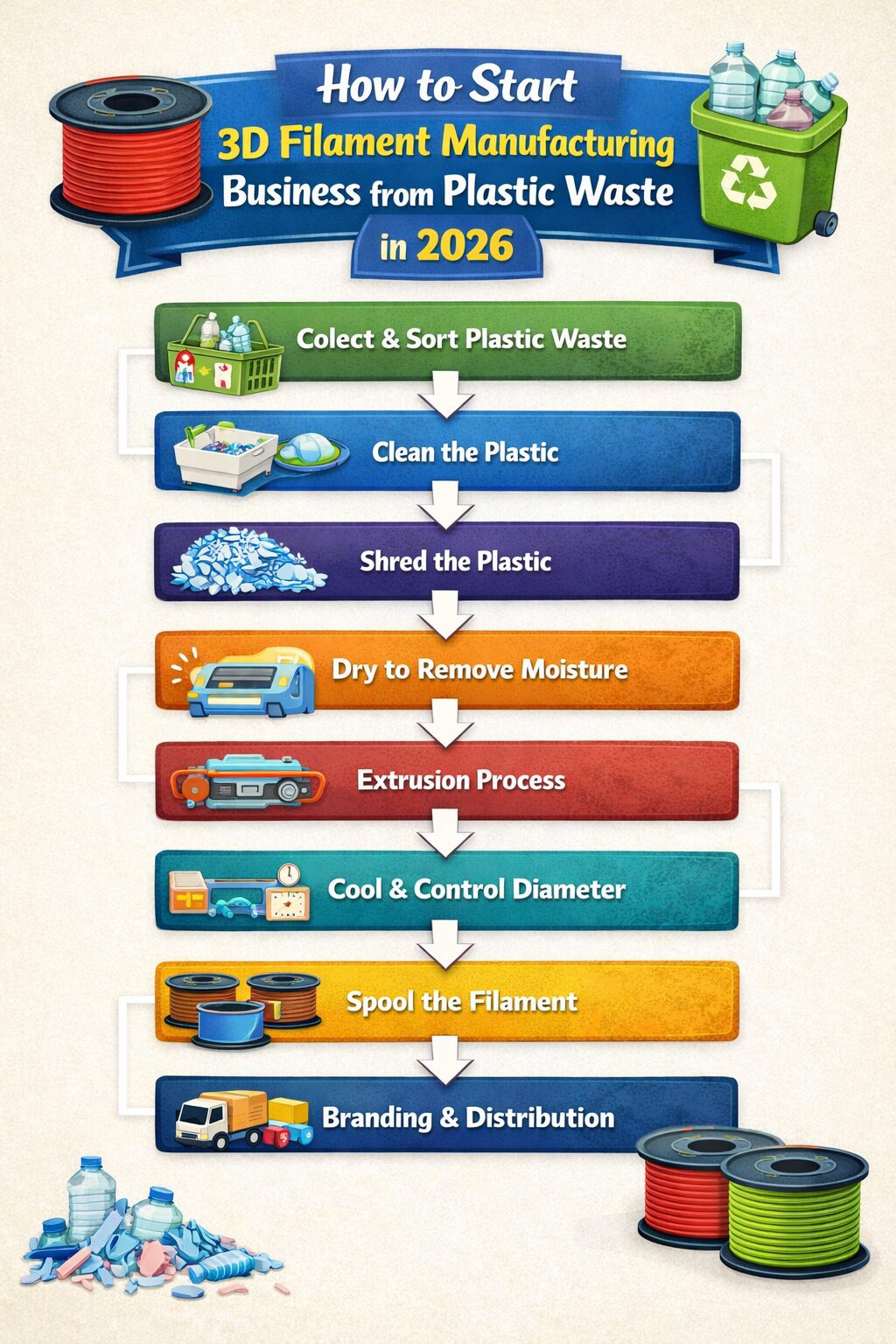
Step-by-Step Manufacturing Process
1. Collection and Sorting
Gather plastic waste and separate by type (PLA, ABS, PET).
2. Cleaning
Wash plastic thoroughly to remove dirt, labels, and contaminants.
3. Shredding
Use a shredder to convert plastic into small flakes.
4. Drying
Dry the flakes to eliminate moisture, which can affect filament quality.
5. Extrusion
Feed flakes into the extruder. The plastic melts and is pushed through a nozzle to form filament.
6. Cooling
The filament passes through a water bath or air cooling system.
7. Diameter Monitoring
Use sensors to maintain uniform thickness.
8. Spooling
Wind the filament onto spools for packaging.
Investment and Cost Breakdown
Starting a small-scale filament business requires moderate investment:
| Expense Category | Estimated Cost |
|---|---|
| Machinery | $5,000 – $25,000 |
| Raw Materials | $1,000 – $3,000 |
| Workspace Setup | $2,000 – $5,000 |
| Electricity & Utilities | $500 – $1,500 |
| Labor | $1,000 – $2,000/month |
Total Initial Investment: $10,000 – $35,000
Profit Margin and Earnings
Recycled filament has high profit potential due to low raw material cost.
- Production cost per kg: $5 – $10
- Selling price per kg: $15 – $30
- Profit margin: 40% – 60%
Monthly profit depends on scale, but a small unit can earn:
$2,000 – $8,000 per month
Legal Requirements
To operate legally, you may need:
- Business registration
- Environmental clearance
- Waste handling permits
- GST/VAT registration (depending on country)
Ensure compliance with local recycling and manufacturing regulations.
Branding and Marketing Strategy
A strong brand is key to success in this industry.
Branding Tips:
- Focus on eco-friendly positioning
- Highlight recycled materials
- Use sustainable packaging
Marketing Channels:
- E-commerce platforms (Amazon, Etsy)
- Your own website
- Social media marketing
- Partnerships with 3D printing businesses
Offer samples to attract customers and build trust.
Challenges and Solutions
1. Inconsistent Quality
Solution: Use high-quality sorting and diameter control systems
2. Plastic Contamination
Solution: Implement strict cleaning and filtering processes
3. Market Competition
Solution: Focus on eco-friendly branding and competitive pricing
4. Technical Knowledge
Solution: Learn extrusion techniques or hire skilled operators.
Future Growth Opportunities
Once your business grows, you can expand into:
- Colored and specialty filaments
- Carbon fiber or flexible filaments
- Custom filament production
- Export business
- Selling filament machines
You can also collaborate with recycling companies and governments for large-scale projects.
Conclusion (3D filament manufacturing business)
Starting a 3D filament manufacturing business from plastic waste in 2026 is a smart and sustainable opportunity. With growing demand for 3D printing materials and increasing environmental awareness, this business offers both profitability and social impact.
plastic waste recycling business 2026 recycled filament making machine how to make 3D printer filament at home 3D printing filament business plan waste plastic to filament process eco friendly filament manufacturing filament production cost and profit small scale filament manufacturing business 3D printer filament startup guide