Pasta Making or Manufacturing Business Plan
Introduction to Pasta Manufacturing Business
Pasta Manufacturing Business Plan involves manufacturing different types of pasta such as spaghetti, macaroni, penne, fusilli, and vermicelli using wheat flour or semolina. With increasing urbanization and fast-paced lifestyles, consumers prefer quick meal solutions, making pasta a high-demand product.
This business can cater to:
- Retail markets (supermarkets, grocery stores)
- Food service industry (restaurants, hotels)
- Online food delivery platforms
Market Research and Demand Analysis
Before starting, conducting market research is crucial. The global pasta market is growing steadily due to:
- Rising demand for ready-to-eat and ready-to-cook foods
- Increased popularity of Italian cuisine worldwide
- Growing demand for healthy pasta alternatives like whole wheat, gluten-free, and organic pasta
High CPC Keywords to Target:
- Pasta manufacturing business plan
- Pasta production cost and profit
- Small scale pasta making machine price
- Pasta factory setup guide
- Food processing business ideas 2026
Focus on identifying your target audience, competitors, and pricing strategies to position your brand effectively.
Types of Pasta Products to Manufacture
Diversifying your product line can significantly increase revenue. You can produce:
- Dry pasta (long shelf life)
- Fresh pasta (premium segment)
- Instant pasta (fast-growing market)
- Specialty pasta (gluten-free, organic, high-protein)
Offering multiple varieties helps in capturing a wider market and boosting profit margins.
Machinery and Equipment Required
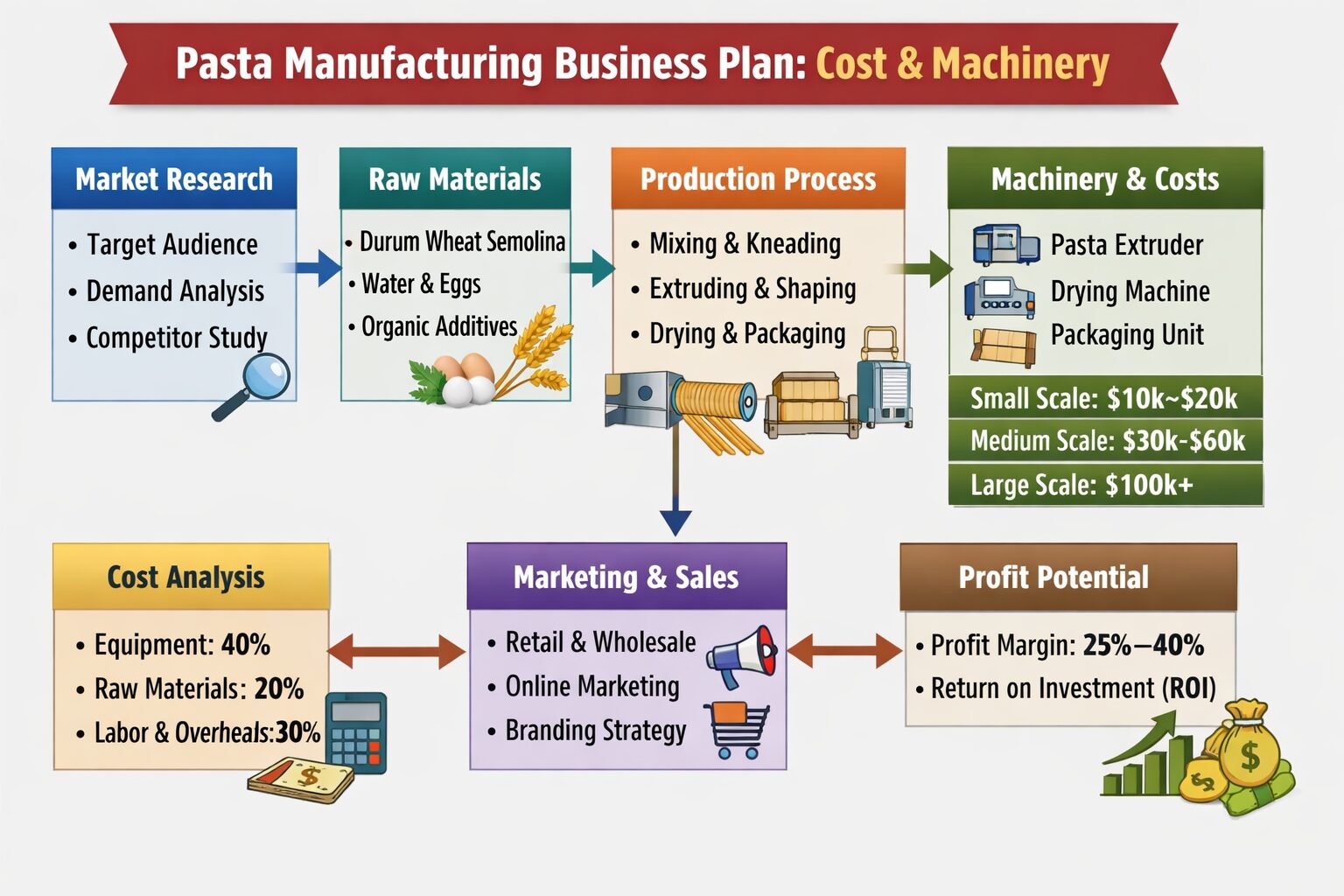
To start a pasta manufacturing unit, you need specific machinery:
- Flour mixer machine
- Pasta extruder machine
- Dryer machine
- Packaging machine
- Weighing and sealing equipment
Estimated Investment:
- Small-scale setup: $5,000 – $15,000
- Medium-scale factory: $20,000 – $50,000
- Large-scale industrial plant: $100,000+
Investing in automatic pasta making machines increases production efficiency and reduces labor costs.
Raw Materials Required
The quality of raw materials directly impacts your product quality. Key ingredients include:
- Durum wheat semolina
- Water
- Eggs (for certain varieties)
- Additives (optional for flavored pasta)
For premium products, consider using organic ingredients to target health-conscious consumers.
Production Process of Pasta
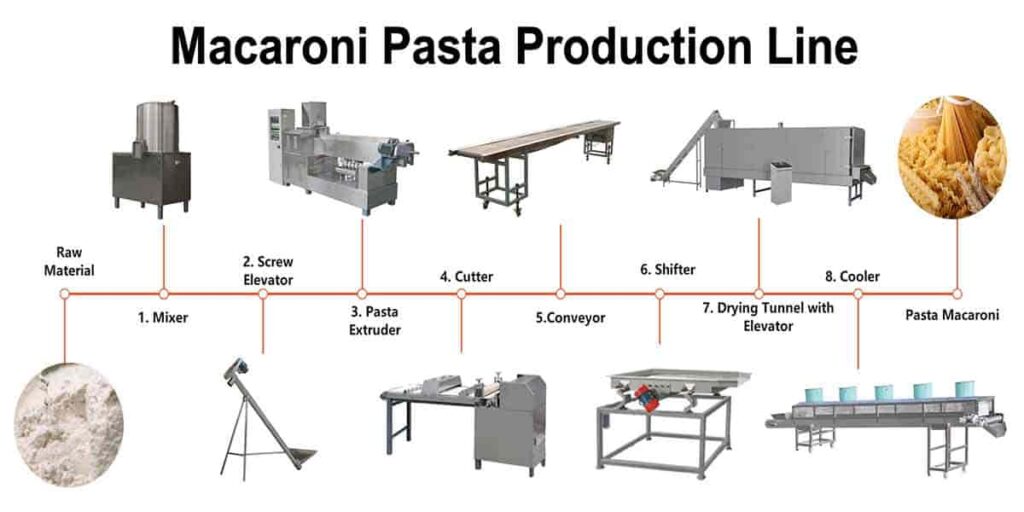
The pasta manufacturing process involves several steps:
- Mixing semolina with water to form dough
- Kneading and shaping using extruders
- Cutting into desired shapes
- Drying to reduce moisture content
- Cooling and packaging
Maintaining hygiene and quality standards is essential to meet food safety regulations.
Licenses and Legal Requirements
To legally operate a food manufacturing business, you need:
- Food safety license (FSSAI or equivalent authority)
- Business registration (LLC or sole proprietorship)
- GST/VAT registration
- Trademark registration for brand protection
Compliance with food safety standards ensures customer trust and long-term success.
Cost and Investment Breakdown
Initial Costs:
- Machinery: 40%
- Raw materials: 20%
- Rent and utilities: 15%
- Labor: 15%
- Marketing: 10%
Monthly Expenses:
- Raw materials supply
- Employee salaries
- Electricity and maintenance
- Packaging and logistics
Profit Margin:
The average profit margin in the pasta business ranges from 20% to 40%, depending on scale and branding.
Marketing and Branding Strategy
Effective marketing is key to scaling your business. Focus on:
Online Marketing:
- SEO-optimized website targeting keywords like “best pasta brand near me”
- Social media marketing (Instagram, Facebook)
- Google Ads for high CPC food keywords
Offline Marketing:
- Supermarket distribution
- Free sampling campaigns
- Tie-ups with restaurants and cafes
Branding Tips:
- Attractive packaging design
- Highlight health benefits (high protein, gluten-free)
- Competitive pricing strategy
Distribution Channels
You can sell your pasta through:
- Retail stores and supermarkets
- Wholesale distributors
- E-commerce platforms (Amazon, Shopify)
- Direct-to-consumer website
Building a strong distribution network ensures consistent revenue flow.
Challenges in Pasta Manufacturing Business
Like any business, this industry has challenges:
- High competition from established brands
- Fluctuating raw material prices
- Maintaining consistent quality
- Logistics and distribution costs
However, strong branding and innovation can help overcome these challenges.
Growth Opportunities in 2026
The pasta industry is evolving with new trends:
- Demand for healthy and organic pasta
- Expansion of ready-to-eat meals market
- Growth of private label pasta manufacturing
- Export opportunities to international markets
Investing in innovation and quality can help you scale globally.
Conclusion
Starting a pasta manufacturing business in 2026 is a smart investment with high growth potential. With proper planning, quality production, and strong marketing strategies, you can build a successful and profitable brand.
Pasta Making or manufacturing Business plan in Hindi Pasta Making Business plan in Hindi Pasta manufacturing Business plan in Hindi Pasta Making or manufacturing PROCESS in Hindi Pasta Making Business IN HINDI Pasta production cost and profit Small scale pasta making machine price Pasta factory setup guide Food processing business ideas 2026 How to start pasta business Pasta making machine cost Pasta business profit margin Packaged food business plan Automatic pasta machine for business