Burger Singh Franchise: Step-by-Step Cost, Investment, Profit and How to Start
Burger Singh is one of India’s popular quick service restaurant brands known for Indian-style burgers, fries, wraps, and combo meals. Apply Burger Singh Franchise Many people want to open a Burger Singh franchise because the brand is already recognized, the menu is youth-friendly, and the fast-food business has strong demand in busy urban locations. If you are planning to start this business, you should understand the full process, total investment, expected profit, and the factors that affect success.
What Is a Burger Singh Franchise?
A Burger Singh franchise is a business model where you open an outlet under the Burger Singh brand name and follow the company’s operating system, menu standards, branding, and quality rules. In return, you get the benefit of an established brand, menu support, staff training, store setup guidance, and business systems.
This is usually more attractive than starting an unknown burger brand from scratch because customers already know the name, and marketing becomes easier.

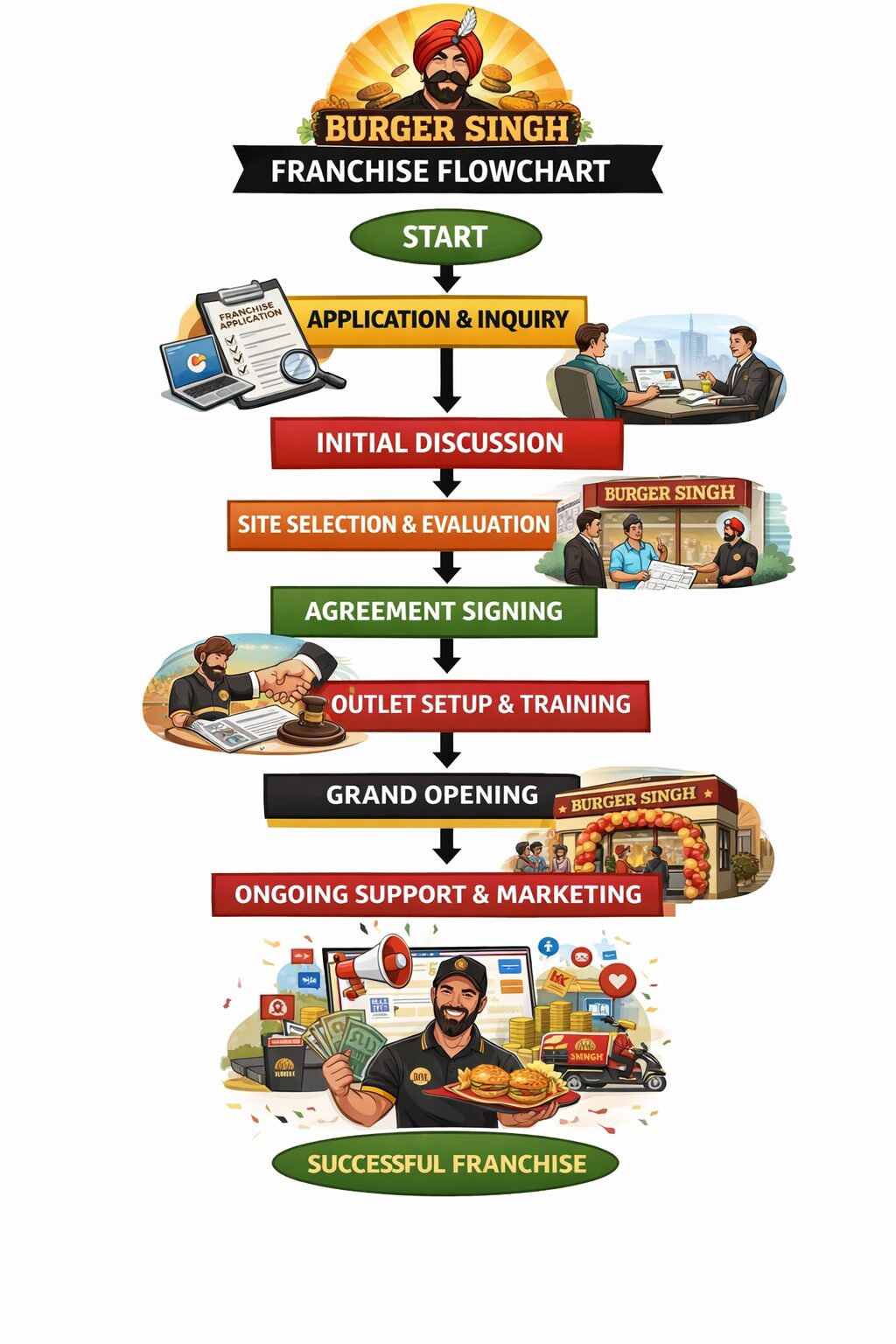
Step-by-Step Process to Start a Burger Singh Franchise
1. Research the Brand and Business Model
Before investing, first understand how the brand works. Check whether they offer different outlet formats such as:
- dine-in store
- takeaway outlet
- food court kiosk
- cloud kitchen
- mall format
Each format has a different setup cost and earning potential. A kiosk or cloud kitchen usually needs less investment than a full dine-in store.
2. Contact the Company
The next step is to contact Burger Singh through its official website or franchise inquiry channel. You usually need to share:
- your name and city
- business background
- preferred outlet format
- investment capacity
- proposed location details
After that, the franchise team may contact you and explain the business model.
3. Discuss Location and Market Feasibility
Location is one of the biggest success factors in any food business. A Burger Singh outlet generally performs better in:
- high street markets
- malls
- college zones
- office areas
- residential hubs with strong delivery demand
- commercial centers
The company may review your location and check footfall, visibility, rental viability, local competition, and delivery potential.
4. Review Franchise Terms
If the location looks suitable, the next step is reviewing the franchise offer. This may include:
- franchise fee
- security deposit
- brand usage rights
- store size requirement
- agreement period
- royalty or revenue share
- marketing contribution
- training and support
Read all terms carefully before signing. Make sure you understand who bears the cost of interiors, kitchen equipment, licenses, and local marketing.
5. Calculate Total Investment
Do not look only at the franchise fee. Your total investment usually includes:
- franchise fee
- store security deposit
- shop interior and civil work
- kitchen equipment
- billing system
- branding and signage
- licenses and registrations
- initial raw material stock
- staff hiring and training
- working capital for the first few months
This is where many first-time investors make mistakes. They budget for setup but forget operating expenses.
6. Sign the Agreement
Once both sides agree, you sign the franchise agreement. This is the legal stage, so review the terms properly. Understand:
- exclusivity area
- exit conditions
- royalty payment
- brand guidelines
- supply chain rules
- performance expectations
7. Outlet Setup and Training
After the agreement, the store setup starts. The company may help with:
- layout planning
- interior branding
- kitchen design
- equipment selection
- menu implementation
- staff training
- POS system setup
The goal is to make the store ready for launch according to brand standards.
8. Launch and Promote the Outlet
Once setup is complete, the store is launched. Opening promotions may include:
- discount combos
- buy one get one offers
- online delivery app listing
- social media promotion
- local leaflet marketing
- influencer tie-ups
A strong opening can help create initial customer awareness and repeat orders.
Estimated Burger Singh Franchise Cost
The actual cost depends on city, store size, rent, and outlet format. Still, a practical estimate for India may look like this.
Small Kiosk or Cloud Kitchen
A smaller format may require around ₹15 lakh to ₹25 lakh.
This can include:
- basic franchise fee
- compact kitchen setup
- branding
- freezer, fryer, grill, storage
- initial stock
- basic staffing
- deposit and licenses
Standard Takeaway or Small Dine-In Outlet
A proper branded outlet may need around ₹25 lakh to ₹45 lakh.
This usually covers:
- franchise fee
- interior setup
- kitchen equipment
- customer counter
- signage
- staff area
- rent deposit
- POS and billing
- launch marketing
Premium or Large Store
A bigger location in a prime city area can go above ₹45 lakh to ₹60 lakh or more, especially if rent and interiors are expensive.
Profit and Return on Investment
Profit depends heavily on location, rent, sales volume, food cost control, and delivery performance. In a well-run QSR outlet, profit is usually not fixed every month. It changes with season, offers, and local demand.
A Burger Singh outlet may earn through:
- burgers
- fries and sides
- beverages
- combos
- online delivery orders
- party or bulk orders
Approximate Profit View
For a good-performing outlet:
- food margins can be healthy on burgers, fries, and beverages
- delivery orders can increase total sales
- combo meals often improve average bill value
A store with strong daily sales and controlled expenses may see a net profit margin of around 10% to 18%, though this varies a lot. Some stores may do better, while weak locations may struggle.
ROI Period
A successful outlet may recover investment in around 2 to 4 years, depending on:
- total setup cost
- monthly rent
- local demand
- delivery sales
- operating efficiency
- competition nearby
If rent is too high and sales are average, recovery can take longer.
Important Expenses to Track
To run the outlet profitably, monitor these cost heads carefully:
- monthly rent
- raw material cost
- salaries
- electricity
- aggregator commission from food delivery apps
- packaging cost
- local marketing
- maintenance
- royalty or brand fees, if applicable
Even a high-sales outlet can struggle if these costs are not controlled.
Who Should Invest in This Franchise?
This business may suit you if:
- you want to enter the food business with a known brand
- you can manage staff and daily operations
- you understand location importance
- you can invest beyond just the basic fee
- you are ready for hands-on involvement
It may not be ideal if you expect passive income without store supervision.
Final Thoughts (Apply Burger Singh Franchise)
Burger Singh franchise can be a promising business opportunity for investors who want to enter India’s fast-food market with an established burger brand. The biggest advantages are brand recognition, a youthful menu, delivery demand, and the structured franchise model. However, success is not guaranteed just because the brand is popular. Your location, rent level, store management, customer service, and cost control will decide the real profit.
How to Buy Burger Singh Franchise Online How to Buy Burger Singh Franchise Online in hindi How to apply Burger Singh Franchise Online Burger Singh Franchise Online apply Burger Singh Franchise kaise buy kare How to Apply Burger Singh Franchise Burger Singh franchise Burger Singh franchise cost Burger Singh franchise cost in India Burger Singh investment Burger Singh profit margin How to open Burger Singh franchise Burger Singh outlet cost Burger Singh franchise apply Burger Singh business opportunity Burger Singh franchise requirements