???? Stationery Shop Business Plan
1. Executive Summary
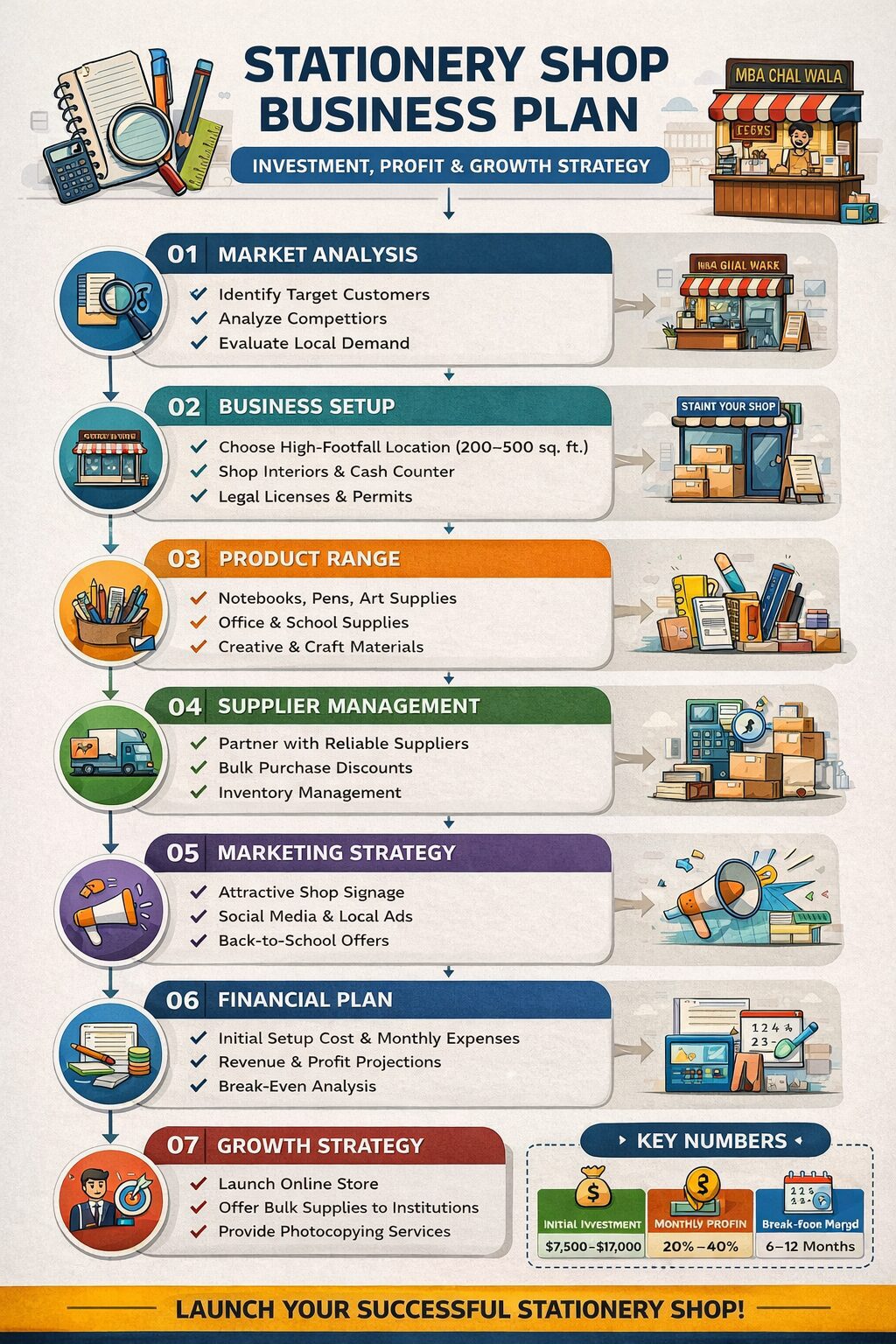
Stationery Shop Business Plan aims to provide high-quality school, office, and creative supplies to students, professionals, and local businesses. With increasing demand for educational and office materials, this business will focus on affordability, product variety, and excellent customer service.
The shop will offer products such as notebooks, pens, files, art supplies, printing materials, and office essentials. The goal is to establish a reliable and profitable retail outlet within the first year and expand into online sales in the future.
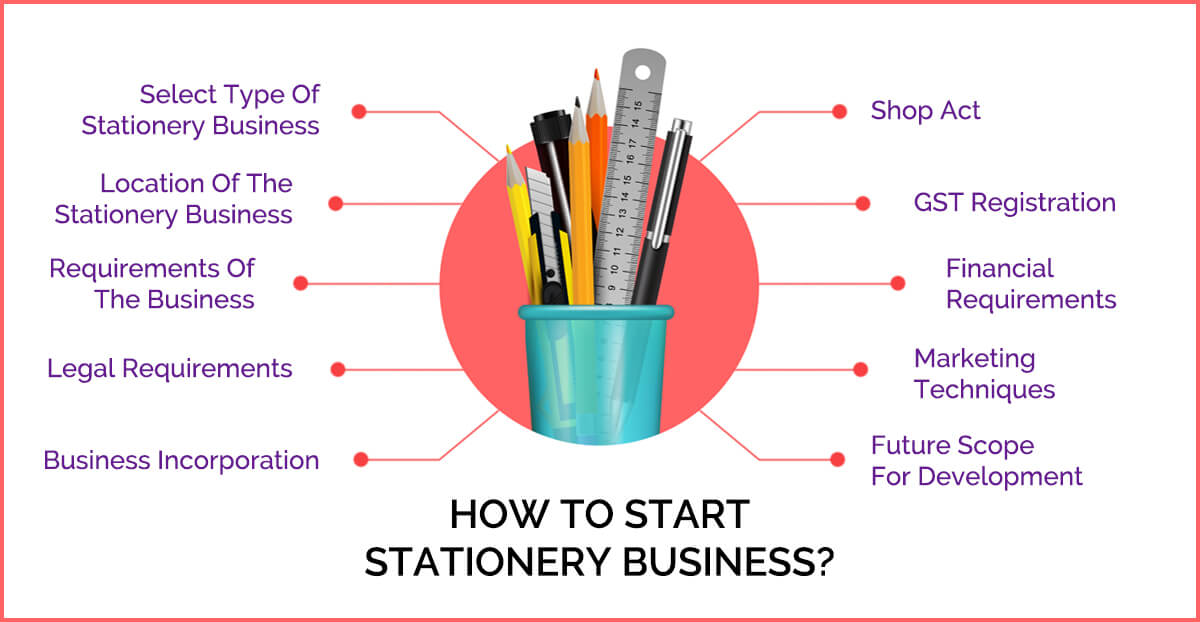
2. Business Objectives
- To establish a fully operational stationery shop within 3 months
- To achieve break-even within 6–12 months
- To build strong relationships with schools and offices
- To generate steady monthly revenue and long-term growth
- To expand into e-commerce and bulk supply services
3. Market Analysis
Target Market
The primary customers include:
- School and college students
- Teachers and educational institutions
- Office workers and businesses
- Artists and hobbyists
Market Demand
The demand for stationery products remains consistent due to ongoing educational and business activities. Back-to-school seasons and office requirements create regular sales opportunities.
Competition
Competitors include local stationery shops, supermarkets, and online platforms. However, a well-located shop with good pricing and product variety can compete effectively.
4. Location and Setup
Choosing the right location is crucial for success. Ideal locations include:
- Near schools and colleges
- Residential areas
- Office complexes
Shop Requirements
- Space: 200–500 sq. ft.
- Attractive display shelves
- Billing counter and storage area
A well-organized and visually appealing shop layout improves customer experience and increases sales.
5. Product Range
The shop will offer a wide variety of products, including:
Basic Stationery
- Notebooks, diaries
- Pens, pencils, markers
- Erasers, sharpeners
Office Supplies
- Files, folders, envelopes
- Printer paper, staplers
- Calculators
School Supplies
- School bags
- Geometry boxes
- Chart papers
Creative & Art Supplies
- Sketchbooks
- Paints, brushes
- Craft materials
Offering diverse products ensures higher customer retention and repeat purchases.
6. Supplier and Inventory Management
Reliable suppliers are key to maintaining product quality and availability. The business will:
- Partner with wholesalers and distributors
- Maintain adequate stock levels
- Track fast-moving items
- Use simple inventory management software
Bulk purchasing can reduce costs and increase profit margins.
7. Marketing Strategy
Offline Marketing
- Attractive shop signage
- Flyers and pamphlets
- Tie-ups with schools and offices
Online Marketing
- Social media promotion (Facebook, Instagram)
- Google Business listing
- WhatsApp order service
Promotional Offers
- Back-to-school discounts
- Combo deals
- Loyalty programs
Effective marketing helps attract new customers and retain existing ones.
8. Operations Plan
Daily operations will include:
- Managing inventory
- Assisting customers
- Handling billing and payments
- Maintaining cleanliness and organization
Staffing
- 1–2 staff members initially
- Owner-managed operations for cost control
Efficient operations ensure smooth business functioning and customer satisfaction.
9. Financial Plan
Initial Investment (Estimated)
- Shop rent & deposit: $2,000–$5,000
- Interior setup: $1,500–$3,000
- Initial inventory: $3,000–$7,000
- Equipment (POS, shelves): $1,000–$2,000
???? Total Investment: $7,500–$17,000
Monthly Expenses
- Rent: $500–$1,500
- Salaries: $800–$1,500
- Utilities: $200–$400
- Restocking inventory: $2,000–$4,000
Revenue Estimate
- Daily sales: $150–$400
- Monthly revenue: $4,500–$12,000
Profit Margin
- Average margin: 20%–40%
???? Expected monthly profit: $1,000–$3,000
Break-even Period
- Estimated: 6–12 months
10. Risk Analysis
Potential Risks
- High competition
- Seasonal demand fluctuations
- Inventory mismanagement
Risk Mitigation
- Offer unique products
- Maintain competitive pricing
- Monitor stock regularly
Planning for risks helps ensure long-term sustainability.
11. Growth Strategy
To expand the business:
- Launch an online store
- Offer printing and photocopy services
- Supply stationery in bulk to institutions
- Introduce branded or customized products
Expansion increases revenue streams and business stability.
12. Conclusion
A stationery shop is a stable and profitable small business with consistent demand. With proper planning, a good location, and effective marketing, it can generate steady income and long-term growth. By focusing on customer satisfaction and product variety, the business can build a strong reputation and expand over time.
stationery shop business idea stationery shop business hindi Stationery Shop Business Plan Stationery shop business plan 2026 How to start stationery business Stationery shop startup cost Office supplies business plan School stationery business ideas Low investment retail business Stationery shop profit margin Small retail shop business plan Stationery store marketing strategy Stationery business profit analysis