
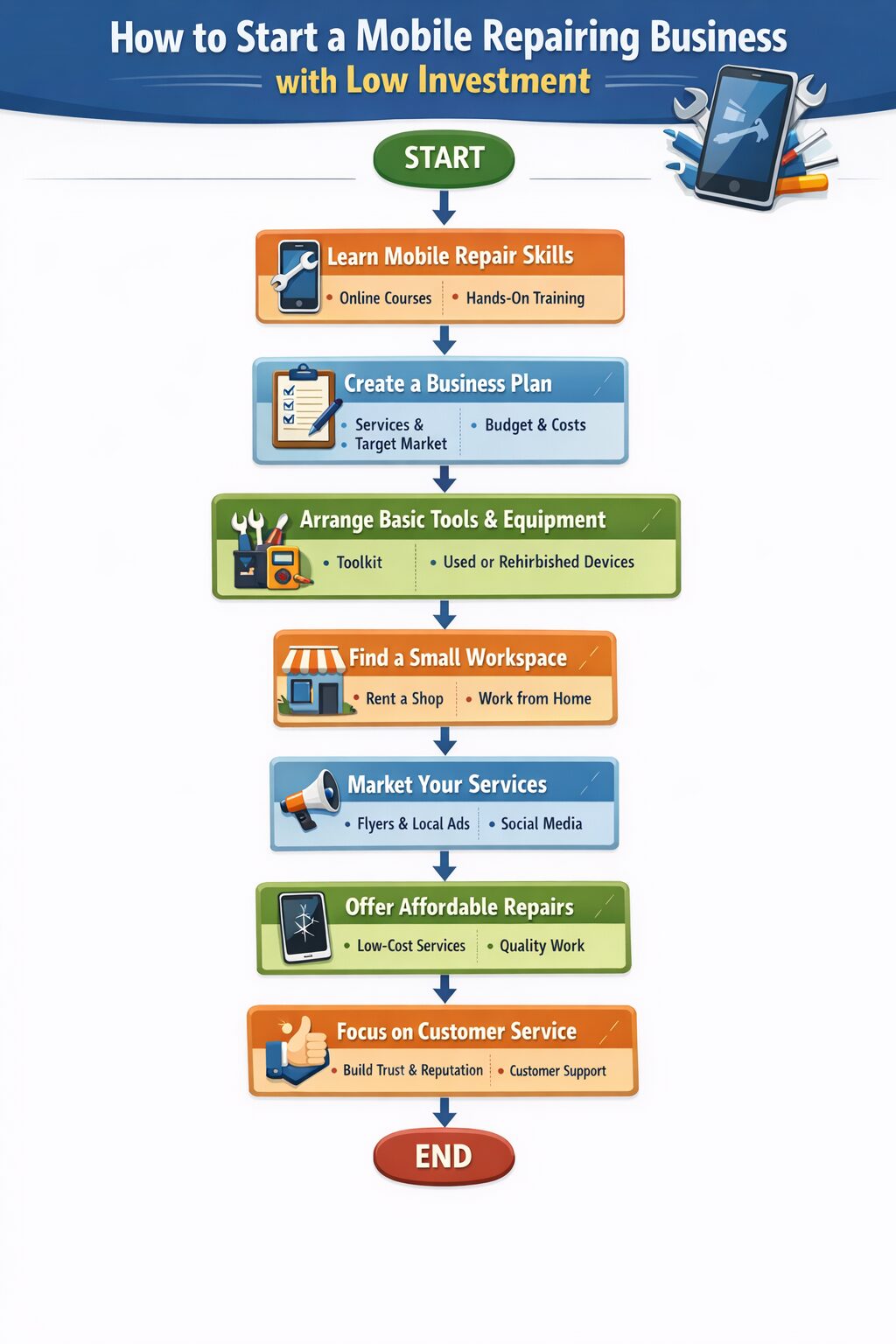
How to Start a Mobile Repairing Business: Complete Guide ????????
Starting a Mobile Repairing Business has become increasingly lucrative as smartphones have become essential devices in our daily lives. With the global mobile phone repair market projected to reach $4.14 billion by 2027, this industry presents excellent entrepreneurial opportunities. Here’s your comprehensive guide to launching a successful mobile repair business.
Market Research and Business Planning
Understanding the Mobile Repair Industry
The smartphone repair industry is experiencing unprecedented growth due to:
- High smartphone penetration rates globally
- Expensive device replacement costs driving repair demand
- Environmental consciousness promoting device longevity
- Regular wear and tear requiring professional services
Conduct thorough market analysis in your target area. Research competitors, pricing strategies, and customer demographics. Identify service gaps you can fill, such as same-day repairs, warranty services, or specialized device support.
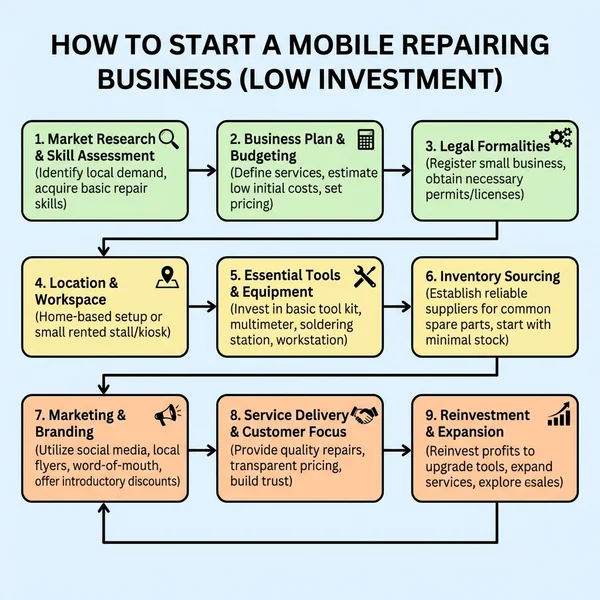
Creating Your Business Plan
Develop a comprehensive business plan including:
- Executive summary and mission statement
- Market analysis and target customer identification
- Service offerings and pricing structure
- Financial projections and funding requirements
- Marketing and growth strategies
Essential Skills and Training
Technical Skills Development
Master essential mobile repair techniques:
- Screen replacement and digitizer repairs
- Battery replacement procedures
- Charging port and headphone jack repairs
- Camera module replacements
- Water damage restoration techniques
- Software troubleshooting and firmware updates
Professional Certification Programs
Invest in reputable training programs:
- Certified Mobile Technician courses
- Manufacturer-specific training (Apple, Samsung, Google)
- Micro-soldering workshops for advanced repairs
- Business management and customer service training.
Legal Requirements and Business Setup
Business Registration and Licensing
Complete necessary legal formalities:
- Business name registration and trademark protection
- Business license acquisition from local authorities
- Tax identification number and GST registration
- Professional liability insurance for equipment protection
- Workers’ compensation insurance if hiring employees
Workspace and Location Selection
Choose an optimal business location considering:
- High foot traffic areas near shopping centers
- Accessibility and parking availability
- Competitive landscape analysis
- Rental costs versus revenue potential
- Security measures for valuable inventory
Equipment and Tools Investment
Essential Repair Tools
Invest in quality equipment:
- Precision screwdriver sets with various bit types
- Heat guns and hair dryers for adhesive removal
- Suction cups and prying tools for screen removal
- Multimeters for electrical diagnostics
- Ultrasonic cleaners for component cleaning
- Microscopes for detailed component inspection
Advanced Equipment
For comprehensive services, consider:
- Hot air rework stations for component replacement
- Ultrasonic welders for plastic repairs
- 3D printers for custom parts manufacturing
- Professional cleaning stations with proper ventilation
Inventory Management and Supplier Relations
Parts and Components Sourcing
Establish relationships with reliable suppliers:
- OEM parts suppliers for quality replacements
- Aftermarket parts vendors for cost-effective options
- Local distributors for quick inventory replenishment
- International suppliers for specialized components
Inventory Optimization
Maintain optimal stock levels:
- Popular device parts (iPhone, Samsung, OnePlus)
- Common replacement components (screens, batteries, chargers)
- Seasonal demand planning for new device releases
- Quality control measures for all incoming inventory
Marketing and Customer Acquisition
Digital Marketing Strategies
Implement effective online marketing:
- Professional website with service descriptions and pricing
- Search Engine Optimization (SEO) for local search visibility
- Google My Business optimization for local customers
- Social media presence on Facebook, Instagram, and YouTube
- Customer review management on Google and Yelp
Traditional Marketing Approaches
Don’t neglect offline marketing:
- Local newspaper advertisements and radio sponsorships
- Flyer distribution in residential areas
- Partnership programs with electronics retailers
- Referral incentive programs for existing customers
Financial Management and Pricing Strategy
Startup Investment Requirements
Budget for initial expenses:
- Equipment and tools: $5,000-$15,000
- Initial inventory: $3,000-$8,000
- Shop setup and renovation: $2,000-$10,000
- Marketing and branding: $1,000-$3,000
- Operating expenses for first 6 months
Competitive Pricing Models
Develop strategic pricing:
- Market research-based pricing analysis
- Cost-plus pricing for profitability assurance
- Service bundling for increased average transaction value
- Warranty programs for customer confidence
Quality Assurance and Customer Service
Service Quality Standards
Establish excellence protocols:
- Standardized repair procedures and quality checklists
- Component testing before and after repairs
- Warranty policies for all services provided
- Customer satisfaction surveys and feedback systems
Building Customer Loyalty
Focus on retention strategies:
- Transparent pricing without hidden charges
- Quick turnaround times for urgent repairs
- Regular maintenance reminders and service follow-ups
- Loyalty programs and repeat customer discounts
Growth and Expansion Opportunities
Service Diversification
Expand your offerings:
- Tablet and laptop repairs for broader market reach
- Accessories sales (cases, chargers, screen protectors)
- Corporate contracts for business device maintenance
- Mobile device buyback programs for additional revenue
Scaling Your Business
Plan for growth:
- Additional location establishment
- Franchise opportunities exploration
- Online repair services with mail-in options
- Training programs for other entrepreneurs
Starting a mobile repairing business requires careful planning, technical expertise, and strong customer focus. With proper preparation and execution, this venture can provide substantial returns while serving an essential market need. Success depends on maintaining quality standards, building customer trust, and adapting to evolving technology trends.
Mobile repairing business startup Low investment phone repair shop Smartphone repair training for beginners Mobile repair tools list budget Home-based mobile repair business Phone screen replacement cost-effective Mobile repairing marketing ideas Profitable phone repair services Mobile repair supplier wholesale parts How to price phone repair services







[…] mobile phones repaired in authorized stores, due to two reasons. Firstly, they have this fear in mind that the warranty would be […]