Walmart: History, Founder, Journey, How to Buy a Franchise, How to Apply, Profit & Costs
Walmart How to Buy a Franchise is one of the world’s largest retail corporations, known for its low‑price strategy and massive global footprint. Founded in 1962, Walmart’s growth from a single discount store to a multibillion‑dollar retailer transformed modern retailing, supply chains, and consumer expectations. This article covers Walmart’s history and founder, the company’s journey, how (and whether) you can buy or open a Walmart franchise or licensed store, the application process, and an overview of profit and costs for potential investors or entrepreneurs.
History and Founder
- Founder: Sam Walton opened the first Walmart on July 2, 1962, in Rogers, Arkansas. Walton’s focus on low prices, efficient logistics, and strong vendor relationships drove rapid expansion.
- Growth: Walmart went public in 1970. By the 1980s and 1990s it expanded nationwide, introduced Supercenters (combining groceries and general merchandise), and invested heavily in distribution and IT systems.
- Global expansion: Walmart entered international markets starting in the 1990s through acquisitions and joint ventures. Some international operations were later divested or restructured to focus on profitable markets.
- Innovation: Walmart pioneered cross‑docking logistics, centralized buying, and extensive use of data analytics to optimize inventory and pricing. Its Sam’s Club wholesale division and e‑commerce platforms are key business units.
Walmart’s Business Model and Journey
- Everyday Low Prices (EDLP): Core strategy to attract high volumes and drive market share.
- Scale and bargaining power: Large purchasing volumes allow Walmart to negotiate lower supplier prices, passing savings to customers.
- Supply chain efficiency: Advanced distribution centers, cross‑docking, and logistics reduce inventory holding costs.
- Omnichannel approach: Brick‑and‑mortar Supercenters, neighborhood markets, online shopping, curbside pickup, and delivery services.
- Private labels: Brand portfolio (e.g., Great Value) improves margins and customer loyalty.
Can You Buy a Walmart Franchise?
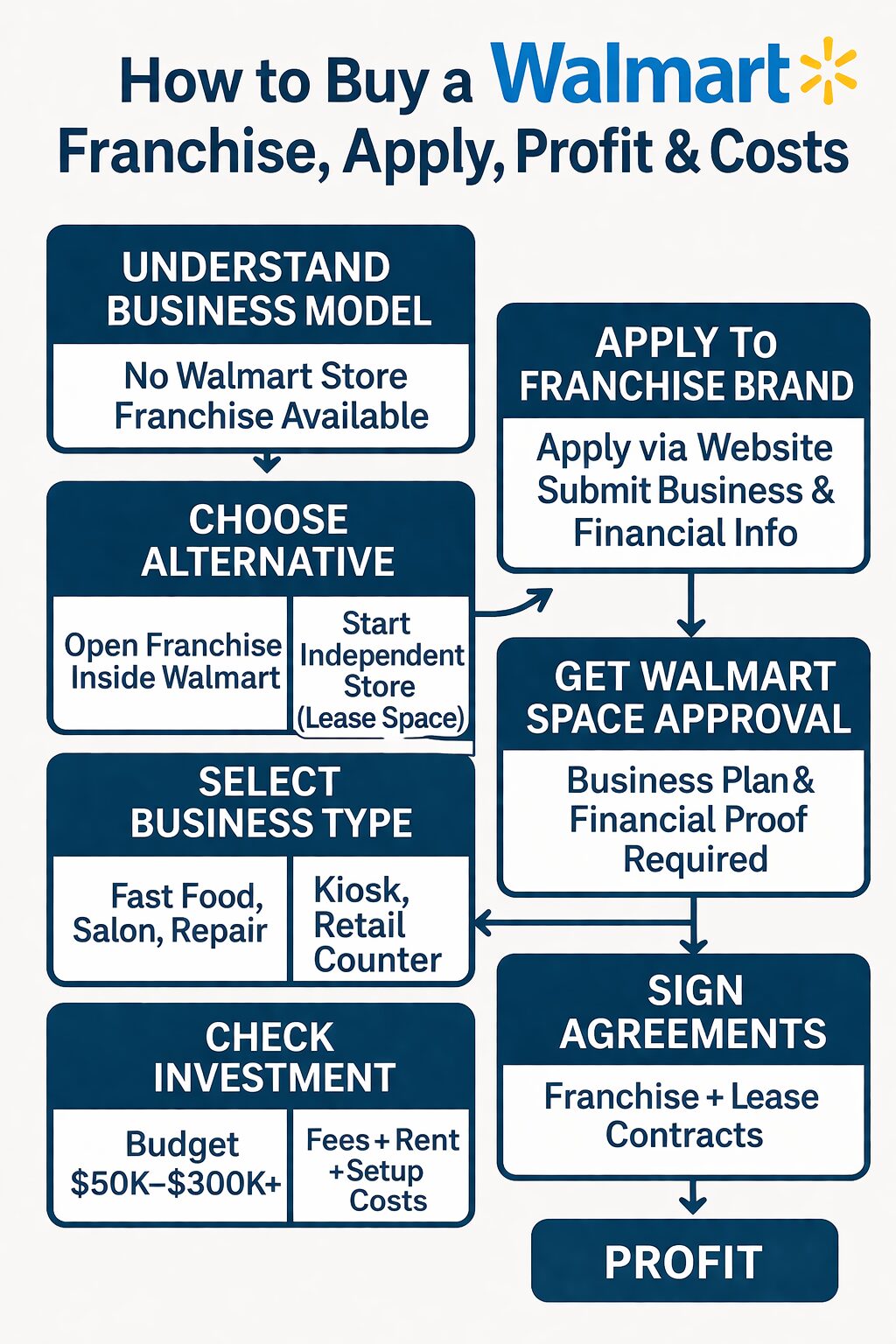
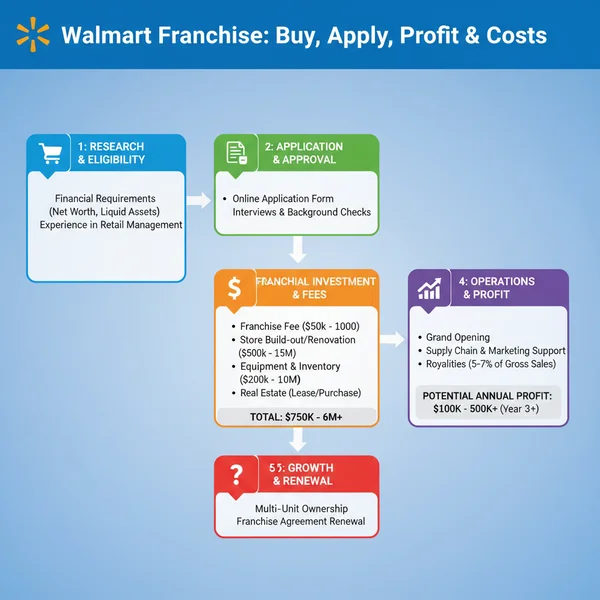
- Short answer: No — Walmart does not offer traditional franchising to independent owners for its core Walmart stores. Walmart stores are company‑owned or operated through specific corporate agreements.
- Exceptions & alternatives:
- Sam’s Club Memberships / Licensed operations: Walmart operates Sam’s Club warehouses; these are not franchise opportunities for the public. In some countries, Walmart has used joint ventures or local partnerships, but these are corporate decisions, not open franchises.
- Supplier or distributorship opportunities: Businesses can become Walmart suppliers or service providers — not franchisees — through vendor onboarding. This is a path to partner with Walmart rather than own stores.
- Third‑party retail under Walmart Marketplace: Small businesses can sell products on Walmart.com as marketplace sellers. This requires registration and meeting seller standards but is not store ownership.
How to Apply to Work with Walmart or Sell on Walmart.com
- Work at Walmart (careers):
- Visit careers.walmart.com to search jobs, create a profile, and apply. Roles range from store associates to corporate and supply‑chain positions.
- Become a vendor/supplier:
- Go to corporate.walmart.com/suppliers or supplier.walmart.com to learn onboarding, standards, and submission portals. Walmart requires financials, compliance checks, EDI capability, and product details.
- Sell on Walmart Marketplace:
- Apply at marketplace.walmart.com/sell; provide business information, tax IDs, product catalog, pricing, and logistics plans. Approval depends on category, quality, and fulfillment capabilities.
- Real estate/contract opportunities:
- Walmart issues requests for proposals (RFPs) for construction, services, and real estate leases; monitor Walmart procurement portals for bids.
How to Open an Independent Retail Store Inspired by Walmart (If You Can’t Franchise)
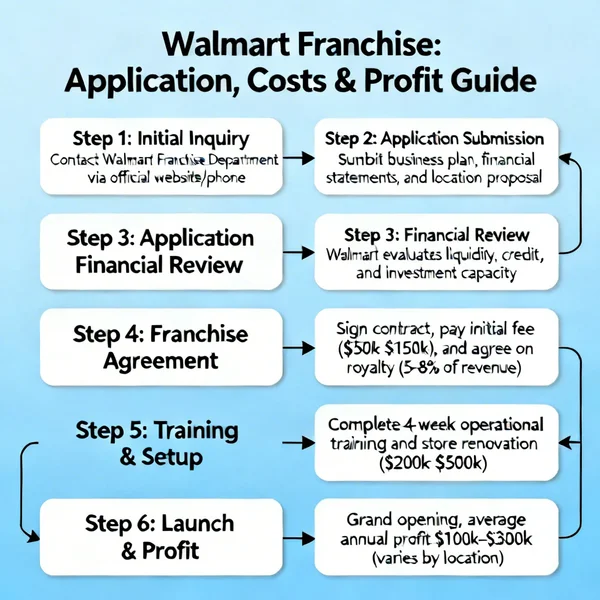
- Market research: Identify local demand, competition, and optimal location.
- Business plan: Include startup costs, operating expenses, inventory strategy, pricing model (EDLP vs promotional), and revenue projections.
- Supply chain & suppliers: Build relationships with wholesalers, distributors, or direct manufacturers. Consider private label options to boost margins.
- Operations: Invest in point‑of‑sale systems, inventory management, and staffing. Efficient logistics and inventory turnover are critical.
- Marketing & pricing: Compete on value, convenience, and service — not just price initially.
Walmart Profit & Cost Overview (High‑level)
- Revenue: Walmart’s revenue runs into hundreds of billions globally — driven by retail sales, grocery, membership clubs (Sam’s Club), and e‑commerce. (Use latest public filings for current figures.)
- Profit margins: Retail is low‑margin; Walmart’s operating margin typically ranges in the low single digits to mid single digits, depending on region and business mix. Net profit margin is also modest due to scale and reinvestment.
- Key cost centers: Inventory procurement, wages and benefits, store operations (rent, utilities), supply chain and transportation, IT and e‑commerce investments, and depreciation.
- Break‑even for an independent store: Highly variable — depends on size, location, rent, labor costs, and sales volume. Grocery and general merchandise stores often need strong daily foot traffic and high turnover to be profitable.
Practical Tips & Next Steps (Walmart History in Hindi)
- If you want to partner with Walmart, explore supplier or marketplace seller routes rather than expecting a franchise.
- For entrepreneurs wanting to replicate Walmart’s model, focus on efficient logistics, competitive supplier contracts, and a strong value proposition.
- Use Walmart’s investor relations and annual reports for precise financial numbers and margins if you need exact figures.
- If your goal is to invest in retail ownership, consider alternatives: local franchise chains that do offer franchises, or wholesale/retail models like discount stores with scalable operations.
Walmart History in Hindi Walmart Founder in Hindi Walmart franchise cost How to buy a Walmart franchise Walmart profit margins Walmart history founder Walmart business model Walmart ownership opportunities Walmart application process Walmart startup costs How to open a Walmart store Walmart revenue and expenses