Ozempic (Semaglutide): Benefits, Side Effects, and How It Helps with Weight Loss
Ozempic for Weight Loss is the brand name for semaglutide when used as a once-weekly injectable medication approved primarily for type 2 diabetes. Semaglutide belongs to a class called GLP-1 receptor agonists (glucagon-like peptide-1). It mimics the action of the body’s incretin hormone GLP-1 to increase insulin release when glucose is high, suppress inappropriate glucagon secretion, slow gastric emptying, and reduce appetite. Although Ozempic is approved for blood sugar control, semaglutide (under different brand names and doses) has also been studied and used for weight management because of its consistent effect on appetite and body weight.
How Ozempic Works (Mechanism of Action)
- Activates GLP-1 receptors in the pancreas and brain:
- In the pancreas: improves glucose-dependent insulin secretion and reduces glucagon secretion, lowering blood sugar.
- In the brain: reduces appetite and food intake by acting on appetite-regulating centers.
- Slows gastric emptying, causing earlier satiety after meals.
- Indirect metabolic benefits: weight loss often improves insulin sensitivity and other cardiometabolic markers.
Key Benefits of Ozempic
- Effective glycemic control
- Significant reductions in HbA1c (glycated hemoglobin) in clinical trials for people with type 2 diabetes.
- Weight reduction
- Many patients experience clinically meaningful weight loss; this effect contributed to the development of higher-dose semaglutide for obesity treatment (under different brand names/doses).
- Cardiometabolic improvements
- Trials have shown benefits for some cardiovascular outcomes in people with type 2 diabetes and established cardiovascular disease.
- Convenient dosing
- Once-weekly subcutaneous injection improves adherence compared with daily injections.
- Potential to reduce other medications
- Improved control may allow reducing doses or number of other diabetes medications under medical supervision.
Full Side-Effect Profile (Common to Serious)
Note: Side effects differ by individual and dose. Consult a healthcare provider for personalized advice.
Common and usually transient:
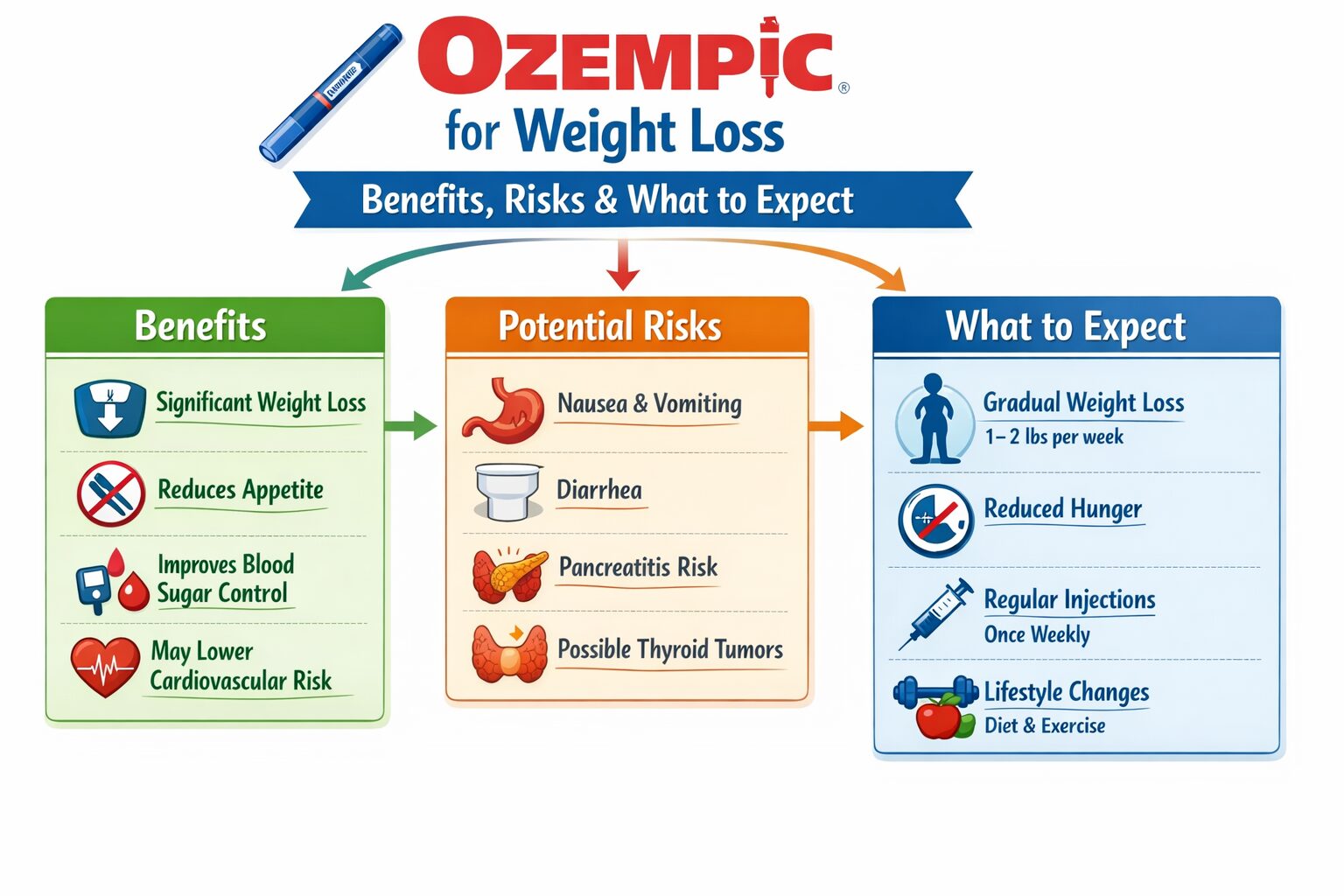
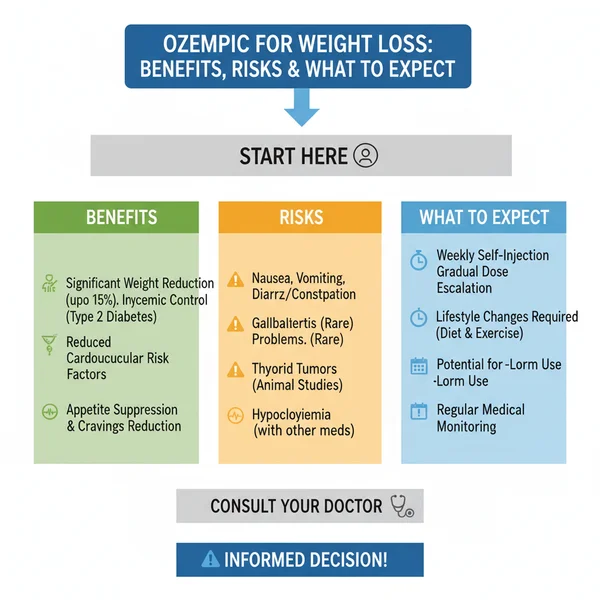
- Gastrointestinal (most frequent): nausea, vomiting, diarrhea, constipation, abdominal pain, indigestion. These symptoms are typically worse during dose escalation and improve with time.
- Reduced appetite: contributes to weight loss but may be problematic if excessive.
- Injection-site reactions: redness, itching, or swelling.
- Mild fatigue or dizziness in some users.
Less common / potentially serious:
- Pancreatitis: cases reported with GLP-1 receptor agonists. Seek urgent care for severe, persistent abdominal pain with or without vomiting.
- Gallbladder disease: weight loss and GLP-1 drugs can increase the risk of gallstones or cholecystitis.
- Hypoglycemia: risk increases when Ozempic is used with insulin or insulin secretagogues (e.g., sulfonylureas); dose adjustments may be required.
- Kidney injury: rare reports of acute kidney injury, often secondary to dehydration from severe GI symptoms.
- Thyroid C-cell tumors: in rodent studies of GLP-1 receptor agonists, C-cell tumors occurred; human relevance is uncertain. Ozempic’s prescribing information advises caution and contraindicates use in patients with personal or family history of medullary thyroid carcinoma (MTC) or multiple endocrine neoplasia syndrome type 2 (MEN2).
- Allergic or hypersensitivity reactions: rare but can be serious — seek immediate care for angioedema or anaphylaxis.
- Mood and mental health: some users report mood changes; monitor for depression or suicidal ideation and seek help if symptoms emerge.
Who Should and Should Not Use Ozempic
- Appropriate for:
- Adults with type 2 diabetes needing improved glycemic control, especially those who would benefit from weight loss.
- Patients with certain cardiovascular risk profiles where semaglutide has demonstrated benefit.
- Not recommended for:
- People with type 1 diabetes or diabetic ketoacidosis.
- Individuals with a personal or family history of MTC or MEN2.
- Those with known hypersensitivity to semaglutide.
- Use caution or discuss with your clinician if:
- Pregnant or breastfeeding (safety not established).
- You take insulin or sulfonylureas (risk of hypoglycemia).
- You have severe gastrointestinal disease.
How to Use Ozempic for Weight Loss (Practical Guidance)
Important: Ozempic is approved for type 2 diabetes. Semaglutide at higher doses has specific approvals for obesity under other brand names/doses. Using Ozempic specifically for weight loss should be done under a healthcare provider’s guidance.
- Medical evaluation first
- Baseline labs: HbA1c (if diabetic), kidney function, liver function, medication review, and assessment of thyroid history and family history.
- Discuss realistic expectations: weight loss varies; combination with lifestyle changes yields the best outcomes.
- Dosing and titration
- Start at a low dose and titrate slowly per prescriber instructions to reduce gastrointestinal side effects.
- Typical regimen for diabetes involves weekly injections with up-titration; obesity treatment uses higher maintenance doses in other semaglutide formulations.
- Combine with lifestyle changes
- Nutrition: aim for modest calorie reduction, balanced macronutrients, increase fiber and protein to enhance satiety, reduce liquid and refined sugars.
- Exercise: regular aerobic and resistance training improves weight loss, preserves lean mass, and enhances metabolic health.
- Behavioral support: counseling, structured programs, or digital tools improve adherence and outcomes.
- Monitor and manage side effects
- Expect nausea early on; eat smaller, more frequent meals and avoid fatty or large meals while adjusting.
- Stay hydrated; seek care for severe vomiting, dehydration, or signs of pancreatitis.
- Monitor blood glucose closely if on insulin or sulfonylureas—adjust doses to minimize hypoglycemia.
- Long-term plan and follow-up
- Frequent follow-up with the prescriber to assess weight, side effects, and metabolic markers.
- Discuss duration of therapy: stopping semaglutide often results in weight regain; long-term strategies and maintenance plans are essential.
Practical Considerations: Cost, Access, and Alternatives
- Ozempic can be costly; insurance coverage varies by indication (diabetes vs weight management). Prior authorization may be required.
- Alternatives: other GLP-1 receptor agonists (liraglutide, dulaglutide, other semaglutide formulations) or approved anti-obesity medications—choice depends on medical history, effectiveness, side-effect profile, and cost.
- Discuss patient-assistance programs and clinic-based weight-management resources with your provider.
Summary
- Ozempic (semaglutide) is a GLP-1 receptor agonist that improves blood sugar control and commonly produces weight loss by reducing appetite and slowing gastric emptying.
- Benefits include better glycemic control, weight reduction, once-weekly dosing, and potential cardiovascular advantages for selected patients.
- Most common side effects are gastrointestinal and usually transient; rarer but serious risks include pancreatitis, gallbladder disease, kidney injury, and theoretical risk of thyroid C-cell tumors.
- For weight loss, Ozempic or other semaglutide formulations should be used under medical supervision combined with lifestyle interventions and careful monitoring.
Ozempic weight loss benefits Ozempic risks What to expect Ozempic weight loss Semaglutide weight loss risks Ozempic side effects weight loss How Ozempic helps weight loss Ozempic pros and cons weight loss Weight loss medication Ozempic Is Ozempic safe for weight loss Ozempic treatment outcomes Ozempic in hindi Ozempic tablet Ozempic medicine