Cardboard Recycling Business Plan 2026: Costs, Profit & Setup Guide
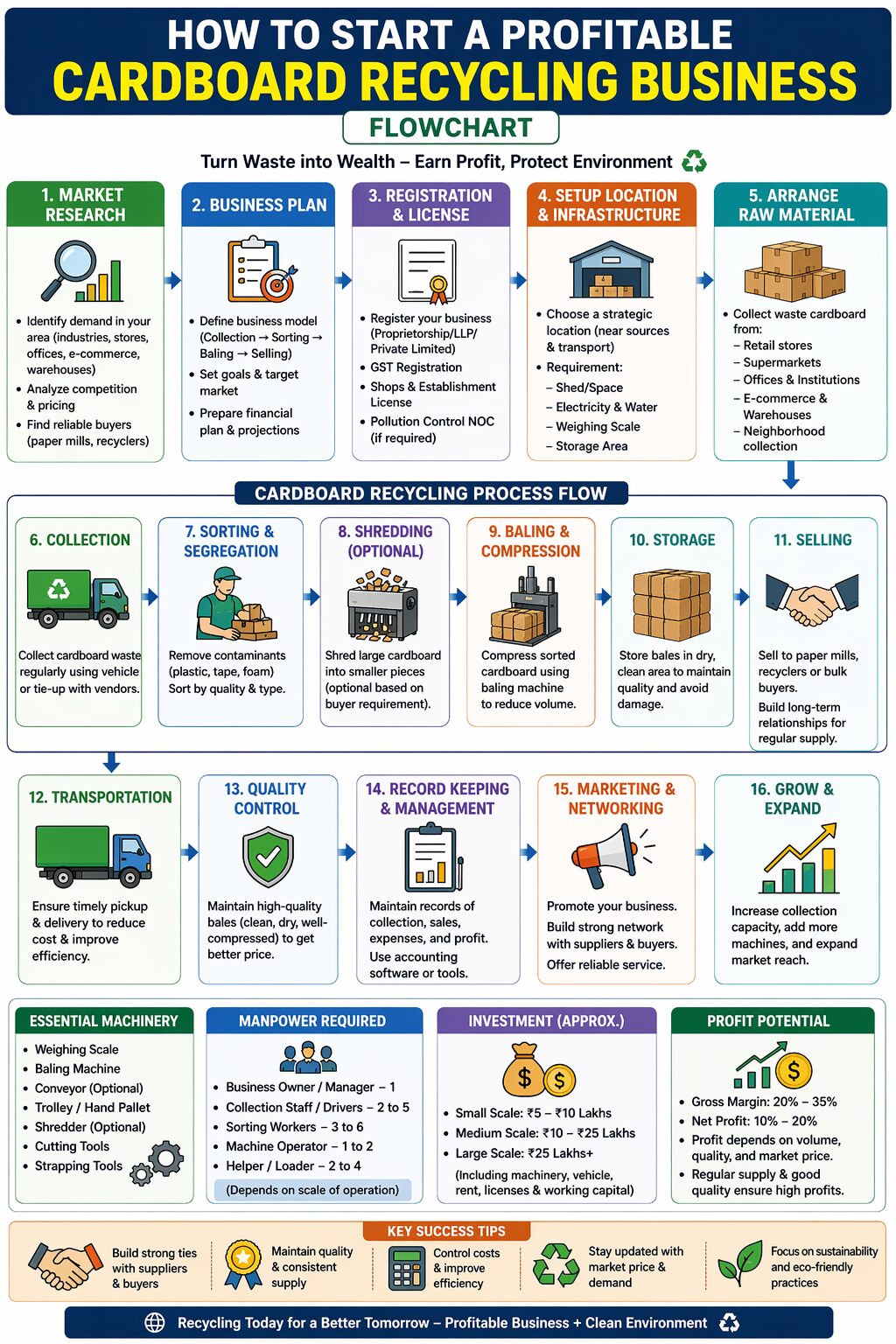
Before launching your business, research the demand for recycled cardboard in your area. Cardboard Recycling Business (also known as OCC—Old Corrugated Containers) is widely used in packaging, especially in retail and e-commerce. Businesses such as supermarkets, warehouses, and online retailers generate large volumes of cardboard waste daily.
Identify potential buyers such as paper mills and recycling plants. These facilities process used cardboard into new paper products. Understanding their pricing structure and quality requirements will help you plan your operations effectively.

Create a Business Plan
A solid business plan outlines your goals, target market, operational strategy, and financial projections. Key elements should include:
- Startup costs: equipment, vehicles, permits, rent
- Revenue streams: selling baled cardboard, collection fees
- Target clients: retailers, offices, industrial facilities
- Logistics plan: collection routes and schedules
Having a clear plan also helps if you seek funding from investors or banks.
Register Your Business and Get Permits
Choose a suitable business structure (sole trader, partnership, or company) and register your business name. Check local regulations regarding waste collection and recycling—many regions require permits or licenses to transport and process recyclable materials.
You may also need environmental compliance approvals to ensure your operations meet safety and sustainability standards.
Secure a Location
You’ll need a space to collect, sort, and store cardboard. This could be a small warehouse or an industrial yard depending on your scale. Important considerations include:
- Easy access for trucks
- Enough space for storage and equipment
- Zoning compliance for recycling activities
Starting small is fine—you can scale up as your business grows.
Invest in Equipment
The right equipment improves efficiency and profitability. Essential tools include:
- Baler machine: compresses cardboard into compact bales for easy transport and higher resale value
- Collection vehicle: a truck or van for pickups
- Weighing scale: to measure quantities accurately
- Safety gear: gloves, boots, and protective clothing
A baler is especially important because buyers prefer tightly packed cardboard, and it significantly reduces transportation costs.
Build a Reliable Supply Chain
Your success depends on consistent access to cardboard waste. Approach businesses that generate large amounts of cardboard and offer to collect it regularly. Potential sources include:
- Retail stores
- Supermarkets
- Warehouses
- Offices
- Manufacturing facilities
You can offer free collection services or even pay a small amount per ton to secure long-term contracts. Reliability and punctuality are key to maintaining these partnerships.
Establish Buyer Relationships
Once you collect and bale cardboard, you need to sell it. Contact local recycling centers and paper mills to negotiate prices. Prices fluctuate based on market demand, quality, and contamination levels.
Ensure your cardboard is clean and dry—wet or contaminated materials fetch lower prices or may be rejected entirely. Building strong relationships with buyers can lead to better rates and consistent demand.
Optimize Logistics and Operations
Efficient logistics can make or break your profitability. Plan collection routes to minimize fuel costs and time. Use scheduling systems to ensure pickups are timely and consistent.
As your business grows, consider hiring drivers and warehouse staff. Training employees on proper sorting and handling improves efficiency and reduces waste.
Focus on Cost Control
Keep a close eye on expenses such as fuel, maintenance, rent, and labor. Profit margins in recycling can be tight, so efficiency is crucial.
Ways to reduce costs include:
- Combining pickups in the same area
- Maintaining vehicles regularly
- Investing in energy-efficient equipment
- Reducing contamination to avoid rejected loads
Market Your Services
Promote your business to attract more clients. Effective strategies include:
- Visiting local businesses directly
- Creating a simple website
- Using social media platforms
- Highlighting environmental benefits
Many companies want to improve their sustainability image, so position your service as a way to help them reduce waste and meet environmental goals.
Scale Your Business
Once you establish a steady operation, look for growth opportunities. You can:
- Expand to new مناطق or cities
- Add other recyclable materials like paper or plastics
- Invest in larger equipment
- Partner with municipalities or large corporations
Scaling gradually ensures you maintain quality while increasing profits.
Stay Informed and Adapt
The recycling industry is influenced by global market trends, environmental policies, and technological advancements. Stay updated on pricing changes and industry developments.
Adapting to new regulations or investing in better technology can give you a competitive advantage.
Conclusion (Cardboard Recycling Business)
Starting a cardboard recycling business requires planning, investment, and consistent effort, but it offers strong potential for profitability and environmental impact. By securing reliable supply sources, maintaining quality standards, and building solid relationships with buyers, you can create a sustainable and successful business.
Recycling business ideas 2026 How to start a recycling business Profitable recycling business Waste management business OCC recycling (Old Corrugated Containers) Recycling startup costs Eco-friendly business ideas Sustainable business 2026 Paper recycling business