How to Start a Clothing Business – Complete Step-by-Step Launch Your Clothing Brand Today
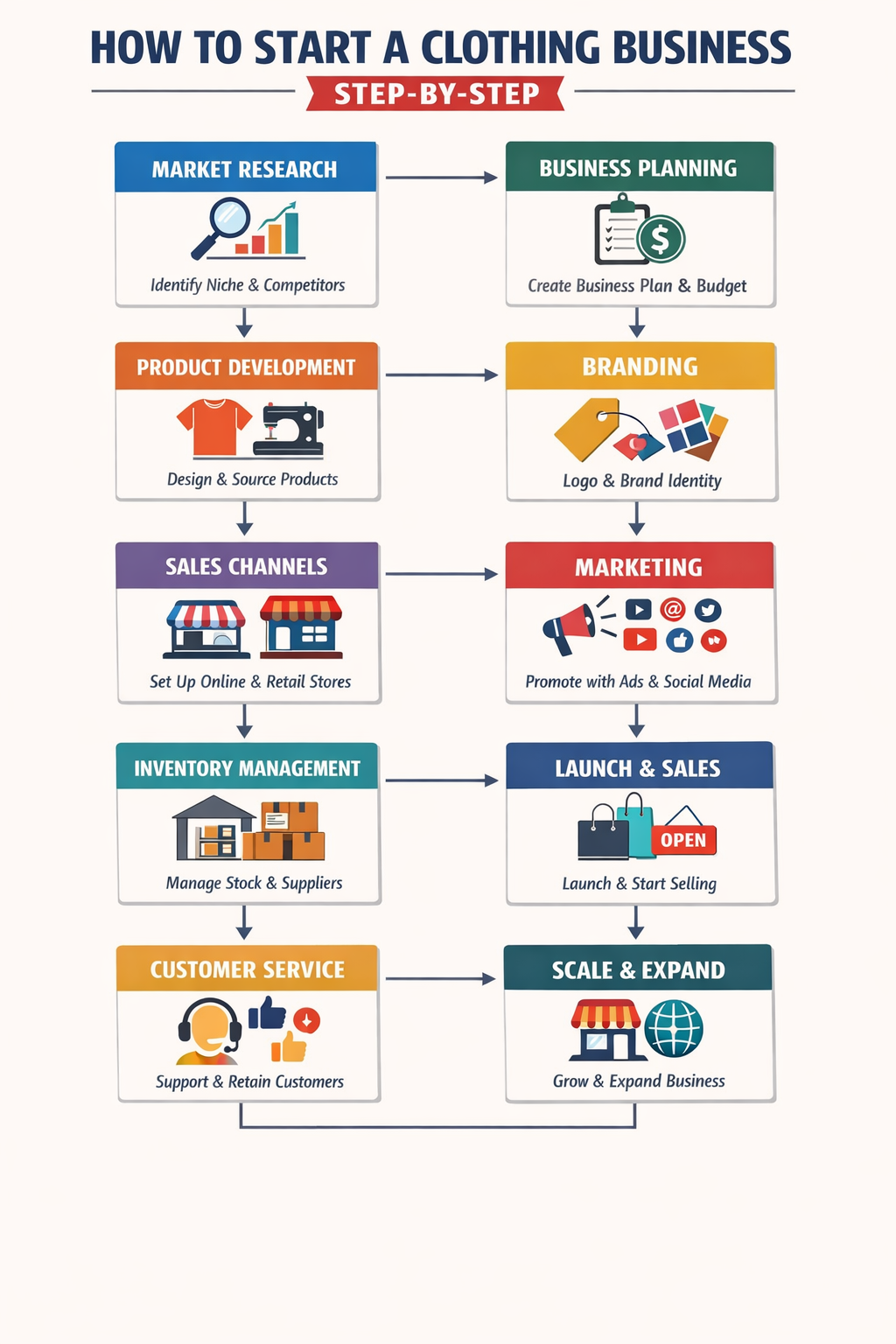
Starting a clothing business is one of the most profitable and scalable ventures in the fashion industry. However, success requires structured planning, financial discipline, brand positioning, and operational control. Below is a professional, end-to-end blueprint covering every stage — from idea validation to scaling a profitable apparel brand.
Stage 1: Market Research & Niche Selection (Foundation Stage)
Before investing capital, conduct deep market research.
Key Questions:
-
Who is your target audience? (Men, women, kids, luxury, streetwear, ethnic, activewear)
-
What price range will you target? (Budget, mid-range, premium)
-
Who are your competitors?
-
What gap exists in the market?
High-Value Niches (2026 Trends):
-
Sustainable fashion
-
Custom print-on-demand apparel
-
Athleisure & fitness wear
-
Modest fashion
-
Streetwear brands
-
Kids designer clothing
Professional Tip: Choose a niche with growing demand and manageable competition. Avoid launching a “general clothing store” without a unique selling proposition (USP).

Stage 2: Business Model Selection
Choose the right business structure:
1. Manufacturing Model
You design and produce your own clothes.
-
Higher profit margins
-
Requires factory coordination
-
Higher startup investment
2. Wholesale/Reselling Model
Buy in bulk from manufacturers and resell.
-
Lower risk
-
Moderate margins
-
Faster launch
3. Print-on-Demand Model
Custom designs printed after customer order.
-
Minimal inventory risk
-
Good for online startups
4. Dropshipping Model
Supplier ships directly to customer.
-
Very low investment
-
Lower control on quality
Stage 3: Business Registration & Legal Setup
Register your business professionally.
Legal Requirements:
-
Business name registration
-
Trademark registration (brand protection)
-
GST/VAT registration (if required)
-
Business bank account
-
Import/export license (if sourcing internationally)
Pro Tip: Trademark your brand name early to avoid future legal conflicts.
Stage 4: Business Plan & Financial Planning
A professional clothing startup requires a structured business plan.
Include:
-
Executive summary
-
Market analysis
-
Marketing strategy
-
Sales projections
-
Cost structure
-
Break-even analysis
Estimated Startup Investment
| Business Type | Approximate Investment |
|---|---|
| Small Online Brand | $2,000 – $10,000 |
| Physical Boutique | $15,000 – $50,000 |
| Manufacturing Setup | $50,000+ |
Main Expenses:
-
Inventory purchase
-
Website development
-
Branding & packaging
-
Marketing & advertising
-
Rent (if physical store)
-
Staff salaries
Stage 5: Brand Development & Positioning
Branding is the backbone of a successful clothing company.
Elements of Strong Brand Identity:
-
Professional logo design
-
Premium packaging
-
Clear brand story
-
Targeted brand voice
-
Consistent color theme
High-Class Keywords for Branding:
-
Premium Apparel Brand
-
Luxury Fashion Line
-
Sustainable Clothing Label
-
Designer Wear Collection
-
Contemporary Streetwear Brand
-
High-End Fashion Startup
Your brand must communicate quality, trust, and lifestyle appeal.
Stage 6: Product Development & Sourcing
This is the operational core.
If Manufacturing:
-
Finalize fabric quality
-
Choose stitching standards
-
Create samples
-
Conduct quality testing
-
Approve final production batch
If Wholesale:
-
Identify reliable suppliers
-
Order samples
-
Check stitching & fabric durability
-
Negotiate bulk pricing
Professional Tip:
Never skip sample approval before bulk production.
Stage 7: Pricing Strategy
Correct pricing ensures profitability and competitiveness.
Pricing Formula:
Cost of Product + Overheads + Marketing + Desired Profit Margin
Example:
-
Product Cost = $15
-
Packaging & Marketing = $5
-
Total Cost = $20
-
Selling Price = $40–$50
Maintain 50–70% markup depending on niche positioning.
Stage 8: Sales Channels Setup
1. E-commerce Website
Create a professional online store:
-
Shopify
-
WooCommerce
-
Custom website
2. Marketplaces
-
Amazon
-
Etsy
-
eBay
3. Social Commerce
-
Instagram Shop
-
Facebook Marketplace
-
TikTok Shop
4. Physical Retail Store
-
Boutique model
-
Mall kiosk
-
Franchise expansion
Digital presence is mandatory in 2026.
Stage 9: Digital Marketing & Customer Acquisition
Marketing determines survival in the clothing industry.
High-Performance Strategies:
-
Social Media Marketing (Instagram & TikTok Reels)
-
Influencer Marketing
-
Facebook & Google Ads
-
SEO optimization
-
Email marketing campaigns
-
Retargeting ads
High-Class Keywords:
-
Fashion E-commerce Growth Strategy
-
Brand Visibility Optimization
-
Performance Marketing Campaigns
-
Customer Acquisition Funnel
-
Conversion Rate Optimization
Allocate at least 15–25% of revenue to marketing in early stages.
Stage 10: Inventory & Supply Chain Management
Efficient inventory control avoids losses.
Key Systems:
-
Inventory tracking software
-
Demand forecasting
-
Seasonal stock planning
-
Supplier relationship management
Avoid overstocking during initial months.
Stage 11: Customer Experience & Retention
Long-term success depends on repeat customers.
Focus Areas:
-
Fast shipping
-
Easy return policy
-
Professional packaging
-
Excellent customer support
-
Loyalty programs
Customer retention reduces marketing cost significantly.
Stage 12: Scaling & Expansion
After stable revenue:
Expansion Options:
-
Launch new collections
-
Introduce premium line
-
Expand internationally
-
Open physical retail outlet
-
Franchise model
-
Collaborate with influencers/designers
Professional brands scale systematically, not aggressively.
Profit Potential in Clothing Business
Gross Margin:
40% – 70% average
High-Profit Niches:
-
Streetwear
-
Athleisure
-
Luxury women’s wear
-
Sustainable fashion
Risk Factors (Clothing Brand Today)
-
Overstocking inventory
-
Poor quality control
-
Weak branding
-
Ineffective marketing
-
Seasonal demand fluctuation
Proper planning reduces these risks significantly.
Complete Startup Timeline
-
Month 1: Market Research & Planning
-
Month 2: Supplier Finalization & Sample Development
-
Month 3: Production & Website Setup
-
Month 4: Launch & Marketing Campaign
-
Month 6+: Optimize & Scale
Final Professional Advice
The clothing industry is competitive but highly profitable if executed strategically. Focus on:
-
Strong brand positioning
-
Premium product quality
-
Data-driven marketing
-
Customer loyalty
-
Scalable operations
A well-managed clothing brand can evolve from a small startup into a global fashion label within 3–5 years if backed by consistent branding, operational excellence, and aggressive digital marketing.
Clothing Brand Today how to start a clothing business sustainable fashion print-on-demand clothing athleisure wear private label clothing clothing brand strategy dropshipping clothing business luxury fashion startup best clothing ecommerce platforms trademark for clothing brand