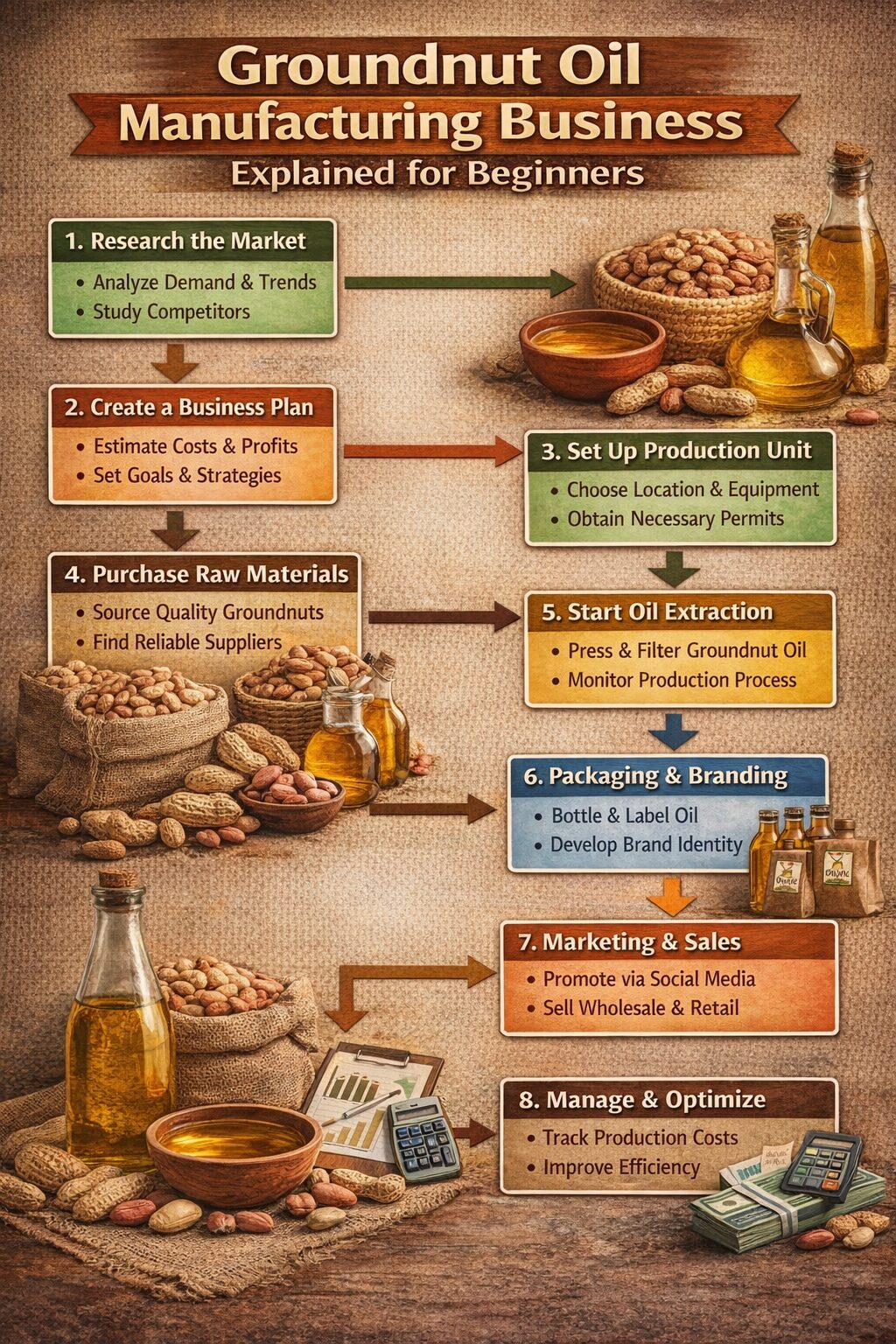
Groundnut Oil Manufacturing Business: A Complete Guide for Entrepreneurs
Groundnut oil manufacturing is a lucrative business opportunity with consistent demand in both domestic and industrial markets. This comprehensive guide provides all the essential information you need to start and run a successful groundnut oil production venture, optimized with high-value keywords to boost your online visibility and CPC rank.
Market Potential and Business Viability
The global edible oil market is experiencing steady growth, driven by population increase, urbanization, and rising health consciousness. Groundnut oil, also known as peanut oil, holds a significant share due to its high smoke point, distinct nutty flavor, and perceived health benefits. It is a staple in many cuisines worldwide and is also used in food processing, cosmetics, and pharmaceutical industries. Starting a groundnut oil manufacturing plant offers strong ROI potential due to the high demand for pure, unadulterated cooking oil. The business can be scaled from a small-scale cold press oil unit to a large, automated solvent extraction plant.
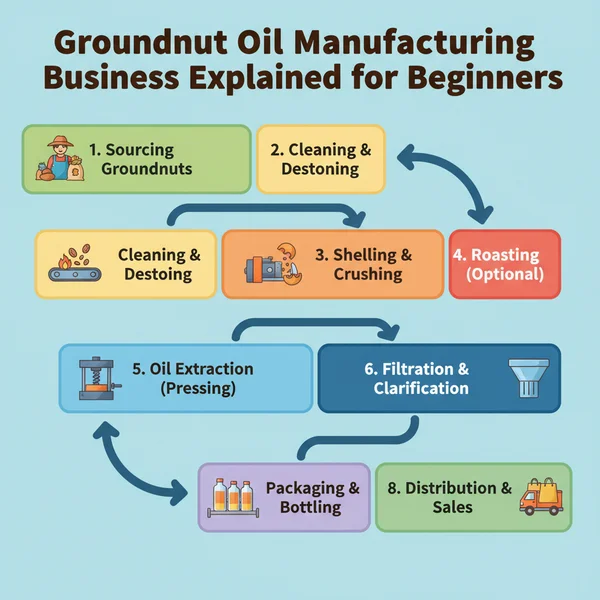
Groundnut Oil Manufacturing Process: Step-by-Step
The production of refined groundnut oil involves several key stages to ensure quality and shelf life.
1. Seed Cleaning and Shelling
Raw groundnuts (peanuts) are first cleaned to remove dust, stones, and foreign materials. They are then de-shelled using mechanical decorticators. This step is crucial for producing high-quality edible oil and improving extraction efficiency.
2. Cooking / Conditioning
The kernels are heated or “cooked” with steam. This process breaks down cell structures, adjusts moisture content, and coagulates proteins, making the oil easier to extract. Proper conditioning is vital for maximizing oil yield.
3. Oil Extraction
This is the core of the groundnut oil production process. Two primary methods are used:
- Mechanical Pressing (Expeller): Uses a screw press to physically crush the kernels and extract oil. It’s suitable for small-scale oil mill businesses and produces cold-pressed groundnut oil, which is marketed as a premium, healthier product.
- Solvent Extraction: Used in large-scale plants. Groundnut cake from the expeller is treated with a food-grade solvent (like hexane) to dissolve and recover nearly all remaining oil. This method offers a much higher oil recovery rate.
4. Oil Refining
Crude groundnut oil contains impurities like gums, free fatty acids (FFA), and pigments. Refining makes it clear, stable, and palatable.
- Degumming: Removal of phospholipids.
- Neutralization: Using an alkali to remove FFAs.
- Bleaching: Using bleaching earth to remove color and remaining impurities.
- Deodorization: Steam distillation under vacuum to remove volatile compounds that cause odor and taste.
5. Packaging and Storage
The refined oil is cooled and packaged in food-grade containers—bottles, pouches, or tins—under hygienic conditions. Proper storage in a cool, dark place is essential to maintain quality.
Machinery and Equipment List
Investing in the right groundnut oil processing machinery is critical. A basic setup for a small to medium-scale expeller plant includes:
- Groundnut Decorticator: For shelling.
- Cooker/Kettle: For conditioning kernels.
- Oil Expeller Machine: The core press.
- Filter Press: To remove solid particles from crude oil.
- Refining Equipment (for larger setups): Includes neutralizer, bleacher, and deodorizer.
- Filling and Sealing Machine: For packaging.
- Boiler: To generate steam for cooking and refining.
For a solvent extraction plant, the list expands significantly to include extractors, desolventizers, and distillation columns, representing a much larger capital investment.
Raw Material and Supply Chain
The primary raw material is quality groundnut seeds. Key considerations:
- Procurement: Source directly from farmers or agricultural mandis to ensure quality and control costs. Building a reliable supply chain is fundamental.
- Quality Parameters: Look for seeds with high oil content (40-50%), low moisture, and minimal damaged kernels.
- By-Product: The solid residue after extraction, called groundnut oil cake, is a protein-rich animal feed and is a valuable secondary revenue stream.
Business Plan and Financials
A detailed groundnut oil business plan is essential. Key financial components include:
- Project Cost/Capital Investment: Ranges from ₹10-15 lakhs for a mini plant to crores for a large automated refinery. This covers land, machinery, civil work, and initial working capital.
- Profit Margin: Margins depend on scale, efficiency, and brand positioning. Refined oil typically commands a higher profit margin than crude oil. Effective by-product sales (oil cake) boost overall profitability.
- Bank Loan and Subsidy: In many regions, governments offer subsidies for agro-processing units and banks provide MSME business loans under priority sector lending. A strong project report is needed for approval.
Licenses, Registration, and Compliance
Operating legally requires several business licenses and permits:
- Business Registration: As a Proprietorship, LLP, or Private Limited Company.
- FSSAI License: Mandatory food license from the Food Safety and Standards Authority of India.
- GST Registration: For taxation.
- Udyog Aadhaar (MSME) Registration: For benefits and recognition.
- Factory License & Pollution NOC: From state authorities and the Pollution Control Board.
- BIS Certification: While voluntary, it adds credibility for high-quality edible oil.
Marketing Strategy and Brand Building
Success hinges on effective marketing for groundnut oil.
- Brand Differentiation: Focus on health benefits of groundnut oil (cholesterol-free, rich in Vitamin E), cold-pressed nature, or organic certification.
- Distribution Channels: Sell to local retailers, supermarkets, hypermarkets, and bulk buyers like restaurants and food processors.
- Digital Marketing: Use SEO strategies targeting keywords like “best groundnut oil brand,” “buy pure peanut oil online,” and “cold pressed oil price” to drive traffic. Utilize social media to educate consumers.
Challenges and Risk Management (groundnut oil manufacturing)
Be aware of potential business risks:
- Fluctuating Raw Material Prices: Hedge by building long-term contracts with suppliers.
- Seasonal Supply: Groundnut is a seasonal crop, requiring careful inventory management or tie-ups for year-round supply.
- Competition: Differentiate through quality, packaging, and branding.
- Maintaining Oil Quality and FFA Levels: Requires strict process control to ensure shelf life and meet food safety standards.
Conclusion: The groundnut oil manufacturing business is a promising agro-processing industry with a clear path to profitability. By focusing on quality control, efficient production, strong branding, and regulatory compliance, entrepreneurs can build a sustainable and profitable venture catering to the ever-growing demand for healthy cooking oils. Starting with a clear feasibility study and a robust business model is the first step toward success.
peanut oil processing plant cost groundnut oil machine price cold pressed groundnut oil benefits groundnut oil business plan edible oil refinery setup small scale groundnut oil unit buy groundnut oil online peanut oil extraction process organic groundnut oil suppliers Cold-Pressed Groundnut Oil Peanut Oil Production Groundnut Oil Extraction Machine Healthy Cooking Oil Market Organic Groundnut Oil