How to Start a Shoe Business Income, Profit & Benefits
Start a Shoe Business is an exciting entrepreneurial opportunity with significant profit potential. The global footwear market is valued at over $365 billion, with steady growth projected in the coming years. Whether you’re interested in retail, manufacturing, or e-commerce, this comprehensive guide will walk you through everything you need to know to launch your successful shoe business.
Market Overview & Opportunity
The shoe industry remains resilient and profitable because footwear is an essential product everyone needs. The market includes various segments: athletic shoes, formal wear, casual footwear, specialized sports shoes, and sustainable/eco-friendly options. Each segment offers different profit margins and target audiences.
The beauty of starting a shoe business is flexibility—you can begin with dropshipping, reselling wholesale inventory, designing custom shoes, or manufacturing your own brand. The entry barrier is moderate, making it accessible for entrepreneurs with limited capital.
How to Start Your Shoe Business
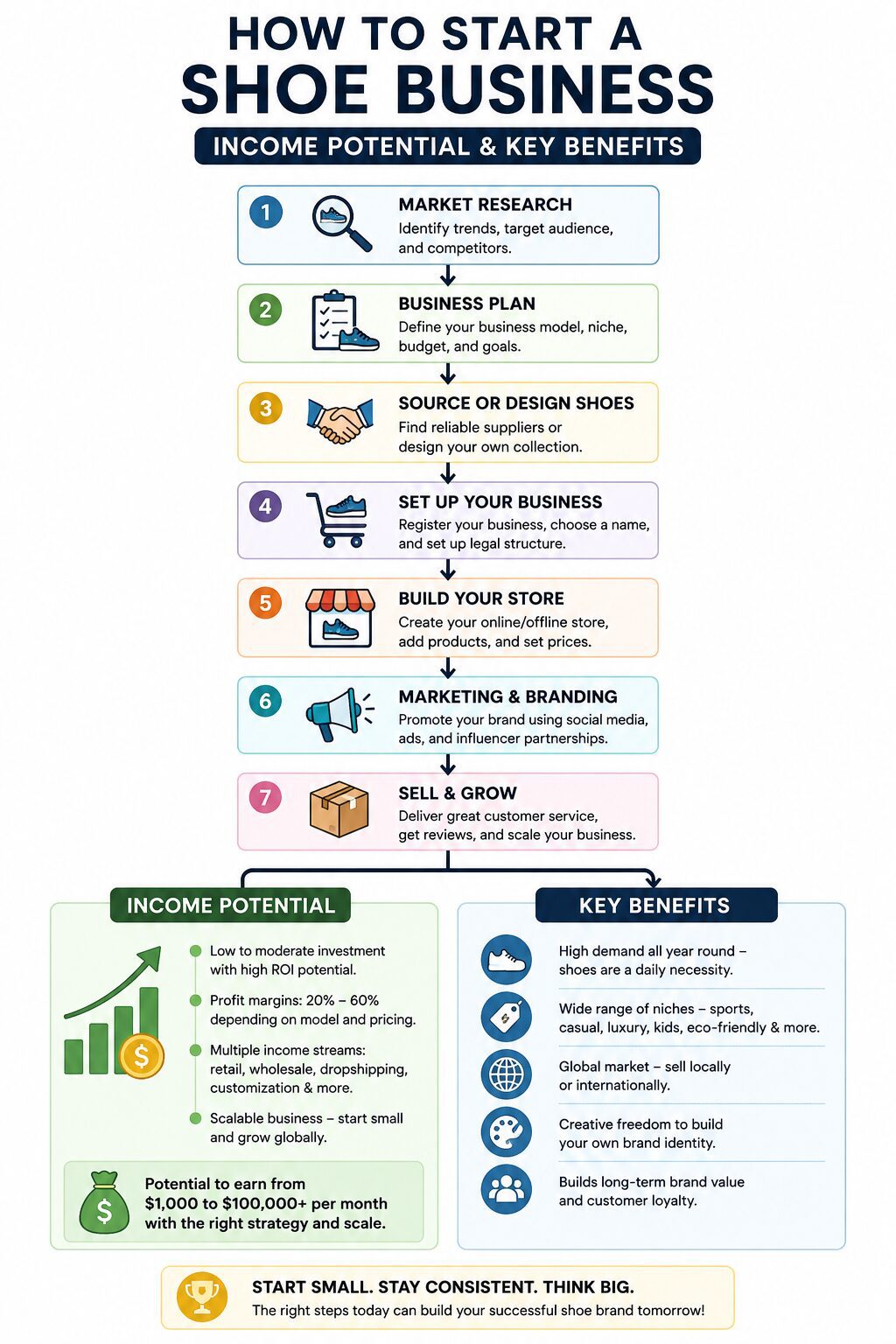
1. Market Research & Niche Selection
Before investing money, identify your target market. Will you focus on:
- Athletic shoes for runners and fitness enthusiasts
- Formal footwear for professionals
- Sustainable/eco-friendly shoes for conscious consumers
- Specialty shoes (safety, medical, orthopedic)
- Fashion/trendy footwear for style-conscious buyers
- Vintage or secondhand shoes
Analyze competitors, study consumer preferences, and identify market gaps. This research is invaluable for positioning your business successfully.
2. Choose Your Business Model
- Dropshipping: Low startup cost; suppliers handle inventory and shipping
- Wholesale Reselling: Buy inventory at wholesale prices, mark up and sell
- Direct Manufacturing: Design and produce your own shoes (higher investment)
- E-commerce Store: Sell online through Shopify, Amazon, or your website
- Retail Location: Physical storefront for direct customer engagement
3. Business Planning & Registration
Create a detailed business plan outlining:
- Startup costs (inventory, website, marketing, permits)
- Revenue projections
- Operating expenses
- Marketing strategy
- Financial forecasts (12-36 months)
Register your business legally (LLC, sole proprietorship, or corporation) and obtain necessary licenses and permits in your jurisdiction.
4. Secure Funding
Estimate your startup budget:
- Initial inventory: $2,000–$15,000
- Website & e-commerce setup: $500–$3,000
- Business registration & licensing: $200–$1,000
- Marketing & branding: $1,000–$5,000
- Packaging & logistics: $500–$2,000
Funding options include personal savings, small business loans, credit lines, or investor partnerships.
5. Source Products & Suppliers
Find reliable suppliers through:
- Alibaba & Global Sources: Connect with manufacturers worldwide
- Local wholesalers: Build relationships with nearby distributors
- Trade shows: Attend footwear industry events
- Supplier verification: Check ratings, certifications, and samples
Quality control is critical—always request samples before bulk orders.
6. Build Your Brand & Online Presence
- Create a professional brand name and logo
- Develop a user-friendly e-commerce website
- Optimize for mobile shopping
- Use social media (Instagram, TikTok, Facebook) for marketing
- Invest in professional product photography
7. Implement Marketing Strategies
- SEO optimization: Target keywords like “affordable running shoes” or “eco-friendly footwear”
- Social media marketing: Showcase products through visual content
- Influencer partnerships: Collaborate with lifestyle and fitness influencers
- Email marketing: Build customer lists for repeat sales
- Paid advertising: Use Google Ads and Facebook Ads strategically
- Content marketing: Create blog posts about shoe care, fashion trends, or fitness
Income Potential & Profit Margins
Profit Margins
- Dropshipping: 20–30% markup (lower investment, higher competition)
- Wholesale reselling: 40–60% markup (moderate competition)
- Direct manufacturing: 60–80% markup (higher investment, higher profit)
- Premium/luxury brands: 70–90% markup
Income Examples
- Part-time business (50 shoes/month at $30 profit): $1,500/month ($18,000/year)
- Mid-scale business (200 shoes/month at $40 profit): $8,000/month ($96,000/year)
- Growing business (500+ shoes/month at $50 profit): $25,000+/month ($300,000+/year)
Profitability depends on your business model, marketing effectiveness, customer acquisition costs, and operational efficiency.
Key Benefits of Starting a Shoe Business
1. Consistent Demand
Footwear is essential; people continuously need shoes for work, sports, and daily life. This creates reliable, recurring customer demand.
2. Diverse Customer Base
Your potential market includes professionals, athletes, students, children, elderly people, and fashion enthusiasts—everyone buys shoes.
3. Scalability
Start small with dropshipping or limited inventory, then scale to manufacturing and multiple sales channels as you grow.
4. Low Time Investment
With proper automation (e-commerce platform, email marketing, social media scheduling), you can operate this business part-time initially.
5. Multiple Revenue Streams
Sell through your website, Amazon, eBay, social media, pop-up stores, or wholesale partnerships simultaneously.
6. Strong Seasonal Opportunities
Capitalize on peak seasons (back-to-school, holidays, summer) for higher sales and profits.
7. Brand Building Potential
Unlike commodity products, shoe businesses allow for strong brand development, customer loyalty, and premium pricing.
Essential Success Tips
- Focus on quality: Poor-quality shoes damage reputation and lead to returns
- Prioritize customer service: Responsive support builds loyalty and reviews
- Optimize logistics: Fast, reliable shipping improves customer satisfaction
- Monitor trends: Fashion and athletic trends change quickly; stay ahead
- Build community: Engage customers through newsletters, loyalty programs, and social media
- Test before scaling: Start with one product line, measure success, then expand
Conclusion (Start a Shoe Business)
Starting a shoe business is a viable path to entrepreneurship with excellent profit potential and growth opportunities. Whether you choose dropshipping for minimal investment or direct manufacturing for maximum margins, success depends on market research, quality products, strategic marketing, and customer focus. With the right execution, your shoe business can generate substantial income while serving a fundamental market need. Begin today with solid planning, and watch your business stride toward success.
How to start a shoe business Shoe business startup costs Shoe business profit margins Shoe business income potential Start shoe business 2026 Shoe business ideas profitable Shoe business benefits Low investment shoe business Online shoe business Shoe business for beginners fastnews123