Starting a Transport Business: A Global Guide to Investment, Truck Costs & Profit
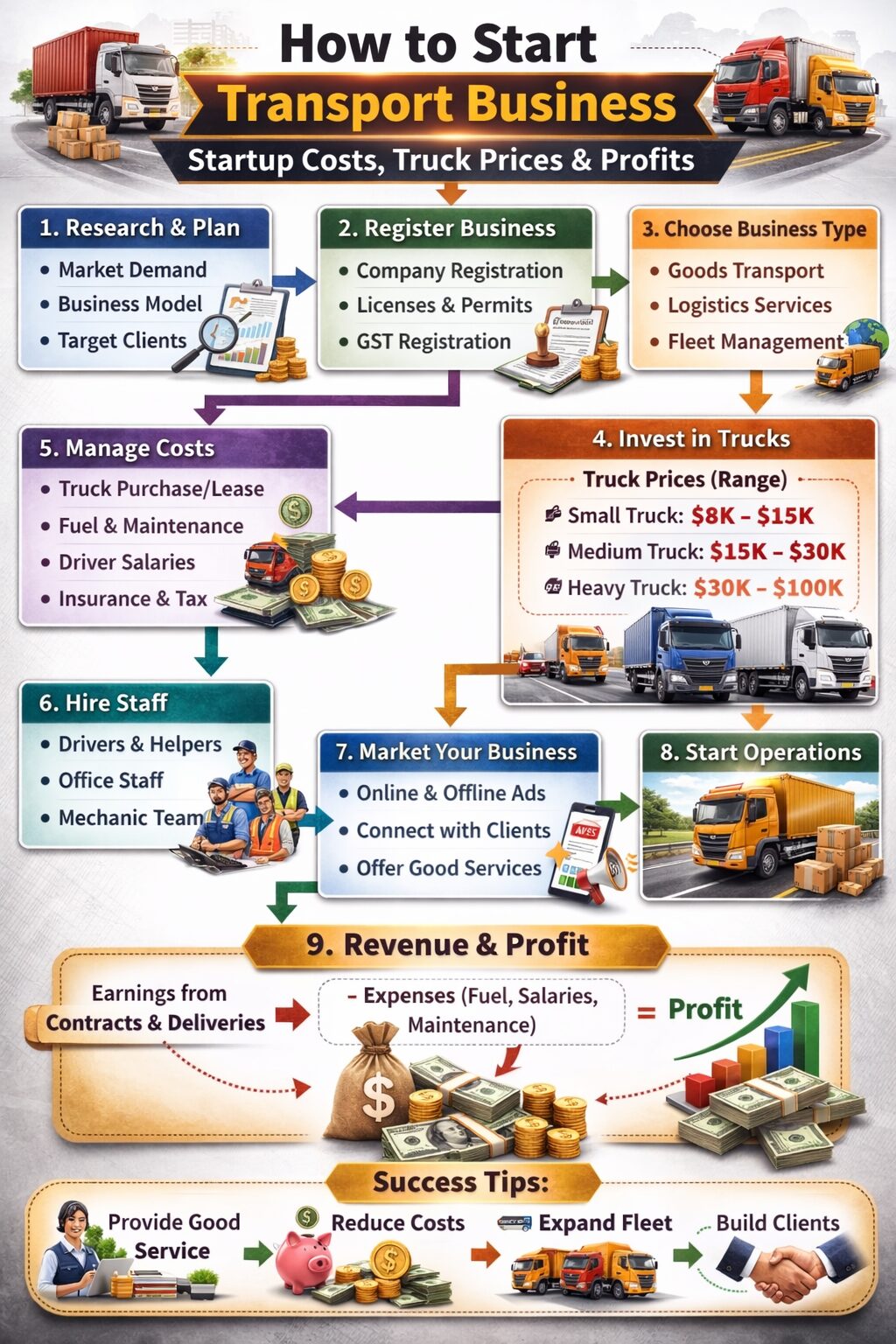
The global logistics market is a multi-trillion-dollar industry, and launching a Start Transport Business is a proven path to entrepreneurship. However, success requires a deep understanding of local regulations, capital requirements, and market dynamics. This guide provides a concise, country-specific breakdown for the USA, Canada, Australia, New Zealand, the UAE, and the UK, focusing on critical startup costs, truck prices, and profitability metrics.
Country-by-Country Startup Analysis & Truck Costs
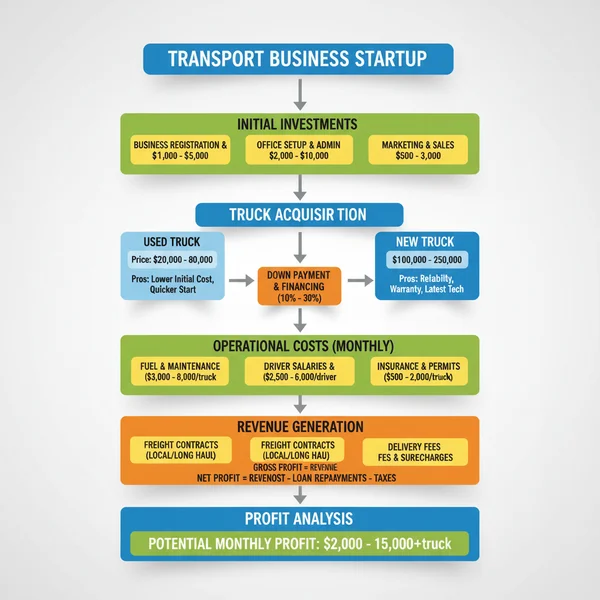
The core of your investment is the truck. Prices vary dramatically based on whether you buy new, used, or lease. Below is a snapshot of the commercial vehicle market and key startup figures.
| Country | Used Truck Cost (Class 8/Semi) | New Truck Cost (Class 8/Semi) | Estimated Total Startup Capital* | Key Regulatory Body |
|---|---|---|---|---|
| USA | $45,000 – $80,000 | $150,000 – $180,000+ | $70,000 – $120,000 | FMCSA (DOT/MC Number) |
| Canada | CAD 60,000 – 100,000 | CAD 180,000 – 220,000 | CAD 85,000 – 140,000 | Transport Canada, Provincial Authorities |
| Australia | AUD 80,000 – 130,000 | AUD 200,000 – 280,000 | AUD 100,000 – 170,000 | NHVR (National Heavy Vehicle Regulator) |
| New Zealand | NZD 70,000 – 110,000 | NZD 180,000 – 250,000 | NZD 90,000 – 150,000 | NZ Transport Agency (NZTA) |
| UAE | AED 120,000 – 200,000 | AED 300,000 – 450,000 | AED 150,000 – 250,000 | RTA (Roads & Transport Authority) |
| UK | £25,000 – £45,000 | £80,000 – £120,000 | £40,000 – £80,000 | DVSA, need Operator’s License (O-Licence) |
Startup Capital includes truck down payment, licensing, insurance, and 3 months of working capital.
Detailed Market Insights & Operational Costs
1. United States
The US offers the largest market but intense competition. Freight rates fluctuate with fuel surcharges and capacity.
- Key Costs: Primary liability insurance can be $8,000-$12,000/year for a new authority. Fuel is a major variable; utilizing fuel card programs is essential.
- Profit Driver: Maximizing rate per mile through dedicated lanes or specialized cargo (e.g., hazardous materials).
2. Canada
Operates similarly to the US but with longer distances and harsh winters impacting maintenance.
- Key Costs: Higher insurance premiums in certain provinces. Cross-border operations require FAST/C-TPAT certification.
- Profit Driver: Efficient cross-border logistics between Canada and the US.
3. Australia & New Zealand
Characterized by vast distances (Aus) and unique geography (NZ). Road train operations are common in Australia.
- Key Costs: High vehicle maintenance due to long hauls. Strict safety and mass management compliance.
- Profit Driver: Securing contracts in mining (Aus) or agriculture export (NZ) sectors.
4. United Arab Emirates
A hub for transshipment and project logistics, especially for construction and events.
- Key Costs: Vehicle registration and licensing fees are significant. Sponsorship (Kafala) rules may apply for business setup.
- Profit Driver: Last-mile delivery in dense urban centers like Dubai and Abu Dhabi, and heavy transport for infrastructure projects.
5. United Kingdom
A dense, regulated market with a focus on Euro 6 emission standards and congestion charges.
- Key Costs: Operator’s Licence application is complex and costly. London’s ULEZ/CCZ charges add daily costs.
- Profit Driver: Urban logistics and same-day delivery services. Pallet network participation can provide consistent work.
The Universal Profitability Formula
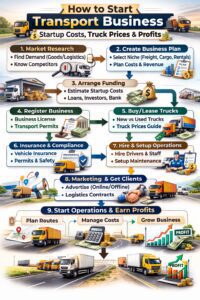
Regardless of location, your net profit is a function of revenue minus fixed and variable costs.
Annual Revenue Calculation: (Rate per Mile/Km * Annual Miles/Km) * Capacity Utilization (%)
Major Cost Centers (Typically 60-75% of Revenue):
- Fuel: The largest variable cost. Track meticulously.
- Finance/Lease: Truck loan or lease payments.
- Insurance: Liability, cargo, and physical damage.
- Maintenance & Tires: Set aside 8-12 cents per mile.
- Licenses & Permits: Annual renewals.
- Driver Wages (if not an owner-operator).
Realistic Profit Expectation: A well-managed single truck with good capacity utilization can yield a net profit margin of 15-25%. For example, a US owner-operator grossing $180,000 may net $30,000 – $45,000 after all business expenses (pre-tax).
Critical Steps for Success in Any Market (Transport Business Plan In Hindi)
- Secure Solid Financing: Explore commercial truck loans, equipment leasing, or SBA-style programs. A strong business plan is mandatory.
- Master Compliance: Invest time in understanding your local transport authority rules. Non-compliance fines can be crippling.
- Manage Cash Flow: Use freight factoring services to get paid immediately instead of waiting 30-60 days for shipper payments.
- Specialize: Move beyond generic freight. Refrigerated transport, hazardous materials certification, or oversized loads command premium rates.
- Embrace Technology: Implement a Transport Management System (TMS) and ELD for efficiency, routing, and compliance.
Conclusion (Start Transport Business)
Launching a transport business is a capital-intensive venture with clear global opportunities. The key is to localize your strategy. Research your specific national and regional market, build a financial model using realistic fuel costs and freight rates, and prioritize regulatory compliance from day one. By treating your truck as a managed asset and focusing on operational efficiency, you can build a resilient and profitable logistics company in any of these dynamic markets.
How to Start Transport Business Transport Business Plan In Hindi Transport Business success story In Hindi Transport Business In Hindi how to start trucking business trucking startup costs truck prices USA transport business plan owner operator trucking freight business startup commercial truck financing trucking licenses USA fleet management software trucking profit margins Start Transport Business in hindi