
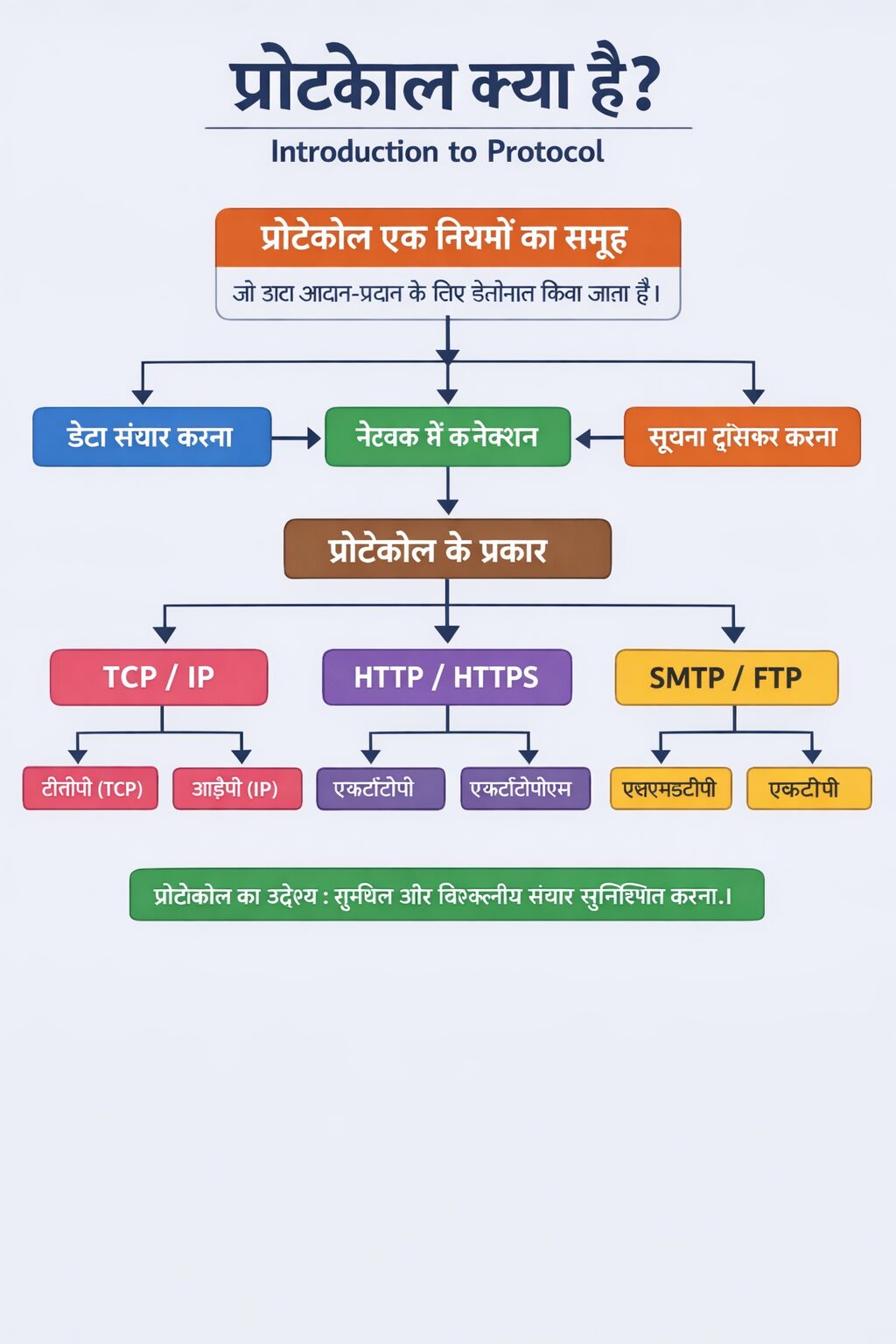
Introduction to Protocol
In the world of computers, networking, and the internet, the term protocol plays a very important role. Without protocols, devices like computers, smartphones, and servers would not be able to communicate with each other effectively. A protocol is simply a set of rules that determines how data is transmitted and received over a network.
Protocols ensure that communication between devices happens smoothly, securely, and in an organized way. Whenever you browse a website, send an email, or watch a video online, different protocols are working behind the scenes to make that possible.

What is a Protocol?
A protocol is a standardized set of rules that allows different devices and systems to communicate with each other across a network. These rules define how data is formatted, transmitted, received, and processed.
For example, when you visit a website, your browser sends a request to the web server using a specific protocol. The server then responds using the same protocol so that your browser can understand the data and display the webpage.
Protocols are essential because devices made by different manufacturers must still be able to communicate with each other. Protocols create a universal language for digital communication.
Why Protocols Are Important
Protocols are critical in networking because they provide structure and reliability to data communication.
1. Standardization
Protocols create standard rules that all devices follow. This ensures compatibility between different systems and technologies.
2. Reliable Communication
Protocols control how data packets are sent and received to avoid errors or data loss.
3. Security
Some protocols provide encryption and authentication to protect sensitive information.
4. Efficient Data Transfer
Protocols manage the flow of data so networks do not become overloaded.
Without protocols, the internet would not function properly, and devices would not understand each other’s messages.
Main Components of a Protocol
A network protocol typically includes three main components.
1. Syntax
Syntax defines the structure or format of the data being transmitted. It specifies how the information is arranged.
2. Semantics
Semantics explains the meaning of each section of data and how it should be interpreted.
3. Timing
Timing determines when data should be sent and how fast it should be transmitted.
Together, these three components ensure that communication between devices is accurate and efficient.
Types of Network Protocols
1. HTTP (HyperText Transfer Protocol)
HTTP is one of the most widely used protocols on the internet. It is responsible for transferring web pages between web servers and browsers.
Whenever you type a website address in your browser, HTTP is used to request and receive the webpage data.
2. HTTPS (HyperText Transfer Protocol Secure)
HTTPS is the secure version of HTTP. It encrypts data to protect it from hackers and cyber threats.
Most modern websites use HTTPS to ensure secure communication.
3. FTP (File Transfer Protocol)
FTP is used for transferring files between computers over a network. It is commonly used by web developers to upload files to web servers.
4. SMTP (Simple Mail Transfer Protocol)
SMTP is the protocol used for sending emails from one server to another.
5. TCP (Transmission Control Protocol)
TCP ensures reliable communication between devices. It breaks large data into smaller packets and ensures they are delivered correctly.
6. IP (Internet Protocol)
IP is responsible for addressing and routing packets of data so they reach the correct destination.
How Protocols Work
Protocols work by dividing data into smaller units called packets. Each packet contains information about the sender, receiver, and the data itself.
The communication process usually follows these steps:
- The sender device prepares the data.
- The data is divided into packets.
- Each packet is labeled with destination information.
- Packets travel through the network.
- The receiving device collects and reassembles the packets.
- The original data is reconstructed and delivered to the application.
This system allows efficient and reliable data transmission even across large networks like the internet.
Protocol Layers in Networking
Protocols operate within a layered structure known as the OSI Model (Open Systems Interconnection Model). This model divides network communication into seven layers.
1. Physical Layer
Handles the transmission of raw data over physical connections.
2. Data Link Layer
Ensures data is transferred correctly between devices on the same network.
3. Network Layer
Responsible for routing data packets to their destination.
4. Transport Layer
Ensures reliable data delivery and error correction.
5. Session Layer
Manages communication sessions between devices.
6. Presentation Layer
Translates data formats so systems can understand each other.
7. Application Layer
Provides services directly to applications such as email and web browsing.
Each layer performs a specific function to ensure successful communication.
Advantages of Protocols
Reliable Communication
Protocols ensure that data reaches the correct destination without corruption.
Interoperability
Devices from different manufacturers can communicate easily.
Data Security
Secure protocols encrypt information and protect user data.
Network Efficiency
Protocols optimize data flow to reduce congestion and improve performance.
Real-Life Examples of Protocols
Protocols are used in everyday internet activities such as:
- Opening websites using HTTP or HTTPS
- Sending emails through SMTP
- Uploading files via FTP
- Streaming videos online
- Messaging applications communicating with servers
Every online service depends on multiple protocols working together.
Future of Network Protocols
As technology advances, protocols continue to evolve. New protocols are being developed to improve security, speed, and efficiency.
For example, HTTP/3 is designed to make websites load faster and reduce connection delays. Similarly, protocols for Internet of Things (IoT) devices are improving communication between smart devices.
With the growth of cloud computing, artificial intelligence, and 5G networks, advanced protocols will become even more important.
Conclusion
A protocol is a fundamental concept in computer networking that defines the rules for communication between devices. Protocols ensure that data is transmitted accurately, securely, and efficiently across networks.
From browsing websites to sending emails and streaming videos, protocols are the backbone of the internet. Understanding how protocols work helps us appreciate the complex systems that make modern digital communication possible.
As technology continues to grow, network protocols will keep evolving to support faster, safer, and more reliable communication around the world.
Network Protocol Definition Types of Network Protocols Internet Protocol Address (IP Address) HTTP vs HTTPS Protocol Transmission Control Protocol TCP File Transfer Protocol FTP Simple Mail Transfer Protocol SMTP Network Security Protocols TCP/IP Protocol Explained OSI Model Network Protocol Layers Protocol kya hai Protocol in hindi