Soap Making Business: Complete Guide to Start, Investment, Licenses, Distribution, Cost & Profit
Starting a soap making business can be highly profitable because soaps are repeat-purchase essentials and also sell well as premium lifestyle products (organic, herbal, handmade, medicated, luxury gift soaps). You can start small from home (handmade/cold process) or scale into a factory (melt & pour / semi-automatic / fully automatic). The key is choosing the right niche, staying compliant with local cosmetic rules, and building strong distribution.
1) Choose Your Soap Business Model (Best Options)
- Handmade / Artisan Soaps (High Margin, Brand-Driven)
- Cold process, hot process, glycerin melt & pour
- Great for D2C (Instagram, Amazon, Shopify), gifting, premium stores
- Herbal / Ayurvedic / Natural Soaps (Fast Growing)
- Neem, turmeric, charcoal, aloe, saffron, sandalwood, essential oils
- Strong demand in India, UAE, UK/USA wellness markets
- Private Label / White Label Manufacturing (B2B, High Volume)
- You manufacture for salons, resorts, influencers, hotels, pharmacies
- Lower branding cost, but needs compliance + capacity
- Hotel & Institutional Supply (Stable Repeat Orders)
- Small-size soaps, customized packaging, contracts with hotels/hospitals.
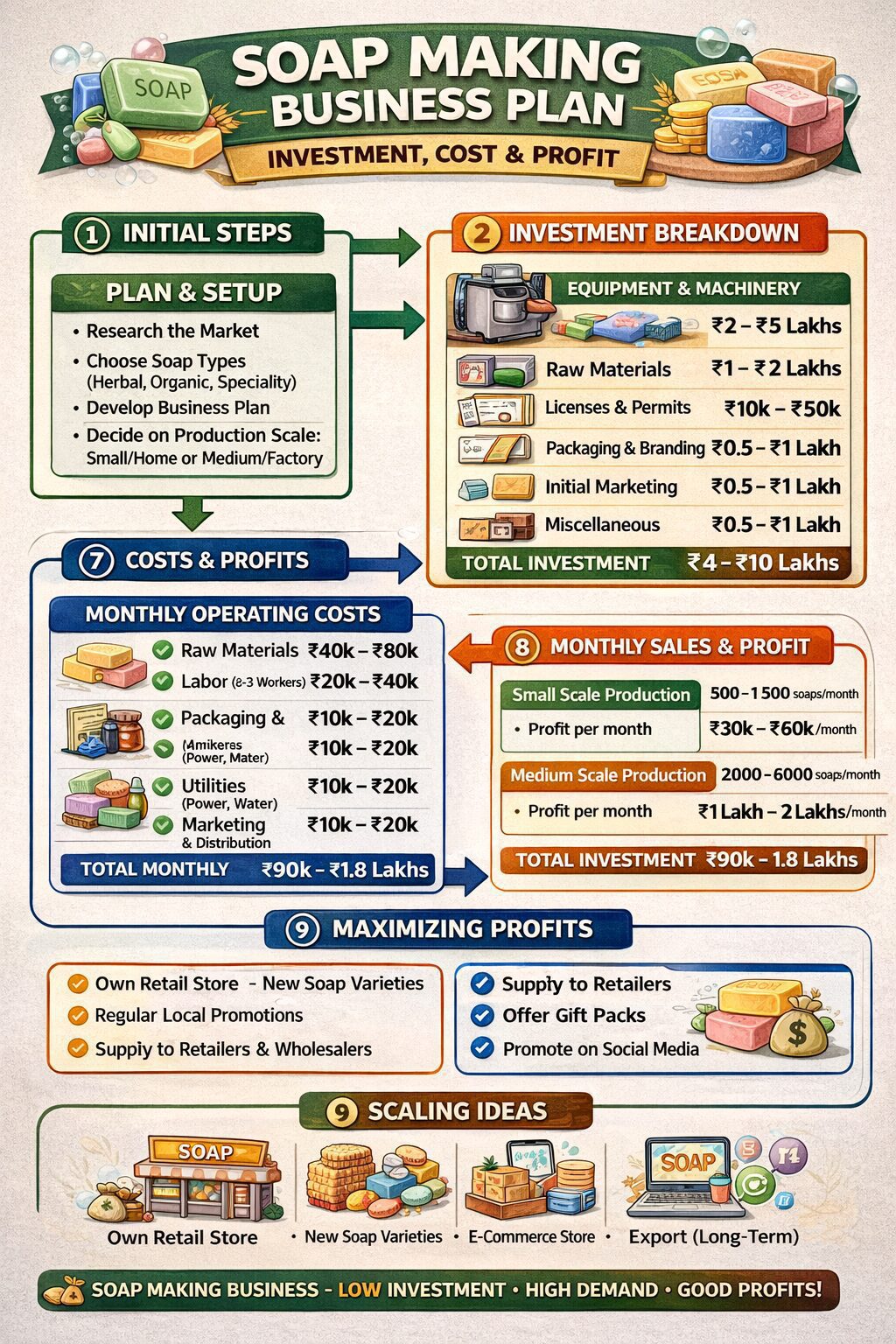
2) Investment Required (India, USA, UK, AUS, NZ, UAE)
Actual cost depends on scale (home unit vs small factory), rent, labor, and automation. Typical starting ranges:
| Country | Home/Small Setup (Approx) | Small Manufacturing Unit (Approx) |
|---|---|---|
| India | ₹25,000–₹2,00,000 | ₹5 lakh–₹25 lakh+ |
| USA | $500–$5,000 | $20,000–$150,000+ |
| UK | £500–£4,000 | £15,000–£100,000+ |
| Australia | AUD 800–AUD 6,000 | AUD 25,000–AUD 180,000+ |
| New Zealand | NZD 800–NZD 5,000 | NZD 20,000–NZD 150,000+ |
| UAE | AED 2,000–AED 12,000 | AED 50,000–AED 300,000+ |
Major cost heads: oils/fats + lye, fragrances/essential oils, colors/additives, molds/cutters, weighing scale, stick blender/mixer, curing racks, packaging, labels, testing/registration, marketing, and working capital.
3) Raw Materials & Equipment You’ll Need
Core ingredients:
- Oils/fats: coconut, palm (or alternatives), olive, castor, rice bran, shea butter
- Sodium hydroxide (NaOH) for solid bars
- Distilled water / herbal extracts
- Fragrance oils / essential oils
- Additives: charcoal, clays, oats, milk, honey, botanicals, vitamins
Basic equipment (starter):
- Digital scale, safety gear (goggles, gloves), stainless steel bowls, thermometer
- Stick blender, silicone molds, cutter, curing racks
- Label printer (optional), heat sealer for pouches
Scaling equipment (small unit):
- Soap mixer, plodder/extruder (for milled soaps), stamping machine
- Batch tanks, filtration, QC tools, shrink-wrap/packing line
4) Licenses & Compliance (Country-wise Checklist)
Soap is often treated as a cosmetic (or cosmetic-like) product in many countries. Requirements vary—always verify with local authorities or a compliance consultant.
India (Typical)
- GST registration (if applicable by turnover)
- Udyam/MSME registration (helpful for loans/subsidies)
- Trade license (local municipality)
- Cosmetic manufacturing compliance (state FDA/Drug Control in many cases if positioned as cosmetic/toilet soap)
- BIS/standards (may apply depending on soap category/claims)
- Pollution control NOC (for manufacturing unit)
- Trademark registration (brand protection)
- Proper labeling (ingredients, net weight, batch, Mfg date, address, MRP, customer care).
USA (Typical)
- FDA cosmetic labeling compliance (soap/cosmetic classification matters)
- Business license + Sales tax permit (state-wise)
- GMP best practices (highly recommended)
- Product liability insurance
- Avoid drug claims like “treats eczema/acne” unless compliant with OTC drug rules
UK (Typical)
- UK Cosmetics Regulation compliance
- CPSR (Cosmetic Product Safety Report)
- SCPN product notification
- Responsible Person in the UK
- Labeling + allergen declaration as required
Australia
- AICIS (industrial chemicals in cosmetics) compliance if applicable
- ABN + GST (as per turnover)
- Cosmetic labeling requirements and safety documentation
New Zealand
- Cosmetic labeling + safety requirements
- EPA/HSNO rules may apply for chemicals handling/storage
- Business registration + tax compliance
UAE
- Trade license (mainland/free zone)
- Product registration (often via municipality; e.g., Dubai Municipality for cosmetics)
- Arabic/English labeling requirements
- VAT registration (if threshold met)
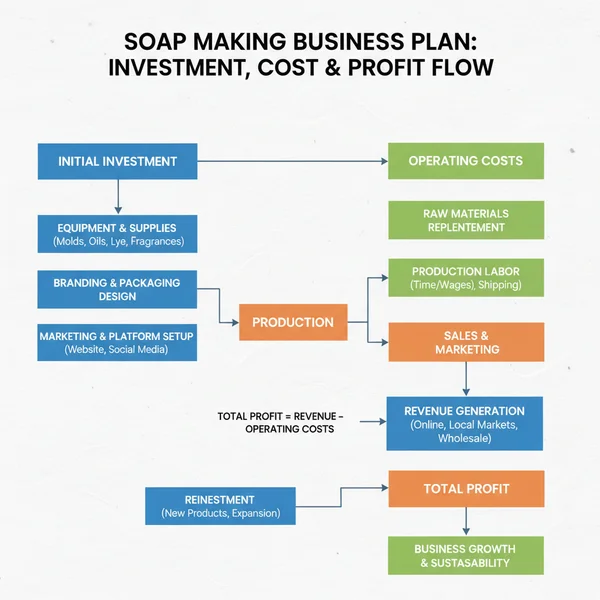
5) Costing, Pricing & Profit Margin (Realistic Numbers)
Example: Handmade Soap Costing (100g bar)
Approx cost varies by formula and fragrance quality:
- Oils + lye + additives: ₹12–₹25
- Fragrance/essential oil: ₹5–₹20
- Packaging + label: ₹4–₹12
- Labor + utilities + wastage: ₹3–₹10
- Total cost: ₹24–₹67 per bar (approx)
Selling price (India benchmarks)
- Mass/regular handmade: ₹99–₹199
- Premium organic/essential oil: ₹249–₹499
- Gift packs: higher AOV (average order value)
Gross profit margin
- D2C retail: 40%–70% possible (branding + premium positioning helps)
- Wholesale to stores: 20%–40% (lower price but higher volume)
- Private label manufacturing: 15%–35% (depends on MOQ, packaging, compliance)
6) Distribution Strategy (Soap Making Business)
Best channels to start:
- Online D2C: Amazon, Etsy (USA/UK), Shopify, Instagram/WhatsApp
- Retail: organic stores, pharmacies, gift shops, salons
- B2B: hotels, resorts, corporate gifting, event planners
- Export: partner with distributors/importers in UAE/UK/USA
Tips to win distribution:
- Offer tester bars, strong packaging, barcode/GTIN, consistent batches
- Provide retailer margins + buyback/replace policy for slow-moving SKUs
- Build 3–5 hero products (don’t launch 20 variants initially)
7) Marketing That Actually Works (private label soap manufacturer)
- Build trust with ingredient transparency, safety, and batch numbers
- Run ads on “pain points”: body odor, dry skin, sensitive skin (avoid medical claims)
- Use bundle offers (3-bar combo, gift pack) to increase AOV
- Collaborate with salons/spas and micro-influencers
- Focus on SEO pages: “charcoal soap for oily skin”, “sandalwood soap”, “hotel soap supplier”
private label soap manufacturer private label soap manufacturer custom soap packaging supplier wholesale handmade soap supplier organic soap business plan soap making equipment price bulk soap base supplier GMP cosmetic manufacturing cosmetic product liability insurance hotel amenity soap supplier soap export license requirements Soap Making Business in hindi