Thread Making Business: How to Start, Cost, Machine, and Profit
Starting a thread making business can be a good opportunity if you want to enter the textile or small manufacturing sector. Thread is used in garments, tailoring, embroidery, bag making, shoe manufacturing, home furnishing, and industrial stitching. Because demand for thread is continuous, this business can work well if you plan production, quality, and sales properly.
What Is a Thread Making Business?
A thread making business is a manufacturing unit where you produce sewing thread or related yarn-based products for different industries. The business can be started on a small scale, medium scale, or large scale depending on your budget and target market.
You can manufacture different types of thread such as:
- Cotton thread
- Polyester thread
- Nylon thread
- Embroidery thread
- Industrial stitching thread
- Colored sewing thread
The type of thread you choose will decide your machine cost, raw material need, and customer segment.
Why This Business Has Potential
Thread is a basic product used every day in many industries. This makes it a practical business for manufacturing entrepreneurs.
Main reasons it can be profitable:
- Constant demand in garment and textile industries
- Repeat orders from shops and factories
- Opportunity to supply local tailors and wholesalers
- Scope for branded packaging and retail sales
- Can start small and expand gradually
If your thread quality is strong and pricing is competitive, you can build a stable customer base.
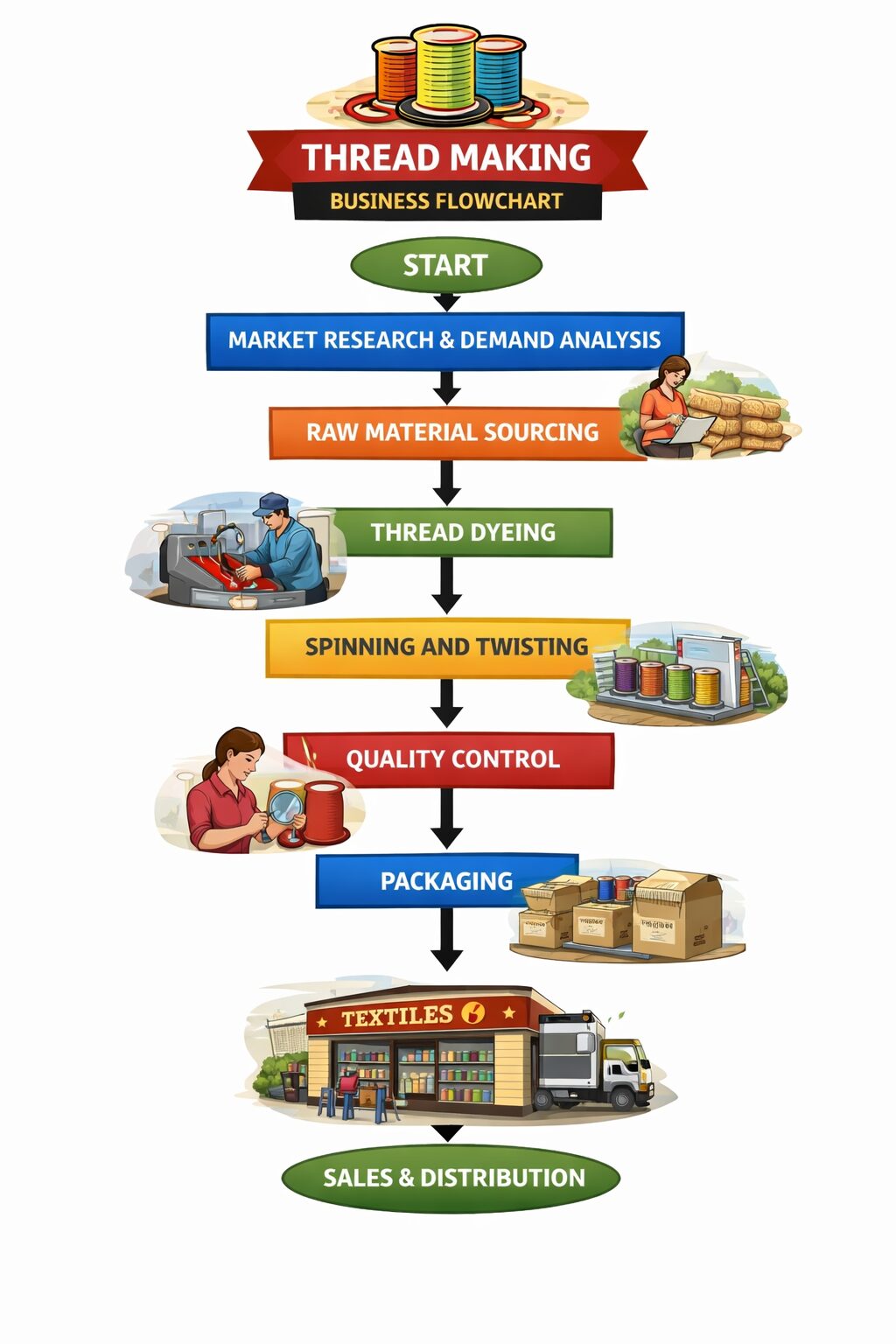
Step-by-Step Process to Start a Thread Making Business
1. Decide the Type of Thread You Want to Make
This is the first step. Do not try to make every type of thread in the beginning. Choose one category based on local demand and your investment capacity.
For example:
- If you want to target tailors and sewing shops, start with basic sewing thread
- If you want to target garment factories, produce polyester cone thread
- If you want higher-value products, explore embroidery or specialty thread
A simple business model is easier to manage in the beginning.
2. Study the Local Market
Before buying machines, check who will buy your product. Research the following:
- Tailoring shops in your city
- Garment units
- Hosiery manufacturers
- Textile wholesalers
- Fabric and accessory markets
- Online B2B buyers
Find out what type of thread is selling more, what packaging size is preferred, and what price competitors are charging.
3. Prepare a Business Plan
A proper business plan will help you avoid wasteful spending. Include:
- Product type
- Machine cost
- Raw material cost
- Electricity and labor expense
- Packaging cost
- Monthly production capacity
- Selling price
- Expected profit
- Target customers
This plan will show whether the business is financially practical.
4. Choose a Suitable Location
You need a place for machines, raw material storage, finished goods, and worker movement. A small manufacturing setup can begin in an industrial area or semi-commercial zone.
Choose a place with:
- Good electricity connection
- Water availability
- Ventilation
- Easy transport access
- Space for future expansion
For a small unit, even a compact workshop may be enough, but layout planning is important.
5. Buy Machines and Equipment
The machine requirement depends on your production process. In a basic thread making setup, common machines may include:
- Thread winding machine
- Rewinding machine
- Cone winding machine
- Twisting machine
- Dyeing machine if you produce colored thread
- Spooling machine
- Packing and labeling equipment
If you are starting very small, you can begin with fewer machines and outsource some stages like dyeing or bulk finishing.
Machine Cost
Machine cost depends on capacity, automation, and product type.
Small-scale setup
For a small unit with basic winding, twisting, and packing machines, the machine cost may be around ₹2 lakh to ₹8 lakh.
Medium-scale setup
A more complete production line with higher capacity and better finishing may cost around ₹8 lakh to ₹25 lakh.
Large-scale setup
A bigger automated thread manufacturing plant can go much higher, depending on imported machinery and industrial capacity.
It is smart to compare:
- New machines
- Used machines
- Local manufacturers
- Imported equipment
- Maintenance support
- Spare parts availability
Do not buy only based on the lowest price. Reliable machines reduce breakdowns and production loss.
Raw Materials Needed
Raw material depends on the type of thread. Common inputs include:
- Cotton yarn
- Polyester filament yarn
- Nylon yarn
- Dyes and chemicals
- Lubricants and finishing agents
- Cones, spools, and reels
- Labels and packaging material
Good quality raw material directly affects thread strength, color consistency, and customer satisfaction.
Registration and Licenses
To run the business legally, you may need basic registrations depending on your country or state. Common requirements include:
- Business registration
- GST or tax registration
- Trade license
- Factory license if applicable
- Pollution clearance if dyeing is involved
- Electricity connection approval
- MSME registration if available
Keeping paperwork clear helps when you want loans, distributors, or bulk buyers.
Total Investment Cost
A small thread making business may require investment in the following areas:
- Machine purchase
- Rent deposit
- Electrical setup
- Raw materials
- Packaging
- Labor
- Transport
- Licenses
- Working capital
Estimated small business cost
A small-scale unit may start from around ₹4 lakh to ₹12 lakh depending on machine type, production level, and location.
Medium business cost
A medium setup with more machines and inventory may need around ₹12 lakh to ₹30 lakh or more.
Always keep working capital for at least 3 to 6 months because manufacturing businesses do not become stable immediately.
Profit Margin in Thread Making Business
Profit depends on:
- Raw material cost
- Production capacity
- Thread quality
- Waste control
- Electricity usage
- Labor efficiency
- Market price
- Distribution strength
In many cases, thread manufacturing can offer moderate but steady margins. If you sell directly to retailers or garment units, profit can be better than selling only through wholesalers.
Ways to improve profit:
- Buy raw material in bulk
- Reduce machine downtime
- Maintain consistent quality
- Offer custom colors or sizes
- Build repeat customers
- Create your own brand packaging
A well-managed small unit can generate decent monthly income, but profit improves significantly when production volume increases.
How to Sell Your Thread
Production alone is not enough. You need a good sales strategy.
Sales channels:
- Local tailoring shops
- Garment factories
- Textile markets
- Wholesalers
- Stitching units
- Online B2B platforms
- Distributors
- Your own branded retail supply
You can also provide sample packs to local businesses and offer bulk discounts for repeat orders.
Challenges in This Business
Like every manufacturing business, thread making also has some challenges:
- Raw material price fluctuation
- Machine maintenance issues
- Quality inconsistency
- Competition from established brands
- Delayed payment from bulk buyers
- Color matching problems in dyed thread
These challenges can be managed with proper planning, quality checks, and strong buyer relationships.
Is This Business Right for You?
This business may be suitable if:
- You want to enter small manufacturing
- You are ready to manage machines and labor
- You can focus on quality control
- You have access to textile markets
- You are willing to grow gradually
It may not be ideal if you want very fast returns without operational involvement.
Final Thoughts
The thread making business can be a practical and scalable manufacturing opportunity because thread is an essential product in the textile and garment industry. You can start with a small setup, basic machines, and a focused product line, then expand as your customer base grows. The most important factors for success are machine quality, strong raw material, consistent production, and good market connections.