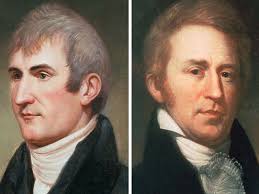
William Clark Biography Born August 1, 1770, in Caroline County, Virginia, Clark was the ninth of ten children in a planter family steeped in Revolutionary fervor. As a soldier, surveyor, Indian diplomat, and Missouri Territory governor, he bridged wilderness and civilization, negotiating treaties that ceded millions of acres while amassing a modest fortune through land and public service. Though no formal net worth tracks his 1838 death at age 68, historians estimate his estate at $50,000-$100,000—equivalent to $1.5-$3 million today—bolstered by 1,200-acre holdings and enslaved labor. His legacy, honored by stamps, counties, and naval vessels, transcends wealth, embodying the era’s bold expansion. This profile chronicles his biography, storied history, landed properties, devoted family, enduring recognitions, fiscal footprint, and visionary projects that shaped the West.
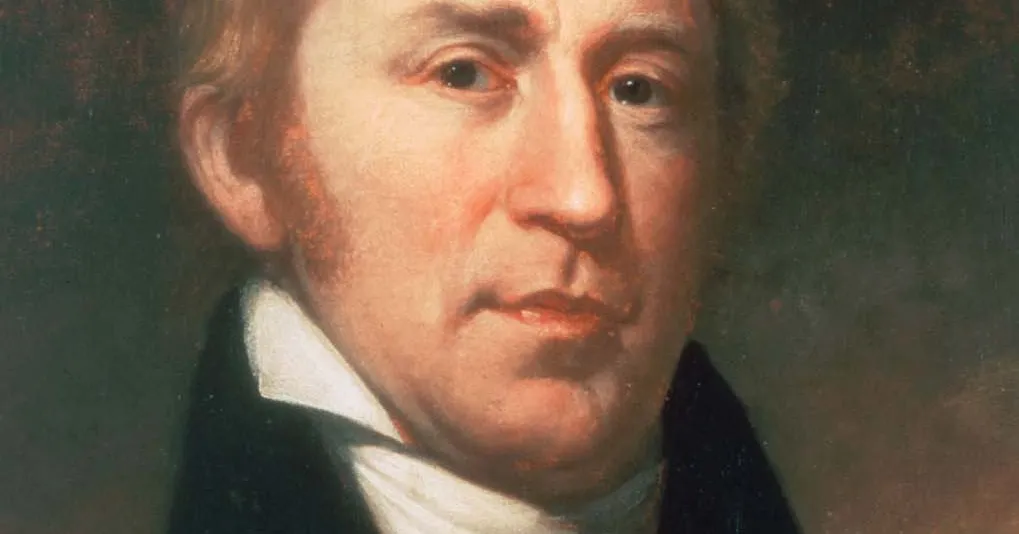
Early Life and the Forge of Frontier Spirit (William Clark Biography)
William Clark’s origins lay in Virginia’s tobacco heartland, where his parents, John Clark—a surveyor and farmer—and Ann Rogers Clark, nurtured a brood amid Anglican piety and agrarian toil. The Clarks owned modest estates totaling several thousand acres, supported by enslaved African Americans, instilling in young William the dual ethos of land stewardship and martial duty. His eldest brother, George Rogers Clark, conquered the Northwest Territory in the Revolution, a saga that shadowed William’s youth. Formal education eluded him; tutored at home in mathematics, horsemanship, and geography, Clark’s grammar remained rustic—spelling “Sioux” 27 ways in his journals—yet his intellect shone in practical arts.
In 1784, at 14, the family migrated to Kentucky’s wilds near Louisville, settling at Mulberry Hill plantation. Indian raids honed Clark’s marksmanship; by 1789, he joined the Kentucky militia, rising to captain by 1792 amid skirmishes with Shawnee and Cherokee. Enlisting in the U.S. Army in 1794, he quashed the Whiskey Rebellion and fought at Fallen Timbers, forging a bond with Meriwether Lewis under General Anthony Wayne. Resigning in 1796 for health and family duties, Clark managed Mulberry Hill, inheriting 3,300 acres, a distillery, gristmill, and 23 enslaved people upon John’s 1799 death—assets yielding modest income but strained by debts. Philanthropy emerged early: aiding missionaries and explorers, he embodied Virginia gentility transplanted to the frontier.
A Historic Odyssey: The Lewis and Clark Expedition
Clark’s immortality crystallized in 1803, when Lewis, Jefferson’s private secretary, summoned him to co-lead the Corps of Discovery. Tasked with mapping the 828,000-square-mile Louisiana Purchase, asserting U.S. sovereignty, and seeking a water route to the Pacific, the expedition launched from Camp Dubois, Illinois, on May 14, 1804. Clark, denied captaincy by Senate oversight, shared command equally, excelling in logistics, hunting, and cartography—his journals, replete with sketches, chronicled 300 species, 160 plants, and Native encounters.
Wintering at Fort Mandan (1804-05) with Sacagawea as interpreter, they traversed the Rockies via Lolo Trail, reaching the Pacific in November 1805. Clark’s “Ocean in view! O! the joy” entry captured triumph amid starvation and frostbite. Returning September 23, 1806, to St. Louis cheers, they delivered maps revolutionizing U.S. geography. Clark’s post-expedition roles amplified impact: brigadier general of militia (1808), Indian agent (1807), and Missouri governor (1813-1821), negotiating 37 treaties ceding 200 million acres. By 1822, as U.S. Superintendent of Indian Affairs, he reformed trade acts, fostering uneasy peace amid relocation pressures.
Properties: Estates of Influence and Legacy
Clark’s real estate mirrored his ascent from frontier farm to territorial magnate, blending utility with status. Mulberry Hill, the 3,300-acre Kentucky plantation inherited in 1799, anchored his early wealth—a tobacco-vetted estate with slave quarters, mill, and distillery generating $5,000-$10,000 annually (in 1800s dollars). Sold in 1802 amid family debts, it funded his St. Louis pivot.
In 1808, Clark acquired a grand St. Louis mansion on Market Street (near modern 14th Street), a two-story brick edifice dubbed “the General’s House,” valued at $15,000. Here, he hosted tribal councils, displayed expedition artifacts in a private museum—the West’s first—and entertained Jefferson. The home, with gardens and stables, symbolized his role as “Great White Father,” though razed in the 1850s for urban growth.
His crowning asset: a 1,200-acre estate at Marais des Cygnes (Swan Lake), 10 miles northwest of St. Louis, purchased post-1818 surveys. Centered on a Castor Hill farmhouse—sketched as a log-hewn manor with springs and beaver ponds—it doubled as Indian negotiation ground at “Council Grove” (now Council Grove Avenue, Pine Lawn, MO). Valued at $20,000 by 1830, it yielded timber and game, but Clark’s 1838 death led to subdivision; son Jefferson Kearny’s “Minoma” mansion endured until 1960 demolition. Investments extended to railroads and banks, patronizing St. Louis’s incorporation and arts scene.
Family Life: Devotion Amid Duty
Clark’s hearth burned bright, a counterpoint to wilderness perils. On January 5, 1808, he wed Julia Hancock, 16-year-old belle of Virginia’s elite, in Fincastle—love letters from the expedition reveal tender courtship. Julia bore five children at their St. Louis home: Meriwether Lewis Clark Sr. (1809–1881, West Point grad, duelist); William Preston (1811–1840, soldier); Mary Margaret (1814–1821, infant death); George Rogers Hancock (1816–1858, lawyer); and John Julius (1818–1838, physician). Julia’s 1820 death at 28 from pneumonia devastated Clark, who mourned deeply, naming a son for her brother.
A year later, he married Harriet Kennerly Radford, 27, a widowed cousin of Julia’s with three children, in a union blending solace and alliance. They added three: Jefferson Kearny (1824–1900, architect of family obelisk); Edmund (1826–1827, infant); and Harriet Jr. (dates unknown, died young). Harriet’s 1831 death left Clark a widower again, raising blended broods of eight with guardianships over Sacagawea’s orphans—Jean Baptiste and Lisette Charbonneau—whom he educated and supported, embodying paternal magnanimity. Grandchildren, including Meriwether’s Civil War sons, carried the line; family reunions at Council Grove fused Kentucky lore with Missouri progress.
Awards and Recognitions: Posthumous Pantheon
Clark shunned personal glory, but accolades accrued. Jefferson granted 1,600-acre Virginia bounty land (1807) and brigadier generalcy (1808) for expedition valor. Freemasonry honored him via St. Louis Lodge No. 111 (1809 initiation). Posthumously, the 1954 U.S. 3-cent stamp commemorated the expedition’s sesquicentennial, etching Lewis and Clark eternally.
Nature’s tributes abound: Clarkia genus (evening primrose), Oncorhynchus clarki (cutthroat trout), and Nucifraga columbiana (Clark’s nutcracker), species he documented. Six counties—Arkansas, Idaho, Kentucky, Missouri, Montana, Washington—bear his name, alongside rivers (Clarks Fork), mountains (Clark’s Peak, OR), and U.S. Navy vessels: USS Lewis and Clark (nuclear sub, 2006) and USNS Lewis and Clark (supply ship). In 2001, President Clinton retroactively promoted him to captain, rectifying Senate slight. Statues at St. Louis’s Gateway Arch and Missouri’s capitol affirm his diplomat’s mantle.
Financial Status: Wealth in Service
Clark’s ledger balanced public duty with private gain, eschewing opulence for influence. Annual income as governor ($2,000) and superintendent ($3,000) sustained his household, augmented by estate yields ($5,000-$8,000) and enslaved labor—owning up to 40 by 1820s, per records. No vast fortune accrued; debts from family aid and treaty logistics tempered assets. At death, his estate—lands, museum artifacts, slaves—valued $50,000-$100,000 ($1.5-$3 million today), per probate estimates, funding heirs modestly. Frugal yet generous, Clark invested in St. Louis banks and railroads, yielding dividends; his “wealth” lay in shaping empire, not hoarding gold.
Future Projects: Visions of Western Harmony
Clark’s final years brimmed with forward gaze. As superintendent, he drafted the 1834 Indian Bureau reorganization, advocating humane relocation over extermination—though flawed, it influenced policy amid Trail of Tears. Patron of arts, he endowed the West’s inaugural museum (1820s St. Louis), amassing 10,000 artifacts for public edification. Railroad stakes eyed trans-Mississippi links, while schoolfounding in Missouri Territory seeded education. Unfinished: a comprehensive Indian dictionary from tribal consultations, lost to time. His 1810 Master Map guided decades of surveys, birthing states from wilderness.
Enduring Echoes: A Bridge to the Beyond
William Clark’s life—from Virginia’s hearths to Pacific’s shores—wove exploration’s thrill with governance’s gravity. Widowed twice, father to eight, he guarded Sacagawea’s legacy while treaties redrew maps. Buried at Bellefontaine Cemetery under a $25,000 obelisk (erected 1904 by son Jefferson), his journals—published 1904-05—immortalize a man who, in Lewis’s words, “possessed the talents of action.” Clark’s compass pointed west, illuminating paths for millions.
Questions and Answers
- When and where was William Clark born? William Clark was born on August 1, 1770, in Caroline County, Virginia.
- Who was William Clark’s expedition partner, and what was the main goal of their journey? His partner was Meriwether Lewis, and the Lewis and Clark Expedition (1804-1806) aimed to explore the Louisiana Purchase, map routes to the Pacific, and establish U.S. claims in the West.
- How many wives did William Clark have, and how many children in total? He had two wives—Julia Hancock (m. 1808, d. 1820) and Harriet Kennerly Radford (m. 1821, d. 1831)—and eight children between them.
- What was one major property owned by William Clark in Missouri? His 1,200-acre estate at Marais des Cygnes, including the Castor Hill farmhouse and Council Grove, served as a family home and Indian treaty site.
- What is the estimated value of William Clark’s estate at his death? Approximately $50,000-$100,000 (equivalent to $1.5-$3 million today), derived from lands, public salaries, and investments.
- Name one posthumous honor given to William Clark. In 2001, President Bill Clinton posthumously promoted him to captain in the U.S. Army, recognizing his expedition leadership. Thank you to read this article on Fastnews123.com
William Clark Biography William Clark Biography William Clark Biography William Clark Biography William Clark Biography William Clark Biography William Clark BiographY IN HINID