Coffee Shop Business – Complete Guide (2026)
Introduction
The Coffee Shop Business culture is growing rapidly across the world. Big brands like Starbucks and Dunkin’ have shown how profitable this industry can be. However, small independent coffee shops also succeed by offering unique ambiance, quality coffee, and personalized service.
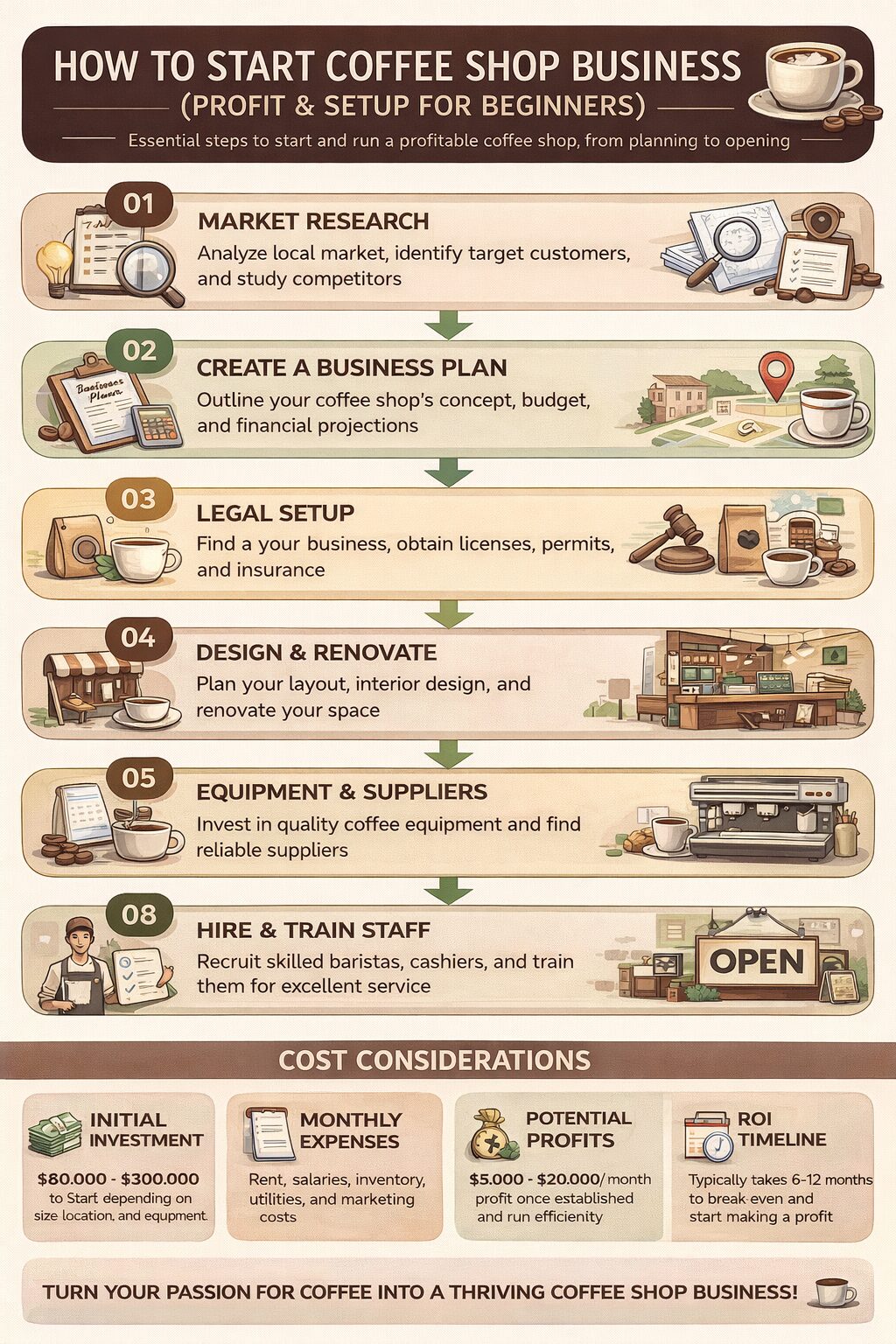
Step 1: Market Research
Before starting, research your local market:
- Identify your target customers (students, office workers, tourists)
- Study competitors and their pricing
- Understand trending products like cold brew, cappuccino, and specialty drinks
Choose whether you want a premium café, budget coffee shop, or takeaway model.
Step 2: Create a Business Plan
A solid business plan helps you stay focused. Include:
- Startup costs and budget
- Menu items (coffee, snacks, desserts)
- Pricing strategy
- Marketing plan
- Expected monthly revenue
Step 3: Choose a Good Location
Location is the most important factor:
- High foot traffic areas (near colleges, offices, malls)
- Easy parking and accessibility
- Visible storefront
A small coffee shop can start with 200–500 sq. ft. space.
Step 4: Business Registration & Licenses
You need to complete legal formalities:
- Register your business
- Get food safety license (if required in your country)
- Apply for local permits
- Open a business bank account
Step 5: Setup & Interior Design
Your coffee shop should feel comfortable and attractive:
- Use modern or cozy interior design
- Provide seating arrangements
- Install lighting and décor
- Add free Wi-Fi to attract customers
Ambiance plays a big role in customer retention.
Step 6: Machines & Equipment
You need the following equipment:
- Espresso machine (main equipment)
- Coffee grinder
- Coffee maker
- Refrigerator
- Blender (for cold drinks)
- Cups, utensils, and furniture
Step 7: Raw Materials
Basic ingredients include:
- Coffee beans
- Milk and cream
- Sugar and syrups
- Chocolate powder
- Snacks and bakery items
Choose high-quality coffee beans to build your brand reputation.
Step 8: Hire Staff
For a small shop, you need:
- 1–2 baristas
- 1 helper or cashier
Train your staff in:
- Coffee preparation
- Customer service
- Cleanliness
Step 9: Investment / Cost
Small Coffee Shop Setup
- Rent: $500 – $2,000/month
- Equipment: $3,000 – $10,000
- Interior setup: $2,000 – $5,000
- Raw materials: $1,000
- Staff salary: $1,000/month
???? Total Investment: $7,000 – $20,000
Step 10: Pricing & Profit
Example:
- Cost per cup: $1
- Selling price: $3–$5
- Profit per cup: $2–$4
If you sell 100 cups/day:
???? Daily profit = $200 – $400
???? Monthly profit = $6,000 – $12,000
Profit increases with snacks and add-ons.
Step 11: Marketing Strategy
To attract customers:
- Create social media pages
- Offer opening discounts
- List your shop on Google Maps
- Collaborate with food delivery apps
- Use attractive packaging
Step 12: Grow Your Business
Once stable, you can:
- Add new menu items
- Start online delivery
- Open multiple outlets
- Build your own coffee brand
Tips for Success
- Focus on quality coffee
- Maintain cleanliness
- Offer good customer service
- Create a unique theme or concept
- Keep prices competitive
Challenges
- High competition
- Maintaining consistency
- Managing staff
- Controlling costs
Conclusion
Starting a coffee shop business in 2026 is a great opportunity if you plan properly and focus on quality and customer experience. With the right location, equipment, and marketing strategy, you can build a successful and profitable café. Start small, learn the business, and grow step by step.
Coffee Shop Business plan Coffee Shop Business in hindi Coffee Shop Business tips Coffee Shop Business start coffee shop business 2026 how to start coffee shop step by step small coffee shop startup cost and profit low investment coffee shop business ideas coffee shop business plan for beginners coffee shop setup guide 2026 how to open cafe with low budget coffee shop profit margin per cup cafe business startup tips 2026 coffee shop equipment list and cost