Why Start a Peanut Chikki Business?
The peanut chikki business is attractive because of its simplicity and strong market demand. Chikki is a nutritious snack made primarily from peanuts and jaggery, both of which are affordable and widely available. It is rich in protein, iron, and energy, making it popular among all age groups.
From a business perspective, this industry benefits from:
- Low investment requirements
- High demand in both urban and rural markets
- Long shelf life of the product
- Easy manufacturing process
- Opportunities for export and online sales
Keywords such as profitable food business, low investment business ideas, small scale manufacturing business, and healthy snack business are highly searched and align perfectly with this venture.
Raw Materials Required
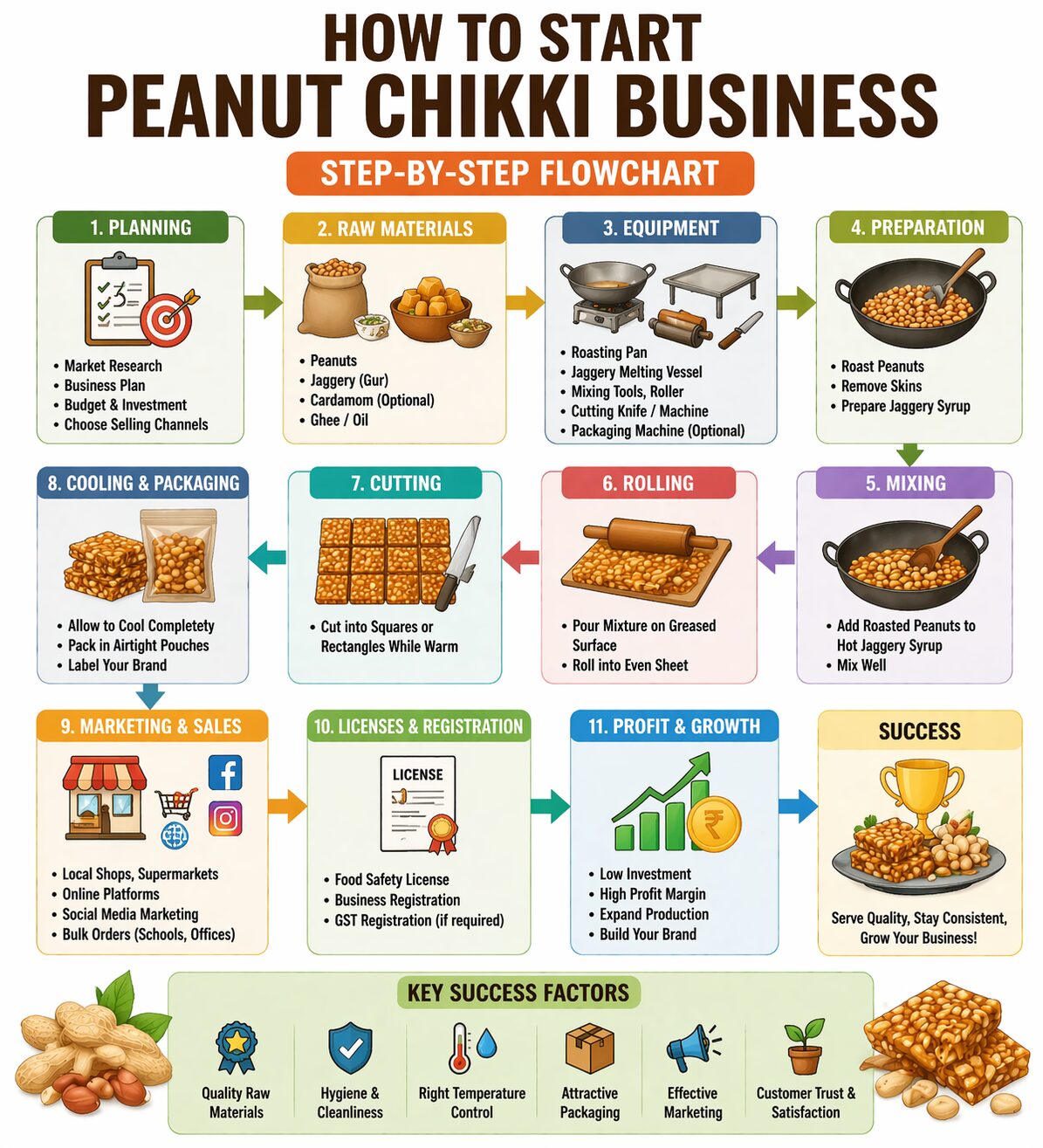
To start a peanut chikki production unit, you need the following raw materials:
- Raw peanuts (groundnuts)
- Jaggery (gur)
- Sugar (optional for variation)
- Cardamom (for flavor)
- Ghee or oil (for greasing)
These ingredients are inexpensive and can be sourced locally, helping you maintain a good profit margin.

Machinery and Equipment
For a small-scale setup, you don’t need expensive machinery. Basic equipment includes:
- Roasting pan or machine
- Jaggery melting vessel
- Mixing tools
- Rolling board and roller
- Cutting knives or chikki cutting machine
- Packaging machine (optional for scaling)
As your business grows, you can invest in automated machines to increase production capacity and efficiency.
Step-by-Step Manufacturing Process
1. Roasting the Peanuts
Peanuts are roasted evenly to enhance flavor and remove moisture. After roasting, the skins are removed.
2. Preparing Jaggery Syrup
Jaggery is heated until it melts and reaches the right consistency. This step is crucial because the texture of chikki depends on the syrup quality.
3. Mixing
Roasted peanuts are added to the hot jaggery syrup and mixed thoroughly to ensure even coating.
4. Rolling
The mixture is poured onto a greased surface and rolled into thin sheets using a roller.
5. Cutting
While still warm, the sheet is cut into desired shapes such as squares or rectangles.
6. Cooling and Packaging
Once cooled, the chikki is packed in airtight packaging to maintain freshness.
This simple process makes it an ideal home-based food business and a strong contender in the high profit small business category.
Investment and Cost Analysis
The initial investment for a peanut chikki business depends on the scale:
- Small-scale setup: $500 – $2,000
- Medium-scale unit: $3,000 – $10,000
Major expenses include raw materials, equipment, labor, and packaging. Since raw materials are inexpensive, the cost of production remains low, increasing profitability.
High CPC keywords such as low investment high profit business, food processing business plan, and small manufacturing business ideas are highly relevant here.
Profit Margin and ROI
Peanut chikki has excellent profit potential. The production cost per kilogram is relatively low, while the selling price can be significantly higher depending on branding and packaging.
Typical profit margins range from 20% to 40%, and even higher if you sell directly to consumers through online platforms or retail outlets.
With proper marketing, you can achieve a fast return on investment (ROI), making it one of the best startup business ideas in the food sector.
Packaging and Branding
Packaging plays a crucial role in attracting customers. Use food-grade materials and design appealing labels that highlight:
- Nutritional benefits
- Ingredients (natural and preservative-free)
- Brand identity
Eco-friendly packaging is also a growing trend and can help you stand out in the market. Strong branding can position your product as a premium healthy snack option.
Marketing Strategies
To succeed in the peanut chikki business, effective marketing is essential. Consider the following strategies:
Online Marketing
Sell your products through e-commerce platforms and social media. Use SEO-rich keywords like buy peanut chikki online, organic chikki, and healthy Indian snacks to improve visibility.
Local Distribution
Supply to local grocery stores, supermarkets, and sweet shops. Offering free samples can help attract new customers.
Bulk Orders
Target bulk buyers such as schools, offices, and event organizers. This ensures consistent sales volume.
Export Opportunities
Chikki has demand in international markets, especially among the Indian diaspora. Exporting can significantly boost profits.
Licenses and Legal Requirements
To operate legally, you may need:
- Food safety license (depending on your country)
- Business registration
- GST or tax registration
Complying with regulations builds trust and allows you to expand your business without issues.
Challenges and Solutions
Like any business, this venture comes with challenges:
- Maintaining consistent quality
- Managing shelf life
- Competition from established brands
To overcome these:
- Use high-quality ingredients
- Maintain hygiene standards
- Focus on unique flavors and branding
Innovation, such as adding sesame seeds, chocolate, or dry fruits, can help you differentiate your product.
Conclusion
The peanut chikki making business is a lucrative opportunity for aspiring entrepreneurs looking for a low-risk, high-reward venture. With minimal investment, simple production methods, and growing demand for healthy snacks, this business has strong potential for success.
Peanuts Chikki making business Peanuts Chikki business Peanuts Chikki making business plan peanut chikki making business chikki business plan 2026 low investment food business ideas peanut chikki profit margin how to start chikki business at home groundnut chikki manufacturing business small scale chikki making business homemade chikki business ideas chikki making machine price profitable food business ideas 2026