
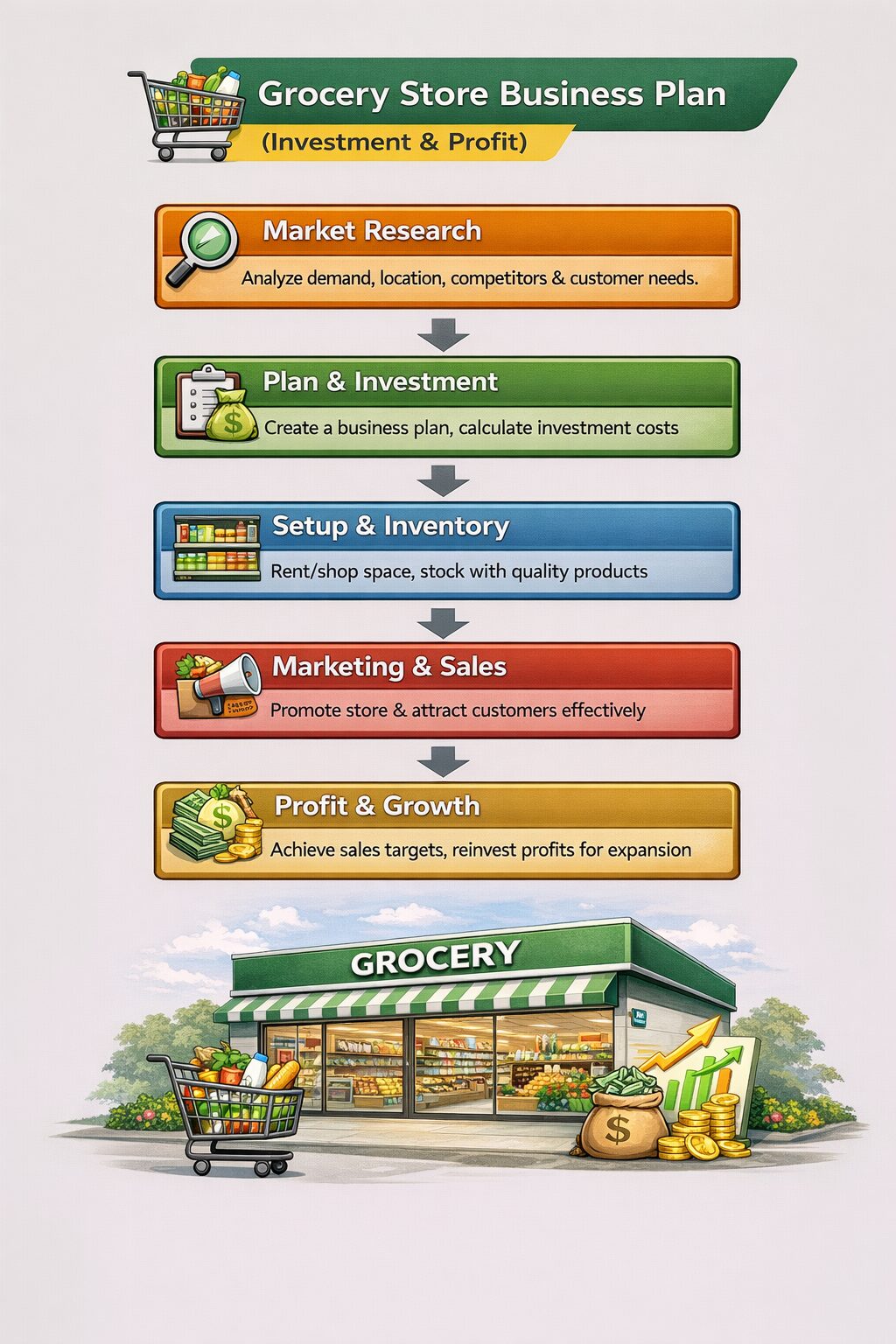
Low Cost Grocery Store Business Plan for Beginners (High Profit Tips)
A Grocery Store Business is a retail business that sells everyday items such as food, beverages, household products, and personal care goods. This business works on high volume and low margin, meaning steady customer flow is key to success. You can start small from home or open a physical shop depending on your budget.
Types of Grocery Store Businesses
There are different formats you can choose based on your investment level:
- Small Kirana Store: A local neighborhood shop with essential items
- Mini Supermarket: A slightly larger store with more variety and self-service
- Online Grocery Store: Home-based delivery model using apps or social media
- Organic Grocery Store: Focus on organic and healthy products
Each type has its own cost structure and profit potential.

Investment Cost Breakdown
The investment required depends on the size and scale of your grocery store.
1. Small Home-Based Grocery Store
- Initial stock: $1,000 – $3,000
- Shelves and storage: $300 – $800
- Basic equipment (weighing machine, billing): $200 – $500
- Total Investment: $1,500 – $4,500
2. Medium-Sized Store
- Shop rent (monthly): $300 – $1,000
- Interior setup: $1,000 – $3,000
- Inventory: $3,000 – $10,000
- Staff salary: $500 – $1,500
- Total Investment: $5,000 – $15,000
3. Online Grocery Store
- Website or app setup: $200 – $1,000
- Delivery setup: $300 – $1,000
- Inventory: $1,000 – $5,000
- Total Investment: $1,500 – $7,000
Required Equipment and Setup
To run a grocery store efficiently, you need:
- Storage racks and shelves
- Refrigerator (for dairy and frozen items)
- Weighing machine
- Billing system or POS software
- Packaging materials
A clean and well-organized store increases customer trust and sales.
Product Selection Strategy
Choosing the right products is crucial for success. Focus on:
- Daily essentials (rice, flour, sugar, oil)
- Packaged foods (snacks, biscuits, beverages)
- Personal care products (soap, shampoo)
- Household items (detergents, cleaners)
Always stock fast-moving goods and avoid overstocking slow-selling items.
Profit Margin in Grocery Business
Profit margins vary depending on the product category:
- Food grains and staples: 5%–10%
- Packaged goods: 10%–20%
- Personal care items: 15%–25%
- Organic products: 20%–40%
Monthly Profit Estimate
- Small store: $300 – $1,000
- Medium store: $1,000 – $3,000
- Online store: $500 – $2,000
Increasing sales volume and customer loyalty can significantly boost profits.
Distribution and Supply Chain
A strong distribution system ensures regular stock availability and better pricing.
Sources of Supply
- Wholesale markets
- Local distributors
- Direct company suppliers
- Online wholesale platforms
Distribution Tips
- Build relationships with multiple suppliers
- Compare prices regularly
- Buy in bulk to get discounts
- Ensure timely restocking
Efficient distribution helps reduce costs and increase profit margins.
Marketing and Customer Attraction
Even a small grocery store needs marketing to grow.
- Offer discounts and combo deals
- Provide home delivery services
- Use social media platforms for promotion
- Maintain good customer service
Word-of-mouth marketing is especially powerful in local areas.
Challenges in Grocery Business
Some common challenges include:
- High competition
- Low profit margins on some products
- Inventory management issues
- Price fluctuations
Proper planning and management can help overcome these challenges.
Tips for Success
- Choose a location with good foot traffic
- Focus on customer satisfaction
- Keep track of inventory and sales
- Maintain product quality and freshness
- Start small and expand gradually
Conclusion (grocery store business)
The grocery store business is a reliable and evergreen opportunity with steady demand. With a low to medium investment, you can start from home and grow into a full-scale retail store. Success depends on smart product selection, efficient distribution, and strong customer relationships. If managed properly, a grocery business can provide long-term profits and financial stability.
online grocery business how to start online grocery business in india grocery delivery business grocery store business 2026 how to start grocery store business low investment grocery store ideas grocery store profit margin small grocery shop business plan grocery store startup cost home based grocery business grocery distribution business guide mini supermarket business plan grocery store income per month grocery store business plan for beginners 2026 low cost grocery shop startup guide profitable grocery business ideas from home how to manage grocery store inventory




[…] बिज़नेस, चलिए जानते हैं कौन से हैं ये साइड बिज़नेस […]
[…] आप कुछ दिन के लिए छुट्टी जा रहे हैं तो लोगों को पहले ही बता दे। […]