How to Start Washbasin Manufacturing Business in 2026 (Low Investment, High Profit)
The Sanitary Ware Manufacturing Business is a highly profitable venture in the construction and home improvement industry. With rapid urbanization, increasing real estate development, and rising demand for modern bathrooms, the need for stylish and durable washbasins is continuously growing. This business offers excellent opportunities for entrepreneurs looking to enter the sanitary ware manufacturing sector with strong profit margins and scalable growth.
Market Demand & Industry Overview
The global sanitary ware market is expanding due to increased construction activities, especially in countries like New Zealand, Australia, Canada, and India. Residential homes, commercial buildings, hotels, and hospitals all require washbasins, ensuring consistent demand.
Key market drivers:
- Rising urban population
- Growth in real estate and infrastructure
- Demand for luxury and designer bathrooms
- Government housing projects
Washbasins are available in different types such as ceramic, stainless steel, glass, marble, and solid surface materials, giving multiple product opportunities.

Types of Washbasins You Can Manufacture
Choosing the right product range is critical for success. Popular categories include:
- Ceramic Washbasins – Most common and high demand
- Wall-Mounted Basins – Space-saving and modern
- Countertop Basins – Premium segment with high profit
- Pedestal Basins – Traditional and widely used
- Stainless Steel Basins – Durable and commercial use
- Designer Basins (Glass/Stone) – Luxury market
Start with ceramic or solid surface basins as they offer the best balance of cost and demand.
Investment & Setup Cost
The investment depends on scale:
Small-Scale Setup:
- Investment: $20,000 – $50,000 NZD
- Manual or semi-automatic machines
- Limited production capacity
Medium-Scale Setup:
- Investment: $80,000 – $200,000 NZD
- Automated machinery
- Higher production output
Major Costs:
- Machinery and equipment
- Raw materials (clay, glaze, resin)
- Factory rent or land
- Labor wages
- Utilities (electricity, water)
Machinery & Equipment Required
Key machines for washbasin production include:
- Moulding machines
- Casting molds
- Kiln (for ceramic firing)
- Polishing and finishing machines
- Cutting tools
- Spray glazing equipment
Automation increases productivity and reduces labor costs.
Raw Materials Required
Raw materials vary by product type:
- Clay and silica (for ceramic basins)
- Resin and chemicals (for solid surface basins)
- Stainless steel sheets
- Glass materials
- Glaze and coating chemicals
Sourcing high-quality materials ensures durability and brand reputation.
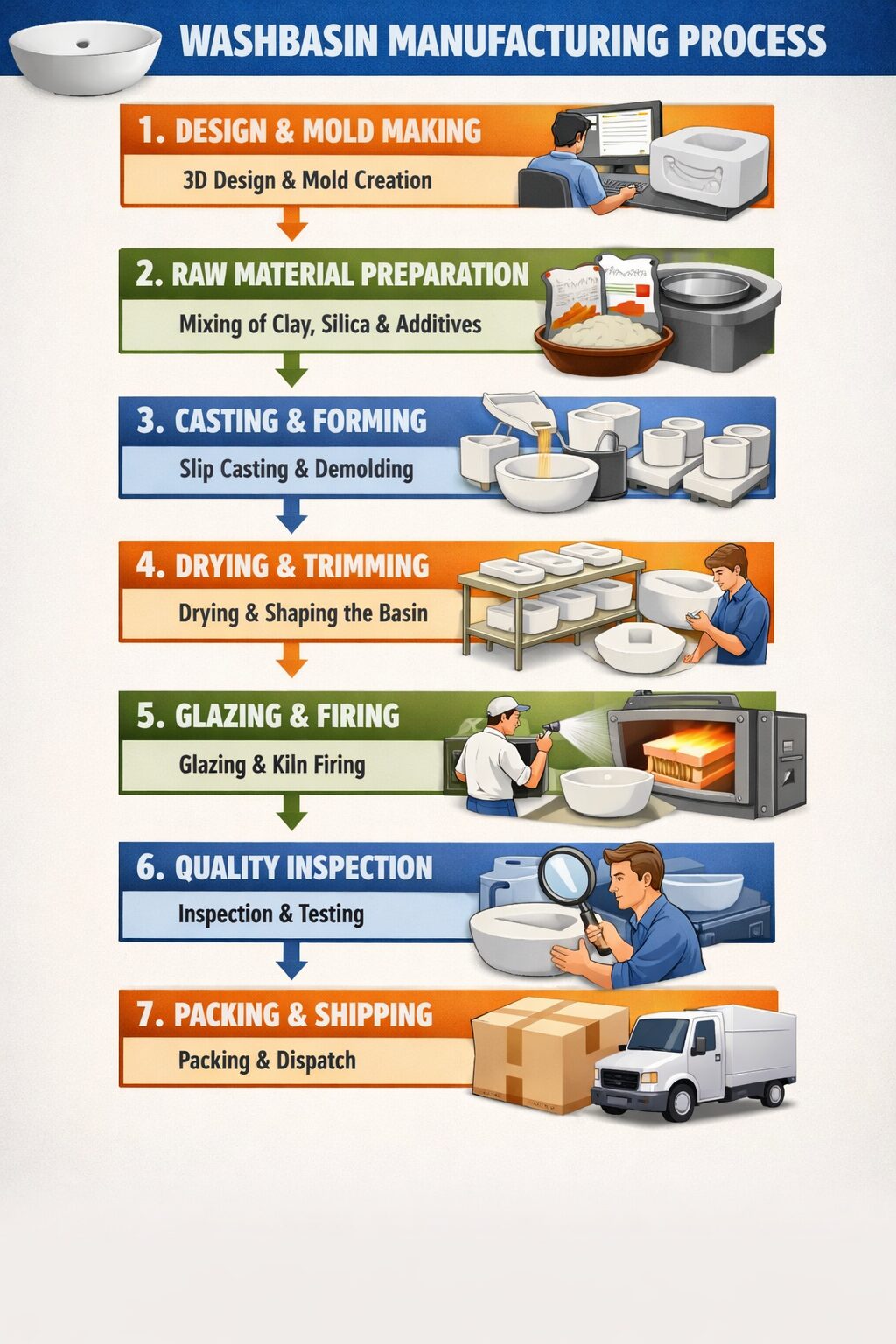
Manufacturing Process (Step-by-Step)
1. Design & Mould Preparation
Create basin designs and prepare molds.
2. Casting or Shaping
Pour raw material into molds or shape manually.
3. Drying
Allow the product to dry completely to remove moisture.
4. Firing (Ceramic Only)
Use a kiln to harden the basin at high temperatures.
5. Glazing & Finishing
Apply coating for shine and durability.
6. Quality Check
Inspect for cracks, leaks, or defects.
7. Packaging
Pack safely for transport and sale.
Profit Margin & Earnings
Washbasin manufacturing offers strong margins:
- Production cost per unit: $10 – $30
- Selling price: $40 – $150+
- Profit margin: 30% – 60%
Luxury designer basins can generate even higher profits.
Monthly income depends on production capacity. A small unit can earn $5,000 – $15,000 NZD per month, while larger units can scale significantly.
Legal Requirements & Licensing
To start legally, you need:
- Business registration in New Zealand
- GST registration
- Health and safety compliance
- Environmental approvals (for waste and emissions)
Ensure your products meet building and plumbing standards.
Marketing & Sales Strategy
Effective marketing is key to success:
Online Marketing:
- Create a website
- Use SEO (target keywords like buy washbasin online, best bathroom sinks NZ)
- Social media promotion
Offline Marketing:
- Tie-ups with builders and contractors
- Supply to hardware stores
- Partner with interior designers
B2B Opportunities:
- Real estate developers
- Hotels and commercial projects
- Government housing contracts
Location & Factory Setup Tips
Choose a location with:
- Easy access to transportation
- Availability of raw materials
- Affordable labor
Industrial zones are ideal for manufacturing units.
Challenges in Washbasin Manufacturing Business
- High initial investment
- Competition from established brands
- Quality control issues
- Logistics and transportation costs
However, with proper planning and branding, these challenges can be managed.
Future Growth & Expansion
Once established, you can expand into:
- Full bathroom fittings manufacturing
- Export business (Australia, USA, UK markets)
- Custom designer basins
- Smart and eco-friendly sanitary products
The global demand for premium bathroom solutions is increasing, making this a long-term profitable business.
Conclusion (Sanitary Ware Manufacturing Business)
The washbasin manufacturing business is a high-potential and scalable opportunity in 2026. With the right investment, quality production, and strong marketing strategy, you can build a successful brand in the sanitary ware industry. Focus on innovation, modern designs, and customer satisfaction to stand out in the competitive market.
Washbasin Manufacturing Business Plan in Hindi Washbasin manufacturing business Bathroom sink manufacturing business Washbasin manufacturing cost Washbasin business profit margin How to start washbasin factory Bathroom sink business plan 2026 Low investment manufacturing business Sanitary ware business ideas Washbasin production process