Loratadine Tablet: Uses, Benefits, and Side Effects Guide
Loratadine Tablet Uses is a widely used, second-generation antihistamine medication available over-the-counter (OTC) and by prescription. It is a cornerstone in the management of allergic conditions, prized for its effectiveness with a lower risk of sedation compared to older antihistamines. This professional guide details its primary uses, therapeutic benefits, potential side effects, and key considerations for safe use.
What is Loratadine? Mechanism of Action
Loratadine belongs to a class of drugs known as non-sedating antihistamines. It works by selectively blocking histamine H1-receptors in the body. Histamine is a chemical released by the immune system during an allergic reaction, causing classic symptoms like itching, sneezing, runny nose, and watery eyes. By inhibiting histamine from binding to its receptors, loratadine effectively prevents or relieves these symptoms without readily crossing the blood-brain barrier in most people, which minimizes drowsiness.
Primary Uses and Therapeutic Benefits
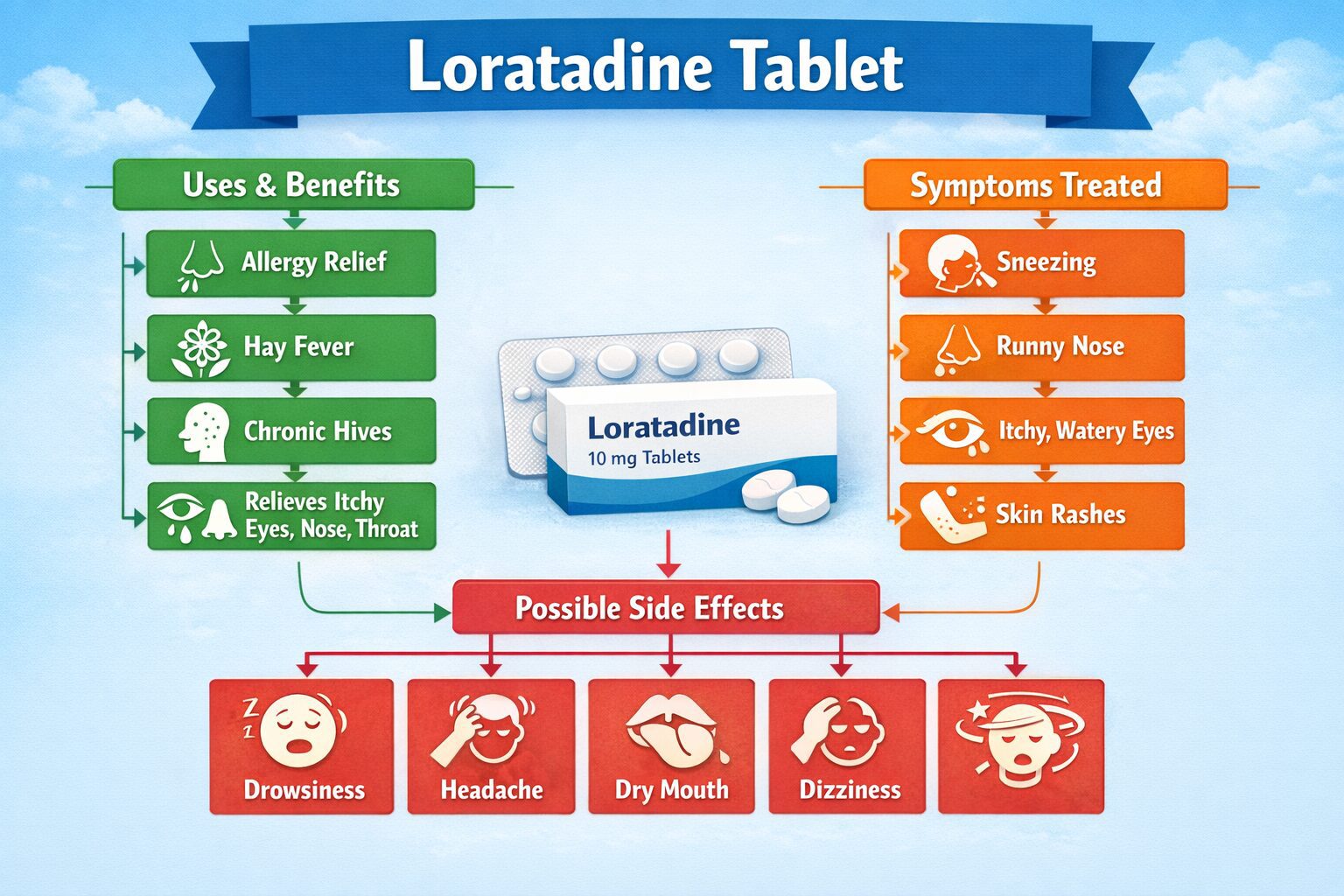
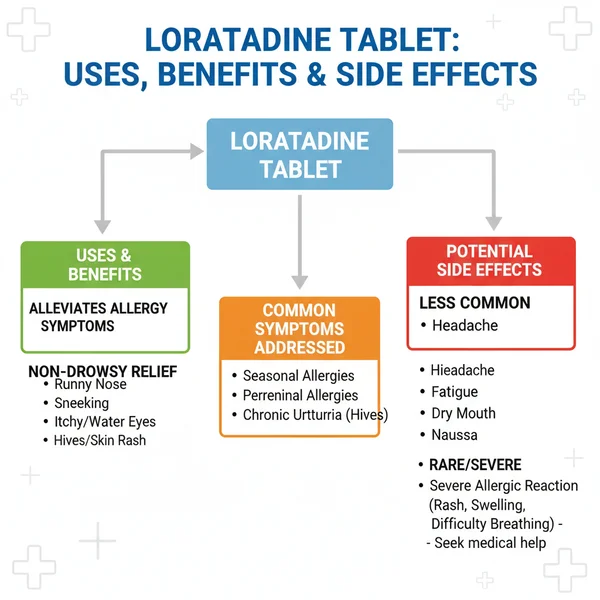
Loratadine is indicated for the symptomatic relief of various allergic conditions. Its key benefits include 24-hour relief from a single dose, minimal drowsiness, and non-impairment of daily activities for most users.
1. Allergic Rhinitis (Hay Fever)
This is the most common use. Loratadine effectively treats:
- Sneezing
- Runny nose (rhinorrhea)
- Itchy nose, palate, or throat
- Itchy, watery, red eyes (allergic conjunctivitis) It is effective for both seasonal allergies (triggered by pollen, mold spores) and perennial allergies (triggered by dust mites, pet dander, cockroaches).
2. Chronic Idiopathic Urticaria (Hives)
Loratadine is used to relieve:
- Red, raised, itchy welts (wheals) on the skin.
- Pruritus (itching) associated with hives of unknown cause (“idiopathic”).
3. Other Allergic Skin Conditions
It can help manage itching associated with:
- Eczema (Atopic Dermatitis)
- Allergic contact dermatitis
Comparative Benefits Over First-Generation Antihistamines
| Feature | Loratadine (2nd Gen) | Diphenhydramine (1st Gen, e.g., Benadryl®) |
|---|---|---|
| Sedation Risk | Low | High |
| Dosing Frequency | Once daily | Multiple times daily |
| Impact on Cognition | Minimal | Can cause significant impairment |
| Anticholinergic Effects (dry mouth, urinary retention) | Very Low | High |
Dosage and Administration Guidelines
- Standard Adult & Pediatric Dose (12+ years): 10 mg once daily.
- Pediatric Dose (2-12 years): Dose is based on weight. Typically 5 mg once daily for children under 30 kg (66 lbs).
- Forms Available: Tablets, rapidly-disintegrating tablets, chewable tablets, and syrup.
- Timing: Can be taken with or without food. Taking it on an empty stomach may lead to slightly faster absorption.
Important: Always follow the specific product label or your doctor’s instructions. Do not exceed the recommended dose.
Potential Side Effects and Adverse Reactions
Loratadine is generally well-tolerated, but side effects can occur.
Common Side Effects (Usually Mild)
- Headache
- Fatigue or drowsiness (Note: While marketed as “non-drowsy,” about 1-10% of users may experience some sedation)
- Dry mouth
- Gastrointestinal upset (e.g., nausea, stomach pain)
Less Common Side Effects
- Nervousness
- Dizziness
- Increased appetite
- Skin rash
Serious Side Effects (Rare – Seek Medical Attention)
While extremely uncommon, discontinue use and contact a healthcare provider immediately if you experience:
- Signs of an allergic reaction: Hives, difficulty breathing, swelling of face/lips/tongue/throat.
- Fast, pounding, or irregular heartbeat (palpitations).
- Severe dizziness or confusion.
- Liver problems: Symptoms include persistent nausea/vomiting, severe stomach/abdominal pain, dark urine, yellowing of eyes/skin (jaundice). (Very rare, mostly associated with overdose).
Important Warnings, Precautions, and Drug Interactions
Who Should Use Caution or Avoid Loratadine?
- Liver or Kidney Impairment: Patients with severe liver disease (cirrhosis) or kidney disease may require a reduced dose (e.g., 10 mg every other day) as the drug is metabolized by the liver.
- Phenylketonuria (PKU): Some rapidly-disintegrating formulations contain aspartame, a source of phenylalanine.
- Pregnancy and Breastfeeding: Consult a doctor before use. Loratadine is generally considered low risk (Category B), but professional guidance is essential.
- Children Under 2 Years: Safety and efficacy are not established. Do not administer without a pediatrician’s direction.
Significant Drug Interactions
Inform your doctor about all medications you take. Key interactions include:
- Erythromycin, Cimetidine, Ketoconazole, Fluconazole: These drugs can inhibit the liver enzymes that break down loratadine, potentially increasing its blood levels and the risk of side effects (including rare cardiac effects like QT prolongation). Dose adjustment may be needed.
- Central Nervous System (CNS) Depressants: While loratadine has low sedative potential, combining it with alcohol, tranquilizers, or sleep aids could theoretically increase drowsiness.
- Other Anticholinergic Drugs: May theoretically enhance anticholinergic effects, though loratadine has minimal activity here.
Practical Tips for Optimal Use and When to See a Doctor
- Start Before Exposure: For seasonal allergies, consider starting loratadine 1-2 weeks before the allergy season begins for optimal preventive effect.
- Consistency is Key: Take it regularly for chronic conditions, not just when symptoms flare.
- It Treats Symptoms, Not the Cause: Loratadine relieves symptoms but does not cure the underlying allergy. For long-term management, discuss allergen avoidance strategies and immunotherapy (allergy shots) with an allergist.
- Know When to Seek Medical Help:
- If symptoms persist after 7 days of OTC use.
- If you develop fever, thick yellow/green nasal discharge, or sinus pain (may indicate an infection, not allergies).
- If you experience any severe or concerning side effects.
- If you have a history of heart or liver disease before starting.
Conclusion: A Safe and Effective First-Line Antihistamine
Loratadine remains a first-choice antihistamine for millions due to its proven efficacy, 24-hour duration of action, and favorable safety profile with minimal sedation. It is a powerful tool for reclaiming quality of life from the burdens of allergic rhinitis and urticaria. However, responsible use is paramount. Always read the product label carefully, be mindful of potential interactions and contraindications, and consult a healthcare professional for persistent symptoms or if you have underlying health conditions. For most adults and children, loratadine provides reliable relief, allowing them to manage their allergies without significant disruption to their daily routines.
Loratadine side effects What is Loratadine used for? Loratadine allergy relief Loratadine dosage Non-drowsy allergy medicine Loratadine over-the-counter Common Loratadine side effects Loratadine benefits Loratadine vs Benadryl