
Zepbound (Tirzepatide): What It Is, Benefits, Side Effects, and How It Helps with Weight Loss
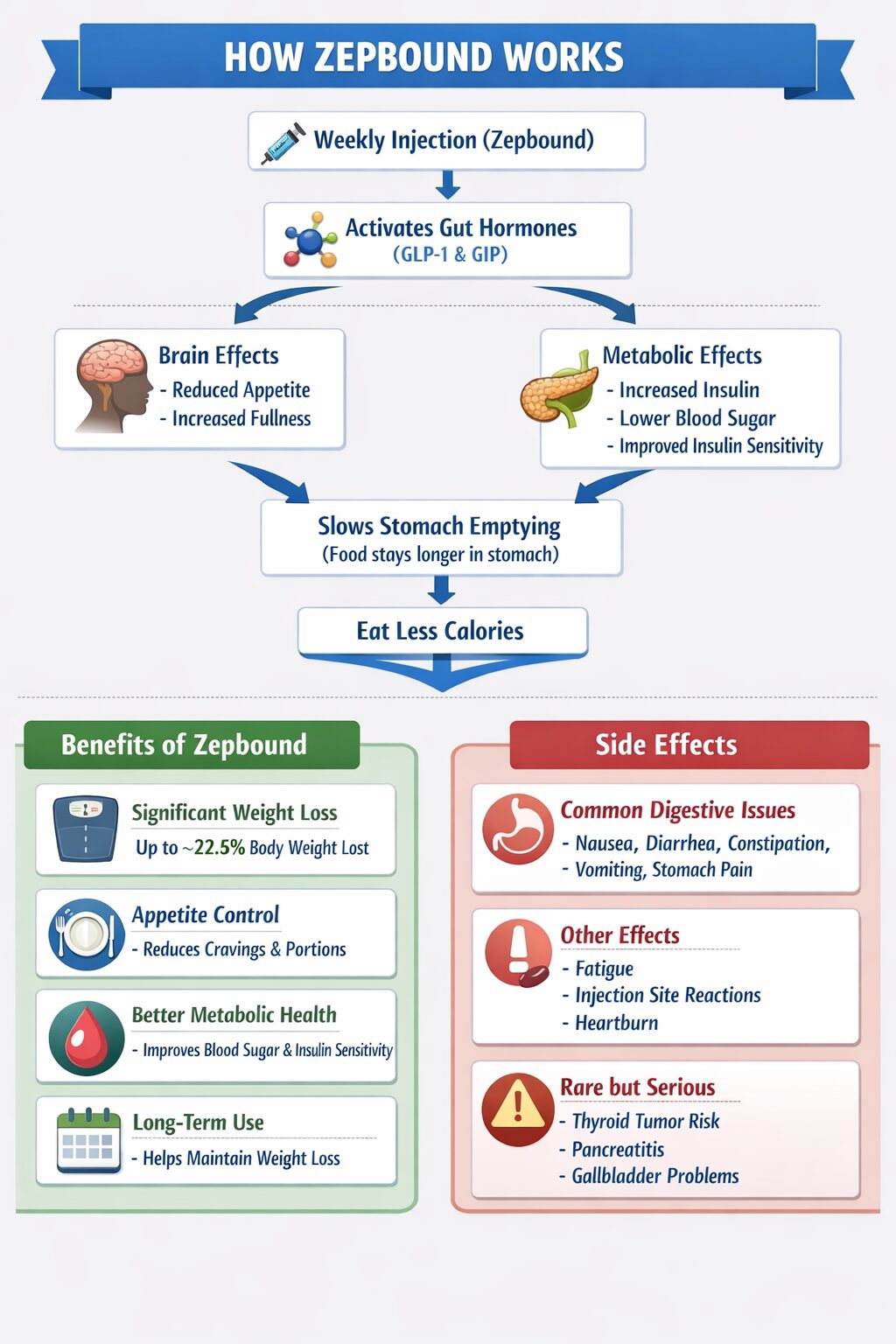
Zepbound Works for Weight Loss for tirzepatide, a once‑weekly injectable medication approved for chronic weight management in adults with obesity (BMI ≥30) or overweight (BMI ≥27) with at least one weight‑related condition. Tirzepatide is a dual glucose‑dependent insulinotropic polypeptide (GIP) and glucagon‑like peptide‑1 (GLP‑1) receptor agonist. By activating both GIP and GLP‑1 pathways, it reduces appetite, improves glucose control, and slows gastric emptying—leading to substantial weight loss when combined with diet and exercise.
How Zepbound Works (Mechanism of Action)
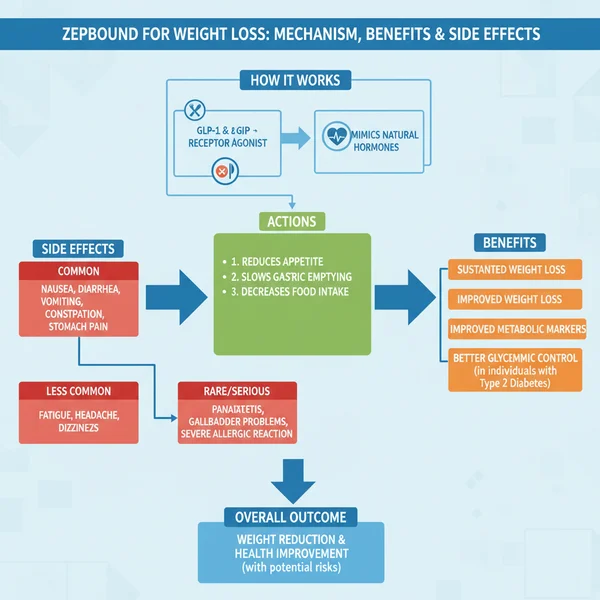
- Activates GLP‑1 receptors: increases satiety, reduces hunger, slows gastric emptying, and promotes insulin secretion when glucose is high.
- Activates GIP receptors: may enhance insulin secretion and improve metabolic responses to food; combined activation appears to amplify weight‑loss effects compared to GLP‑1 alone.
- Metabolic effects together lead to reduced calorie intake, improved glycemic control, and favorable changes in body composition.
Proven Benefits
- Significant weight loss
- Clinical trials (SURMOUNT program) showed average weight loss substantially greater than placebo and larger than many prior therapies—many participants lost 15–25% (and some more) of body weight over 72 weeks when combined with lifestyle interventions.
- Improved glycemic control
- Tirzepatide reduced fasting glucose and HbA1c in participants with or without type 2 diabetes, often enabling better blood‑sugar control.
- Cardiometabolic improvements
- Reductions in waist circumference, blood pressure, and improved lipid profiles were reported in trials.
- Enhanced appetite control and sustained results
- Dual agonism often yields stronger appetite suppression and greater weight maintenance compared with GLP‑1 alone.
- Convenience of weekly dosing
- Once‑weekly injection improves adherence compared with daily medications.
Full Side‑Effect Profile (Common to Rare/Serious)
Side effects vary by individual and dose. Discuss risks with your healthcare provider.
Common and generally transient:
- Gastrointestinal: nausea, vomiting, diarrhea, constipation, abdominal pain, and decreased appetite. These are most common during dose escalation and often decrease over time.
- Injection‑site reactions: mild redness or irritation.
- Fatigue or mild dizziness in some users.
Less common / potentially serious:
- Pancreatitis: rare cases have been reported with incretin‑based therapies. Seek immediate care for severe or persistent abdominal pain with or without vomiting.
- Gallbladder disease: rapid weight loss can increase risk of gallstones and cholecystitis.
- Kidney injury: dehydration from severe GI side effects can lead to acute kidney injury in susceptible people.
- Hypoglycemia: more likely when used with insulin or insulin secretagogues—monitor blood glucose and adjust other diabetes medications as needed.
- Thyroid C‑cell tumors: rodent studies showed C‑cell tumors with GLP‑1 receptor agonists; relevance to humans is uncertain. Use caution in those with personal/family history of medullary thyroid carcinoma (MTC) or multiple endocrine neoplasia type 2 (MEN2).
- Allergic reactions: rare but can be serious (angioedema, anaphylaxis).
- Mood changes: some users report depression or suicidal thoughts—seek help if mood worsens.
Who Should Consider Zepbound — and Who Should Not
- Appropriate candidates:
- Adults with BMI ≥30, or BMI ≥27 with at least one weight‑related comorbidity (e.g., hypertension, type 2 diabetes, dyslipidemia) who have not achieved adequate weight loss with lifestyle changes alone.
- Patients able to commit to medical follow‑up, lifestyle changes, and the injection schedule.
- Not recommended for:
- People with a personal or family history of MTC or MEN2.
- Individuals with known hypersensitivity to tirzepatide.
- Pregnant or breastfeeding people—avoid pregnancy during treatment and discuss contraception with your clinician.
- Pediatric use—safety and efficacy in children depend on regulatory approvals and specific guidance.
How to Use Zepbound for Weight Loss (Practical Guide)
- Medical evaluation first
- Baseline assessment: weight, BMI, medical history, medication review, labs (glucose/HbA1c if indicated, liver and kidney function), and family history of thyroid cancer.
- Titration schedule
- Zepbound is typically started at a low weekly dose and titrated upward over weeks to months to reach the target maintenance dose; this reduces GI side effects. Follow prescriber instructions exactly.
- Combine with lifestyle changes
- Diet: adopt a reduced‑calorie, nutrient‑dense plan emphasizing lean protein, fiber, vegetables, and controlled portions. Avoid high‑fat, high‑sugar meals during dose escalation to reduce nausea.
- Exercise: aim for regular aerobic activity plus resistance training to preserve lean mass and improve cardiometabolic health.
- Behavior support: structured counseling, weight‑management programs, or digital tools improve adherence and long‑term success.
- Monitor and manage side effects
- For mild nausea: eat smaller, more frequent meals; avoid fatty or spicy foods; stay hydrated. Report severe abdominal pain, persistent vomiting, signs of gallbladder disease, or mental health changes promptly.
- If you use insulin or sulfonylureas, coordinate glucose monitoring and medication adjustments with your provider to avoid hypoglycemia.
- Long‑term planning
- Maintaining weight loss often requires ongoing therapy and lifestyle support. Stopping medication commonly leads to weight regain—discuss goals, duration, and maintenance strategies with your clinician.
Cost, Access, and Alternatives
- Zepbound is a branded medication and can be costly; insurance coverage varies and often requires prior authorization. Patient assistance programs may be available through the manufacturer.
- Alternatives include other FDA‑approved anti‑obesity medications (GLP‑1 agents like semaglutide/Wegovy or lower‑dose agents), intensive lifestyle programs, and bariatric surgery for eligible patients. Choice depends on medical history, weight‑loss goals, risk tolerance, and cost.
Conclusion (Zepbound Works for Weight Loss)
Zepbound (tirzepatide) is a powerful, once‑weekly medication that has shown substantial weight‑loss and metabolic benefits in clinical trials, largely due to its dual GIP and GLP‑1 receptor activity. It is most effective when used under medical supervision alongside diet, exercise, and behavioral support. Common side effects are gastrointestinal and typically transient, but rare serious risks (pancreatitis, gallbladder disease, kidney issues, potential thyroid concerns) exist and should be monitored. Discuss candidacy, dosing, monitoring, and long‑term plans with your healthcare provider to determine whether Zepbound is right for you.
How Zepbound works for weight loss Zepbound benefits explained Zepbound side effects list Tirzepatide weight loss mechanism Zepbound treatment expectations Weight loss drug Zepbound Benefits of Zepbound medication Zepbound risks and side effects Zepbound vs Wegovy for weight loss Effective weight loss with Zepbound



Thanku