
What Is Bimagrumab? Effects, Side Effects & Everything to Know
Bimagrumab for Weight Loss has become one of the most closely watched experimental drugs in the obesity and muscle-health space, especially as the weight-loss drug industry grapples with a major side effect of GLP-1 medications: muscle loss. This 2026 guide breaks down what Bimagrumab is, how it works, its effects on the body, its side effects, and where it currently stands in clinical development.
What Is Bimagrumab?
Bimagrumab is a fully human monoclonal antibody that binds to the activin type II receptor (ActRII), and through that mechanism, prevents the actions of natural ligands that negatively regulate skeletal muscle growth. In simpler terms, it’s an antibody that blocks myostatin and related signaling pathways that normally limit muscle growth — meaning when those pathways are blocked, the body responds by building and preserving more muscle.
The drug was originally discovered by Novartis and tested against rare muscle-wasting conditions like sarcopenia and inclusion body myositis. It was later licensed to a biotech startup called Versanis Bio, which launched in 2021 and envisioned bimagrumab as part of obesity drug regimens. Eli Lilly then acquired Versanis for up to $1.9 billion, signaling just how much pharmaceutical interest exists around this drug’s potential.
Bimagrumab is sometimes referred to by its developmental code name BYM338.

How Does Bimagrumab Work?
The mechanism behind bimagrumab is rooted in blocking a receptor pathway that the body uses to “put the brakes” on muscle growth. Here’s how it functions step by step:
1. Blocks the ActRII receptor. Bimagrumab inhibits myostatin, a protein crucial for regulating muscle growth, thereby promoting muscle growth and reducing wasting. Myostatin normally acts like a governor, preventing muscles from growing beyond a certain point — bimagrumab effectively removes that limit.
2. Increases lean muscle mass while reducing fat mass. In preclinical studies using murine models, blocking the ACTRII receptor increased muscle mass by 10% to 15% and improved strength, providing the foundation for human trials. In human studies, a single intravenous dose of bimagrumab not only increased lean mass but significantly reduced total body fat mass and improved metabolic markers.
3. Affects brown adipose tissue. Beyond the muscles, ActRII blockade in preclinical animal models also promoted effects on brown adipose tissue (BAT) differentiation and activity — brown fat being the type of fat tissue associated with burning calories for heat rather than storing energy.
4. Improves glycemic control. In a phase 2 randomized clinical trial of 75 patients with type 2 diabetes and a BMI between 28 and 40, those who received bimagrumab had a significantly larger decrease in total body fat mass and glycated hemoglobin (HbA1c), along with an increase in lean mass, compared with patients who received a placebo.
Bimagrumab and Weight Loss: The GLP-1 Connection
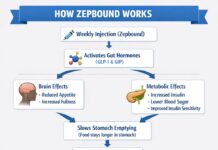
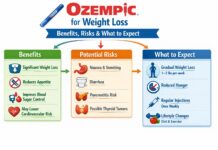
One of the most exciting — and controversial — areas of bimagrumab research in 2026 is its potential use alongside GLP-1 receptor agonists like semaglutide (Ozempic/Wegovy) and tirzepatide (Zepbound).
The problem bimagrumab is being positioned to solve is significant: as much as 40% of weight loss from GLP-1 drugs may come from lean body mass, primarily skeletal muscle, raising serious concerns about sarcopenia (age-related muscle loss) in people using these medications long-term.
A randomized phase 2 trial published in Nature Medicine found that combining bimagrumab with semaglutide led to up to 17.8 kg of weight reduction, compared to up to 14.2 kg with semaglutide alone — while also preserving lean mass and reducing visceral fat. Improvements in physical function scores were also greater in the combination groups compared to placebo.
However, the path forward hasn’t been smooth. Eli Lilly recently terminated a trial that was expected to enroll 180 people and evaluate bimagrumab in combination with Zepbound, with initial results originally expected around April 2026. According to reporting on the decision, the stoppage comes as the FDA appears to be indicating that drugs like bimagrumab may need to do more than just improve muscle composition to win approval — suggesting regulators want to see clearer functional or clinical benefits beyond just body composition changes.
Bimagrumab for Sarcopenia and Inclusion Body Myositis
Before its pivot toward obesity, bimagrumab was studied as a treatment for sporadic inclusion body myositis (sIBM) — a rare muscle-wasting disease with no previous effective therapy — as well as for sarcopenia and post-hip-fracture recovery.
The results in these populations were mixed. Bimagrumab improved muscle mass in patients with sarcopenia and post-hip fracture recovery, while only showing minimal improvements in mobility and strength. In the RESILIENT trial, conducted over 48 weeks, there was only a slight improvement in functional outcomes of gait speed and strength, with little association seen in other outcome measures. This disconnect — building muscle mass without translating that into meaningful functional improvement — has been one of the central challenges in bimagrumab’s development story.
Bimagrumab Side Effects
Like any monoclonal antibody therapy, bimagrumab comes with a documented side effect profile based on clinical trial data:
Common side effects reported in clinical trials include muscle spasms (occurring in roughly 10–15% of patients), joint pain (occurring in roughly 5–10% of patients), and mild gastrointestinal disturbances.
When combined with semaglutide, the side effect profile shifts slightly. Common adverse events for bimagrumab in combination trials included muscle spasms, diarrhea, and acne, while semaglutide on its own was associated with nausea, diarrhea, constipation, and fatigue. Overall, the incidence of treatment-emergent adverse events during the primary treatment period was similar among active drug treatment groups, ranging from roughly 91% to 98%, compared to about 75% in the placebo group.
Safety over time: Reassuringly, the RESILIENT trial found no evidence of major organ toxicity over its 48-week duration. Other ActRII pathway inhibitors studied alongside bimagrumab — including myostatin and activin A inhibitors — similarly showed adverse events that were generally mild and reversible, though researchers caution that long-term safety data remain limited.
Hormonal effects: Bimagrumab has also been studied for its effects on the pituitary-hormone axes, given that activin signaling intersects with several hormonal pathways in the body — an area that continues to be monitored in ongoing research.
Is Bimagrumab FDA Approved?
As of 2026, bimagrumab is not yet FDA-approved for any indication. It remains an investigational drug undergoing phase 2 clinical trials, primarily focused on obesity and metabolic disease in combination with GLP-1 medications, as well as continued research into muscle-wasting conditions. Larger, controlled trials are necessary to confirm efficacy and safety before clinical implementation can be considered for broader use.
The Bottom Line (Bimagrumab for Weight Loss)
Bimagrumab represents a genuinely novel approach to two of medicine’s biggest challenges: obesity and muscle loss. Its ability to build lean mass while reducing fat mass — and potentially offset the muscle-wasting side effects of blockbuster GLP-1 drugs — has made it one of the most closely watched compounds in development. That said, regulatory hurdles, mixed functional outcome data, and a recently terminated major trial show that its path to market is far from guaranteed. For now, bimagrumab remains an investigational therapy, available only through clinical trials, with its future shaped by ongoing research expected to report results throughout 2026.
What Is Bimagrumab Bimagrumab for Muscle Gain Bimagrumab weight loss drug Bimagrumab muscle growth Bimagrumab side effects Bimagrumab before and after Bimagrumab clinical trials 2026 Bimagrumab vs semaglutide New muscle building drug 2026 Future obesity treatment Fat loss without muscle loss Next generation weight loss medicine