
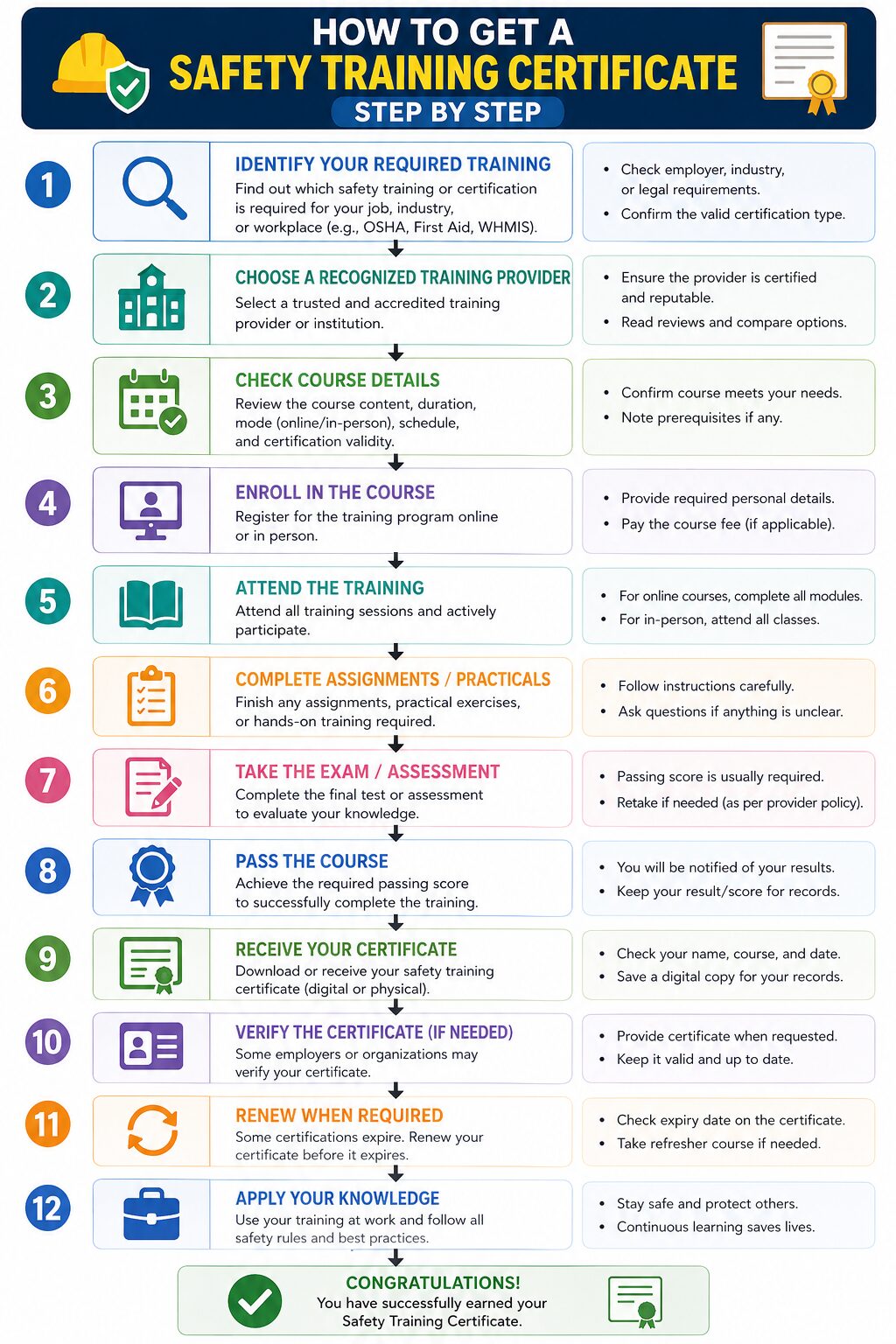
How to Get Safety Training Certificate A Complete Step-by-Step Guide
Workplace Safety Training Certificate is no longer just a regulatory checklist; it is a core foundation of a successful and thriving career. Whether you are entering the construction field, working in a corporate office, or managing a high-risk industrial site, holding valid safety training certificates is one of the best ways to boost your employability, protect yourself, and ensure compliance with modern labor laws.
In 2026, the process of acquiring a safety certification has become highly streamlined, with many accredited institutions offering interactive, digital-first learning experiences. This comprehensive guide will walk you through exactly how to choose, apply for, and successfully earn your safety training certificates step-by-step.
Why Safety Training Certificates Matter in 2026
Before diving into the steps, it is important to understand why these credentials hold so much weight in today’s job market:
- Career Advancement: Employers actively seek candidates who already hold certifications, saving them onboarding time and training costs.
- Legal Compliance: Regulatory bodies like OSHA (Occupational Safety and Health Administration) and equivalent global organizations enforce strict penalties for uncertified workforces.
- Life-Saving Knowledge: Beyond compliance, these courses teach practical, life-saving skills such as hazard recognition, emergency response, and proper equipment handling.
- Higher Earning Potential: Certified safety professionals and site supervisors often command significantly higher salaries than their uncertified peers.
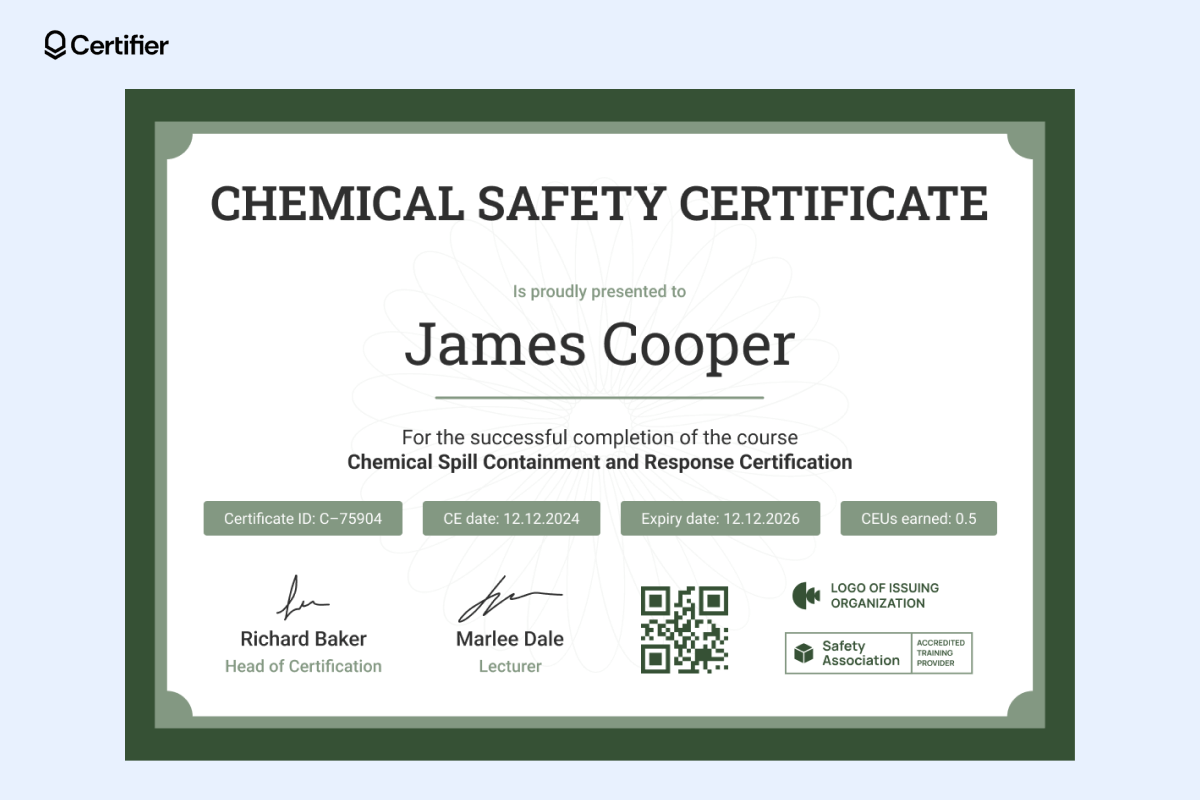
Most In-Demand Safety Certifications Today
Depending on your industry, you will need to target specific certifications. Here are the top courses recognized globally in 2026:
- OSHA 10-Hour and 30-Hour: The gold standard in the United States for construction and general industry workers.
- NEBOSH & IOSH: Highly respected international certificates ideal for management and health and safety officers.
- First Aid, CPR, and AED: Essential for all workplaces, from corporate offices to remote field sites.
- HAZWOPER: Mandatory for workers dealing with hazardous waste operations and emergency response.
- Working at Heights & Confined Spaces: Crucial for construction, maintenance, and telecommunications sectors.
Step-by-Step Guide to Earning Your Safety Training Certificate
Obtaining your certification is a straightforward process if you follow the correct path. Here is how to do it from start to finish.
Step 1: Identify Your Industry Requirements
The first step is to figure out exactly which certificate you actually need. Consult with your HR department, hiring manager, or union representative. If you are a job seeker, look at the job descriptions for your desired role. For example, a site laborer will need an OSHA 10-Hour Construction card, while a site manager will require the OSHA 30-Hour card.
Step 2: Choose an Accredited Training Provider
This is a critical step. Your certificate is only valid if issued by an authorized and accredited training provider.
- Look for providers explicitly approved by regulatory bodies (e.g., OSHA-authorized trainers).
- Check online reviews and ensure the platform issues universally recognized digital or physical wallet cards.
- Beware of incredibly cheap, unverified websites, as they may issue fake certificates that will not pass an employer’s background check.
Step 3: Select Your Preferred Learning Format
In 2026, training flexibility is better than ever. You can choose a format that fits your schedule:
- 100% Online Paced Learning: Ideal for busy professionals. You can log in, complete a few modules, and pause whenever needed.
- Virtual Instructor-Led Training (VILT): Live webinars with an instructor where you can ask questions in real-time.
- In-Person Classroom Training: Best for hands-on courses like First Aid, CPR, or heavy machinery operation where physical evaluation is necessary.
Step 4: Complete the Coursework and Modules
Once enrolled, dedicate focused time to completing the curriculum. Modern safety courses use interactive videos, quizzes, and hazard simulation games to keep you engaged.
- Take notes on key safety protocols, hazard symbols, and emergency procedures.
- Do not rush through the modules. Many online platforms have mandatory time minimums (e.g., you must spend exactly 10 hours on an OSHA 10 course).
- Complete all end-of-module quizzes, as these will prepare you for the final exam.
Step 5: Pass the Final Assessment
Almost all valid safety training certificates require a final exam to prove your competency.
- Review your notes focusing on hierarchy of controls, personal protective equipment (PPE), and specific hazard mitigation.
- Most final exams are multiple-choice.
- If you fail the first time, do not worry! Most accredited providers allow you two or three retries to pass the final assessment.
Step 6: Claim and Download Your Certificate
Congratulations, you passed! Here is how you will receive your credentials:
- Digital Certificate: Immediately upon passing, you will usually be able to download a PDF version of your certificate. You can print this, attach it to your resume, or upload it to your LinkedIn profile.
- Physical Wallet Card: For credentials like OSHA or First Aid, a durable, plastic wallet card will be mailed to your physical address within 2 to 4 weeks. Always carry this card with you while on a job site.
How to Verify and Maintain Your Certification
Earning your safety training certificate is just the beginning. To remain compliant, you must keep your credentials up to date.
- Check Expiration Dates: Many certificates are not permanent. For instance, CPR/First Aid typically expires every two years, and some forklift certifications expire every three years.
- Take Refresher Courses: Instead of taking the full 30-hour or 40-hour course again, many providers offer shorter “Refresher Courses” that allow you to renew your certificate quickly.
- Employer Verification: If you are an employer checking a new hire’s certificate, always use the QR code found on modern 2026 certificates or input the trainee’s ID number into the issuing body’s official verification database.
Conclusion ????
Investing in a safety training certificate is one of the smartest moves you can make for your career and your personal well-being. By identifying the right course, choosing an accredited provider, and dedicating time to mastering the material, you will not only make your resume stand out in 2026 but also contribute to a safer, healthier work environment for everyone. Stay safe and happy learning!
Safety Training Certificates how to get safety training certificate safety training certificate online 2026 how to get safety certification step by step safety training certificate cost and process best safety certificates for construction workers OSHA safety training certificate online how to renew safety training certificate safety certification online with accredited provider workplace safety training certificate requirements how to verify safety training certificate