Ashwagandha Benefits: Uses, Symptoms, and Side Effects
Ashwagandha Benefits (Withania somnifera), also known as Indian ginseng or winter cherry, is a cornerstone herb in Ayurvedic medicine. Widely researched for its adaptogenic properties, ashwagandha helps the body adapt to stress and supports overall health. This article explores clinically relevant uses, evidence-backed benefits, common symptoms it may help relieve, and potential side effects — all presented for clarity and SEO-friendly impact.
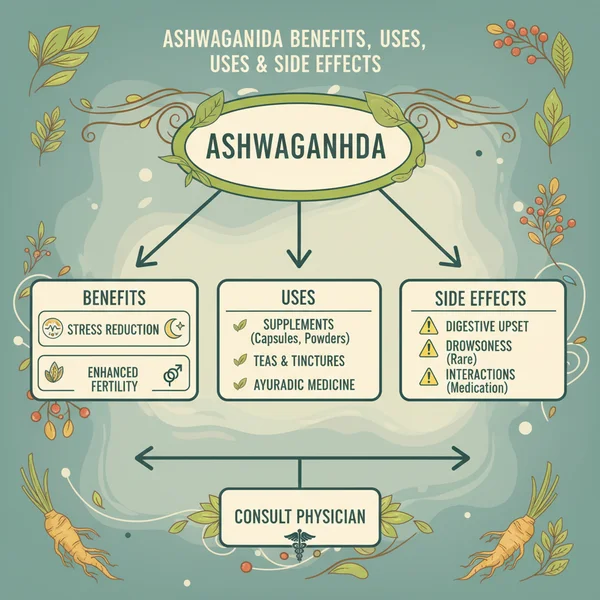
What is Ashwagandha and How It Works
Ashwagandha is an adaptogenic herb containing bioactive compounds called withanolides. These steroidal lactones modulate the hypothalamic-pituitary-adrenal (HPA) axis and influence neurotransmitter systems (GABAergic and serotonergic), which helps regulate stress response, cortisol levels, and inflammation. Standardized extracts (often 1–5% withanolides) are commonly used in clinical studies and supplements.
Key Uses and Clinical Applications
- Stress and Anxiety Relief
- Most-studied use: randomized controlled trials show ashwagandha can significantly reduce perceived stress and anxiety scores vs placebo.
- Typical dose ranges: 250–600 mg/day of standardized root extract for 8–12 weeks.
- Improved Sleep Quality
- Ashwagandha may improve sleep latency and sleep efficiency; recommended for insomnia related to stress.
- Studies use doses around 300–600 mg/day, often at bedtime.
- Enhanced Cognitive Function and Memory
- Evidence suggests improvements in attention, executive function, and memory in adults under stress.
- Mechanisms include neuroprotective antioxidant effects and reduced cortisol.
- Increased Strength, Muscle Mass, and Exercise Recovery
- Trials in resistance-trained men report greater muscle strength and lean mass gains with ashwagandha supplementation compared to placebo.
- Commonly used dose: 300–600 mg/day alongside exercise programs.
- Sexual Health and Fertility
- Men: improved sperm count, motility, and testosterone levels in several studies.
- Women: may help normalize menstrual irregularities linked to stress, though evidence is less robust.
- Metabolic Health and Blood Sugar Control
- Some trials show modest reductions in fasting glucose and improved insulin sensitivity.
- May benefit people with metabolic syndrome when combined with lifestyle changes.
Benefits (Evidence-Based Highlights)
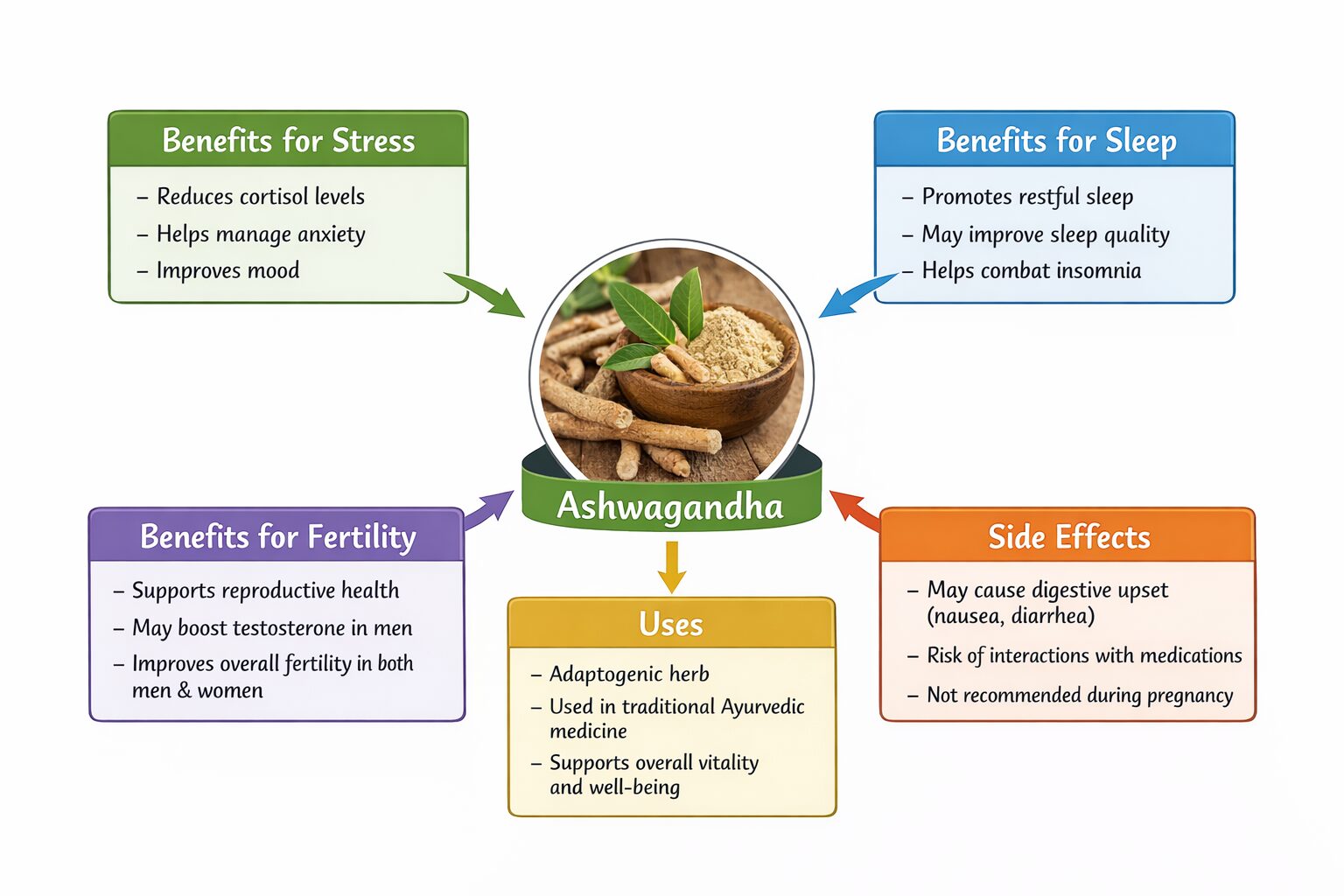
- Reduces cortisol (stress hormone) and subjective stress scores.
- Improves sleep quality and decreases insomnia symptoms.
- Enhances physical performance, muscle strength, and recovery.
- Supports male fertility parameters and may increase testosterone.
- Provides neuroprotective antioxidant effects that support memory and cognitive function.
- May modestly improve blood glucose and lipid profiles.
Symptoms and Conditions Ashwagandha May Help
- Chronic stress and generalized anxiety symptoms (restlessness, irritability, worry).
- Insomnia and poor sleep quality.
- Fatigue and low resilience to physical/mental stress.
- Cognitive symptoms like poor concentration, brain fog, and memory lapses.
- Low libido, erectile dysfunction related to stress, and subfertility in men.
- Exercise-related muscle weakness and slow recovery.
- Mild metabolic disturbances such as elevated fasting glucose within prediabetic ranges.
Dosage Recommendations and Formulations
- Standardized root extract: 300–600 mg/day (commonly split into two doses); many clinical trials use 300 mg twice daily.
- Powdered root (traditional): dosing varies; extracts are preferred for consistent withanolide content.
- KSM-66 and Sensoril are well-known branded extracts with clinical data; Sensoril often standardized to higher withanolide content and used at lower doses.
- Duration: benefits for stress and sleep often appear within 2–8 weeks; longer use (8–12 weeks) is common in studies for physical and reproductive outcomes.
Potential Side Effects and Safety Considerations
- Common mild side effects: gastrointestinal upset (nausea, diarrhea), drowsiness, and headache.
- Sedative effect: may increase sleepiness — caution with driving or operating machinery.
- Thyroid function: some reports suggest ashwagandha can raise thyroid hormone levels; people with hyperthyroidism should consult a clinician.
- Autoimmune conditions: because it can stimulate immune function in some models, people with autoimmune diseases (e.g., lupus, rheumatoid arthritis) should seek medical advice before use.
- Pregnancy and breastfeeding: not recommended due to limited safety data and potential uterine-stimulating effects.
- Drug interactions: may potentiate sedatives (benzodiazepines, sleep aids), immunosuppressants, thyroid medications, and medications affecting blood sugar or blood pressure. Always review with a healthcare professional.
- Allergic reactions: rare but possible; discontinue use if rash, itching, or respiratory symptoms occur.
Who Should Avoid or Use Caution
- Pregnant or breastfeeding women.
- Individuals on sedatives, thyroid hormone therapy, immunosuppressants, or antidiabetic medications — consult your doctor.
- People with autoimmune diseases or unstable thyroid disorders.
- Those planning major surgery (discontinue as advised by surgeon/physician).
Quality, Sourcing, and Choosing a Supplement
- Choose products with third-party testing (USP, NSF) or from reputable brands to ensure purity and correct withanolide standardization.
- Prefer root-only extracts for better traditional alignment and many clinical studies; confirm the withanolide percentage on the label.
- Check for Good Manufacturing Practice (GMP) certification and transparent ingredient lists.
Practical Tips and Next Steps (Ashwagandha Benefits)
- Start low and go slow: begin with 300 mg/day and assess tolerance before increasing.
- Take with food to reduce gastrointestinal upset; if using for sleep, take 30–60 minutes before bedtime.
- Track outcomes: monitor stress, sleep quality, energy, and any side effects for 4–12 weeks.
- Consult a healthcare professional if you have chronic conditions, are pregnant, or take prescription medications.
Ashwagandha is a well-researched adaptogen with multiple evidence-backed benefits for stress, sleep, cognition, physical performance, and male reproductive health. When chosen thoughtfully (standardized extract, trusted brand) and used responsibly, it can be a valuable adjunct for many people seeking improved resilience and wellbeing. If you’d like, I can draft an SEO-optimized meta description, suggest high-CPC keywords to target, or create a 600-word version tailored for a blog post.
Ashwagandha Side Effects Ashwagandha stress relief Natural sleep aid Ashwagandha Male fertility booster Adaptogenic herb benefits Cortisol management supplement Anxiety reduction natural Ashwagandha uses for energy Cognitive enhancement natural Herbal wellness solutions Ashwagandha tablet in hindi