
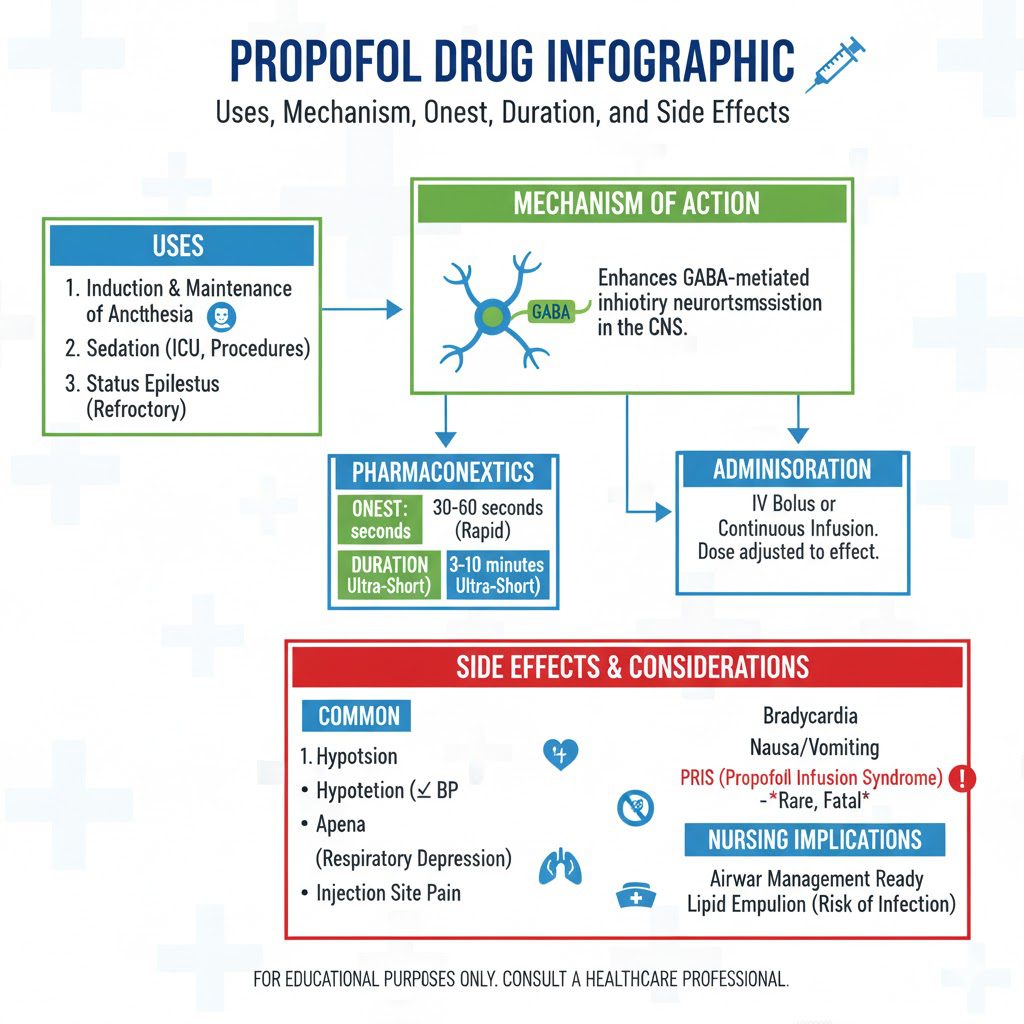
Introduction to Propofol Drug Uses
Propofol Drug Uses is a widely used medical drug that belongs to the class of intravenous anesthetic medications. It is mainly used in hospitals to induce and maintain anesthesia during surgeries and medical procedures. Because of its fast-acting and short-duration effects, Propofol has become one of the most commonly used anesthetic drugs in modern medical practice.
Doctors and anesthesiologists prefer Propofol because it works quickly and allows patients to recover faster after procedures. It is often used in operating rooms, intensive care units (ICU), and diagnostic procedures such as endoscopy or colonoscopy.
Understanding the uses, benefits, symptoms, and side effects of Propofol is important for patients and medical learners who want to know how this drug works and why doctors use it.
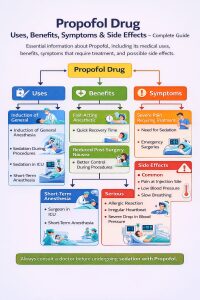
What is Propofol Drug?
Propofol is a powerful anesthetic medication that is given through an intravenous (IV) injection. It acts on the central nervous system and helps patients fall asleep quickly before surgical or medical procedures.
The drug works by slowing down brain activity, which leads to sedation, relaxation, and unconsciousness. This allows doctors to perform medical procedures safely and without causing pain or discomfort to the patient.
Propofol is usually administered only by trained healthcare professionals such as anesthesiologists because the dosage and monitoring require medical expertise.
Propofol Drug Uses
Propofol is mainly used in hospitals and surgical centers. Some of the most common uses include:
1. Induction of General Anesthesia
One of the primary uses of Propofol is to induce general anesthesia before surgery. It helps patients lose consciousness quickly so that they do not feel pain during the procedure.
It is commonly used for surgeries such as:
- Orthopedic surgeries
- Heart surgeries
- Cosmetic surgeries
- Abdominal procedures
2. Sedation During Medical Procedures
Propofol is also used for sedation during diagnostic tests and minor procedures. These include:
- Endoscopy
- Colonoscopy
- Dental surgeries
- Minor surgical treatments
The drug keeps the patient relaxed and comfortable while the doctor performs the procedure.
3. Sedation in Intensive Care Units (ICU)
In intensive care units, Propofol is used to sedate patients who require mechanical ventilation. It helps patients remain calm and prevents discomfort while they are connected to life-support machines.
4. Short-Term Anesthesia
Propofol is often preferred for short medical procedures because it acts quickly and wears off rapidly, allowing patients to recover faster compared to some other anesthetic drugs.
Symptoms That May Require Propofol
Propofol is not used to treat symptoms directly like common medicines. Instead, it is used when patients require anesthesia or sedation for certain medical conditions or procedures.
Doctors may use Propofol in situations such as:
- Severe pain requiring surgical treatment
- Medical procedures that require sedation
- Emergency surgeries
- Patients needing controlled sedation in ICU
These conditions require medical supervision, and Propofol is administered only in hospital settings.
Benefits of Propofol Drug
Propofol offers several advantages in modern medicine, which is why it is widely used by anesthesiologists.
1. Fast-Acting Anesthetic
Propofol works very quickly. Patients usually fall asleep within 30 to 60 seconds after the injection. This makes it extremely useful during surgical procedures.
2. Quick Recovery Time
One of the biggest benefits of Propofol is that patients wake up relatively quickly after the drug is stopped. This reduces recovery time and allows patients to regain consciousness sooner.
3. Better Control During Procedures
Doctors can easily control the depth of sedation with Propofol by adjusting the dosage. This helps maintain the right level of anesthesia throughout the procedure.
4. Reduced Post-Surgery Nausea
Compared with some other anesthetic drugs, Propofol may cause less postoperative nausea and vomiting, which improves patient comfort after surgery.
5. Effective Sedation
Propofol provides smooth and reliable sedation, making it ideal for procedures that require the patient to remain still and relaxed.
Possible Side Effects of Propofol
Like any medical drug, Propofol may cause side effects. These effects vary depending on the patient’s health condition and the dosage used.
Common Side Effects
Some common side effects include:
- Pain at the injection site
- Low blood pressure
- Slow breathing
- Mild dizziness
- Headache
These side effects are usually temporary and monitored by healthcare professionals during medical procedures.
Serious Side Effects
Although rare, serious side effects may occur, including:
- Severe allergic reaction
- Breathing difficulties
- Irregular heartbeat
- Severe drop in blood pressure
In very rare cases, a condition called Propofol Infusion Syndrome may occur during long-term use, especially in critically ill patients.
Because of these risks, Propofol is always administered under strict medical supervision.
Precautions Before Using Propofol
Certain precautions must be followed before administering Propofol.
1. Medical History Check
Doctors usually review the patient’s medical history to identify any allergies or health conditions that may increase the risk of side effects.
2. Monitoring During Administration
Patients receiving Propofol must be closely monitored for:
- Blood pressure
- Heart rate
- Oxygen levels
- Breathing patterns
This monitoring ensures patient safety during the procedure.
3. Pregnancy and Breastfeeding
Propofol should only be used during pregnancy or breastfeeding if the doctor determines that the benefits outweigh the risks.
4. Professional Administration
Propofol must only be given by trained medical professionals in hospitals or clinical settings.
Storage and Handling
Propofol is usually stored in hospitals under controlled conditions. Proper storage ensures the drug remains effective and safe to use.
Important storage guidelines include:
- Keep in a controlled temperature environment
- Protect from contamination
- Use within recommended time after opening
Because Propofol is a hospital-administered drug, patients do not usually store or handle it themselves.
When to Consult a Doctor
Medical professionals should be informed immediately if any unusual reactions occur after receiving Propofol, such as:
- Difficulty breathing
- Severe allergic reactions
- Chest pain
- Extreme weakness
These symptoms require immediate medical attention.
Conclusion
Propofol is an essential anesthetic drug widely used in modern medicine for surgeries, diagnostic procedures, and ICU sedation. Its fast-acting nature and quick recovery time make it a preferred choice among anesthesiologists.
However, because Propofol affects the central nervous system and breathing, it must only be administered by trained healthcare professionals in controlled medical environments.
Understanding the uses, benefits, symptoms, and side effects of Propofol helps patients and medical learners gain better knowledge about this important anesthetic medication.
Always rely on professional medical advice before any medical procedure involving anesthesia.
Propofol Injection Uses Propofol Side Effects Propofol Anesthesia Drug Propofol Injection Benefits Propofol Dosage for Anesthesia Propofol Drug Side Effects and Risks What is Propofol Used For Propofol Sedation Uses in ICU Propofol Medical Uses and Benefits